
Your Holistic Guide to Empowering Your Child with ADHD
From Chaos to Connection: Your Holistic Guide to Empowering Your Child with ADHD (and Yourself!)

Is your home a whirlwind of constant motion, intense meltdowns, and a pervasive sense of exhaustion? For parents raising a child with ADHD, it often feels like playing life on "hard mode." The daily landscape can be marked by overwhelming challenges, leaving you feeling burnt out and even guilty. As one parent bravely shared, "He’s constantly screaming, melting down, refusing to listen, crying, running around, hitting us and his siblings, begging for us to play with him, never wanting to be alone…just exhausting for everyone." Another echoed, "We lose our patience a lot and don’t have a lot of energy to give him when he needs so much."
If this resonates, know this: You are not alone. And you are not failing. This guide is your invitation to shift from "survival mode" to a place of empowerment, understanding, and deep connection. We're here to help you move beyond simply managing behaviors, to truly understanding your child's unique brain wiring, nurturing their incredible strengths, and building a resilient, harmonious family life. Because ADHD isn't a deficit; it's a difference. And with the right support, your child can absolutely thrive.
What Is ADHD? Understanding the Neurodevelopmental Difference
Attention-Deficit/Hyperactivity Disorder (ADHD) is a common neurodevelopmental difference that affects approximately 6-7% of children worldwide, making it one of the most common neurodevelopmental conditions. It's characterized by persistent patterns of inattention, hyperactivity, and/or impulsivity that can significantly interfere with daily functioning and development.
Here's the crucial truth: ADHD is a brain-based condition. It is not a result of poor parenting, too much sugar, or your child being lazy or lacking discipline. Research consistently points to genetic factors and subtle differences in brain structure and function as primary causes.
Understanding this fundamental truth is the first, vital step towards empathy and effective support. Your child isn't choosing to be difficult or defiant; their brain is simply wired differently. This impacts their executive functions, the vital mental skills that help us plan, focus attention, remember instructions, and juggle multiple tasks successfully.
The ADHD Brain: What's Different?
Children with ADHD have subtle but important differences in brain structure and function, particularly in areas responsible for executive functions, the mental skills that help us plan, focus, remember instructions, and manage multiple tasks. These differences affect:
- Attention regulation: Difficulty filtering out distractions and maintaining focus
- Working memory: Trouble holding information in mind while using it
- Impulse control: Acting before thinking through consequences
- Emotional regulation: Managing big feelings appropriately
- Task initiation: Getting started on activities, especially boring ones
Understanding these neurological differences helps explain why traditional discipline methods often don't work for children with ADHD, their brains literally process information and regulate behavior differently.
Common ADHD Symptoms in Kids: Beyond Just Hyperactivity
While hyperactivity is often the most visible symptom, ADHD manifests in diverse and often surprising ways. For a diagnosis to be made, symptoms must be present in multiple settings (like home and school) and significantly interfere with daily functioning.5
Common symptoms typically fall into three main categories:
- Inattention:
- Difficulty sustaining attention in tasks or play.
- Seem not to listen when spoken to directly, appearing "spaced out"
- Struggle to follow through on instructions or complete tasks
- Avoid tasks requiring sustained mental effort like homework or reading
- Often seems not to listen when spoken to directly.
- Fails to give close attention to details or makes careless mistakes.
- Struggles with organization.
- Frequently loses necessary items (toys, schoolwork, tools).
- Easily distracted by unrelated thoughts or external stimuli
- Often forgetful in daily activities.
- Hyperactivity:
- Fidgets, taps hands or feet, or squirms in the seat.
- Leaves seat when remaining seated is expected.
- Runs about or climbs in inappropriate situations (may feel restless in teens/adults).
- Difficulty playing or engaging in quiet leisure activities.
- Often "on the go," as if "driven by a motor", constantly moving or talking
- Talks excessively.
- Impulsivity:
- Blurts out answers before questions are completed.
- Have trouble waiting their turn in games or conversations
- Interrupts or intrudes on others (e.g., butts into conversations or games).
Emotional Dysregulation: The Hidden Symptom
Beyond these core symptoms, many children with ADHD experience emotional dysregulation. While not part of the official diagnostic criteria, emotional dysregulation is extremely common in children with ADHD. This might include:
- Intense emotional reactions that seem disproportionate to the situation
- Difficulty recovering from emotional upset
- Frequent meltdowns or outbursts
- Extreme sensitivity to criticism or perceived rejection
- Trouble managing frustration or disappointment, the "constant screaming" and "huge battles" many parents describe
Another common, yet often overlooked, symptom is time blindness, where children genuinely struggle to accurately perceive the passage of time, leading to difficulties with transitions, deadlines, and planning.
Different Types of ADHD in Children
ADHD is not a single, uniform condition. The Diagnostic and Statistical Manual of Mental Disorders, Fifth Edition (DSM-5), identifies three main presentations:
- Predominantly Inattentive Presentation: Sometimes called "ADD" informally. Children primarily exhibit symptoms of inattention. They might seem quiet, dreamy, "in their own world" or easily distracted, often going unnoticed in classrooms because they aren't disruptive.This type is often overlooked, especially in girls.
- Predominantly Hyperactive-Impulsive Presentation: Children primarily show hyperactive and impulsive behaviors. These are often the children who are constantly "on the go", constantly moving, talking, or acting without thinking and struggling with waiting their turn. These children are more likely to be disruptive and noticed by adults
- Combined Presentation: This is the most common type, affecting about 70% of children with ADHD. Here children meet the criteria for both inattention and hyperactivity-impulsivity and this type presents the most comprehensive challenges.
It's important to note that presentations can change over time. Hyperactivity often decreases with age, while inattentive symptoms may become more apparent as academic demands increase.
The Science Behind ADHD
ADHD is a complex neurodevelopmental condition that arises from the intricate interplay between genetic vulnerabilities, brain development differences, and environmental influences. Understanding these multiple layers helps explain why ADHD affects each child differently and why both biological and environmental approaches to treatment can be effective.
The ADHD Brain: Structural and Functional Differences
ADHD involves consistent differences in brain structure and function, particularly in regions responsible for executive functioning. The most significant differences occur in:
The Prefrontal Cortex: The Brain's "CEO"
Located right behind your forehead, this crucial brain region is responsible for:
- Attention and focus: Filtering out distractions and staying on task
- Working memory: Holding information in mind while using it
- Impulse control: Thinking before acting
- Emotional regulation: Managing big feelings appropriately
- Planning and organization: Breaking down complex tasks into manageable steps
Research shows that in children with ADHD, the prefrontal cortex shows delayed maturation, developing more slowly than in neurotypical children. This explains why many ADHD symptoms improve with age as the brain continues to mature.
The Neurochemical Foundation: Dopamine and Norepinephrine
The brain differences in ADHD are closely linked to neurotransmitter imbalances, specifically involving dopamine and norepinephrine. These chemical messengers are essential for:
Dopamine's Role:
- Motivation and drive to start and complete tasks
- Reward processing and finding activities engaging
- Attention regulation and focus
- Movement coordination and impulse control
Norepinephrine's Role:
- Alertness and vigilance
- Working memory function
- Response to stress and environmental demands
- Attention to important stimuli
These brain functions rely heavily on chemical messengers called neurotransmitters, especially dopamine and norepinephrine. In ADHD, these chemicals often don’t work as efficiently as they should, which can make focusing and self-control harder. That's why stimulant medications (which boost these chemicals) can be so helpful, they're essentially giving the brain's "CEO" better tools to do its job.
The Genetic Foundation: A Highly Heritable Condition
Research shows that ADHD is highly heritable, meaning it often runs in families. Twin studies suggest that genetics account for about 70-80% of ADHD traits. But here's the crucial point:
Genetics increase susceptibility to ADHD but do not fully determine outcomes.
Environmental factors still play a huge role in whether and how ADHD symptoms show up. How ADHD traits develop depends on:
- The timing, dose, and quality of environmental inputs interacting with these genetic predispositions.
- This means genes set the stage, but the environment directs the play.
The Role of Sensitivity and Environment
Dr. Gabor Maté, renowned trauma therapist, argues that what’s inherited is not ADHD itself, but sensitivity, a heightened responsiveness to environmental stimuli. This sensitivity becomes problematic only in stressful environments:
- Without genetic sensitivity: ADHD does not develop, no matter the environment
- Without environmental stress: ADHD does not develop, even if genetic sensitivity exists
- Sensitivity + Environmental stress: ADHD symptoms can develop
This view helps explain why ADHD looks different in different people and why the environment matters so much.
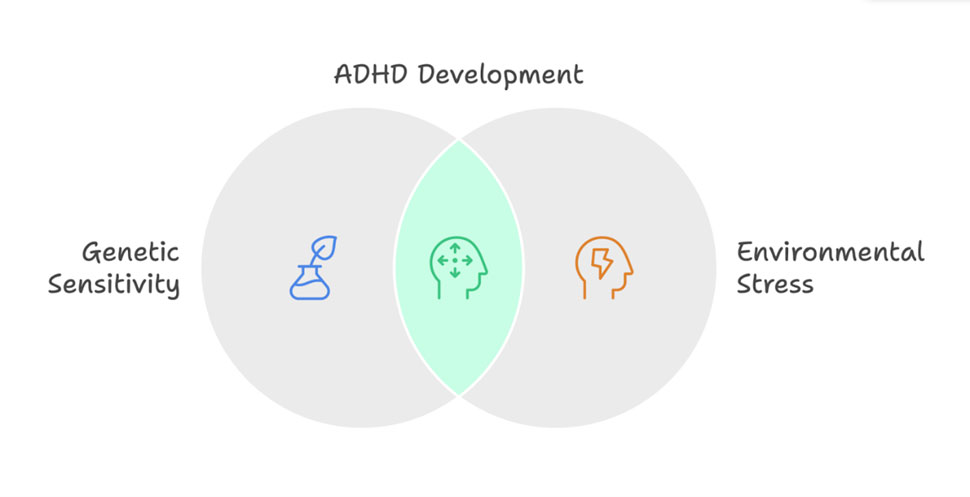
The Gene-Environment Dance:
The brain goes through specific periods when it's especially plastic and responsive to environmental input. For attention and self-control circuits, the most critical periods are:
Infancy (0-2 years):
- Basic stress response patterns form
- Attachment relationships shape emotional regulation
- Foundation for trust and safety develops
Preschool (3-5 years):
- Rapid prefrontal cortex development
- Executive function skills begin emerging
- Language and social skills develop rapidly
Adolescence (12-18 years):
- Final maturation of attention and impulse control systems
- Peer relationships and identity formation intensify
- Increased vulnerability to stress and mental health challenges
Think of your genes as having a light switch on top of them. Your environmental experiences can actually turn these genes "on" or "off" without changing the DNA sequence itself. Environmental factors that can trigger ADHD in sensitive children include:
Prenatal Environment:
- Maternal stress, depression, or trauma during pregnancy
- Substance exposure (alcohol, nicotine, drugs)
- Nutritional deficiencies or maternal illness
- Environmental toxins like lead or mercury
Early Caregiving Environment:
- Attunement quality: Emotionally responsive, predictable caregiving
- Chronic stress from family conflict, poverty, or instability
- Trauma exposure including neglect, abuse, or household dysfunction
- Consistency of caregiving and emotional availability
Broader Environmental Context:
- Socioeconomic stress affecting family stability
- Cultural pressures for productivity and achievement
- Educational environments that support or stress the child
- Community support systems and social connection
This having a dual focus, respecting the strong heritability of ADHD while actively targeting and improving the environmental contexts, can help massively. At Coach for Mind, ADHD therapy in India can help you manage these challenges.
This means:
- Supportive environments can help "turn off" genes that contribute to ADHD symptoms
- Stressful environments can "turn on" genetic vulnerabilities
- These changes can sometimes be passed down to future generations
- Recovery is possible: Improved environments can help regulate gene expression
So what does This Mean for Understanding ADHD:
- Some children are born with genetic vulnerabilities that make them more likely to develop attention and impulse control challenges
- Whether those vulnerabilities become significant problems depends heavily on environmental factors, especially early caregiving experiences
- Stress and trauma can create ADHD-like symptoms even in children without genetic vulnerabilities
- Conversely, supportive environments can help genetically vulnerable children develop much better self-regulation skills
Important Cautions:
- This doesn't mean parents are "to blame" for ADHD, many factors outside parental control affect child development such as economic pressures requiring both parents to work extensively, cultural emphasis on productivity over emotional well-being, erosion of extended family support systems, childcare systems lacking adequate emotional attunement and social isolation and community breakdown.
- Genetic factors are real and significant; environmental approaches alone aren't always sufficient
- Medication can be tremendously helpful and often makes other interventions more effective
The Stress-Development Connection
Chronic stress fundamentally alters brain development, particularly in areas crucial for attention and self-control:
How Stress Disrupts Development
When children experience chronic stress, whether from inconsistent caregiving, family conflict, poverty, trauma, etc, their brains prioritize survival over learning and development. Under stress, the body releases hormones like cortisol. While helpful in small doses, chronic elevation leads to:
- Suppressed dopamine production (reducing motivation and focus)
- Impaired prefrontal cortex development (making self-control harder)
- Bias attention toward threats (making learning difficult)
- Reduced behavioral flexibility (leading to rigid, reactive responses)
- Compromised memory formation (affecting academic and social learning)
The Survival Response That Looks Like ADHD
When a child's environment feels unpredictable or overwhelming, they may mentally "check out" as protection. The child's nervous system essentially says, "This is too much, I need to disconnect to stay safe." Over time, this survival mechanism can create symptoms that look identical to ADHD:
- Difficulty paying attention (mind elsewhere for safety)
- Hyperactivity (nervous system on high alert)
- Impulsivity (survival brain overriding thinking brain)
- Emotional dysregulation (overwhelmed stress response system)
Attunement: The Brain's Social Nutrition
Attunement is when a caregiver is emotionally “tuned in” to a child, recognizing their needs, responding warmly and predictably, creating a sense of safety and connection. It might look like:
- Responsive eye contact and shared facial expressions
- Warm responses to the child's emotional states
- Celebrating the child's discoveries and excitement
- Comfort during distress without dismissing feelings
- Predictable routines that create safety and connection
Attuned caregiving triggers dopamine release in the child’s brain, supporting motivation, learning, memory, and the development of attention and self-control circuits in the prefrontal cortex. When children experience frequent, joyful, responsive interactions, their brains get repeated "doses" of dopamine that help build stronger attention and self-control circuits.
The Neurobiological Magic of Attunement
When children experience frequent, joyful, responsive interactions, their brains receive repeated "doses" of dopamine that:
- Build stronger attention circuits in the prefrontal cortex
- Support emotional regulation development
- Enhance motivation and curiosity for learning
- Create resilience against stress and adversity
- Establish secure attachment patterns that last into adulthood
This explains why some children with genetic vulnerability for ADHD may develop strong self-regulation skills in highly attuned environments.
What Causes ADHD in Children? Debunking Myths
The scientific consensus is clear: ADHD is a neurobiological disorder with strong genetic links. As Dr. Russell Barkley, a leading expert, notes, "The hereditary nature of ADHD is striking."7 It's incredibly common for parents to discover their own undiagnosed ADHD after their child's diagnosis, bringing a profound sense of understanding and empathy to their family's journey. This means ADHD is NOT caused by:
- Poor parenting or lack of discipline.
- Too much sugar or food additives
- Excessive screen time or video games
- Vaccines or medical treatments
- Poverty alone (though it can worsen symptoms)
- Laziness or lack of motivation
- Bad choices or character flaws
While environmental factors can influence symptom severity, they are not the root cause. This understanding is vital for alleviating the immense guilt many parents carry, helping you recognize that your child's challenges stem from a neurological difference, not a parental failing.
Important Considerations for Families
Parents Are Not to Blame
This understanding is crucial for reducing parental guilt. Many factors affecting child development are beyond parental control:
- Economic pressures requiring both parents to work extensively
- Cultural emphasis on productivity over emotional well-being
- Erosion of extended family and community support systems
- Childcare systems that may lack adequate emotional attunement
- Social isolation and community breakdown
- Historical or intergenerational trauma affecting family patterns
Navigating the ADHD Diagnosis Journey in Children: From Suspicion to Support
The journey to an ADHD diagnosis can feel overwhelming, fraught with challenges from initial skepticism to frustratingly long waitlists for specialists. "Waitlists are long here," is a common, disheartening refrain among parents seeking help.9 Yet, early and accurate diagnosis is critical for timely intervention, preventing years of struggle and potential damage to a child's self-esteem.
Recognizing Early Signs and When to Seek Help
Many parents recall noticing atypical behaviors even in infancy or toddlerhood, often dismissed as "just a high-energy kid."10 Trust your instincts if something feels "off." Early indicators can include:
- Infancy/Toddlerhood: Excessive crying, difficulty sleeping, constant motion, intense emotional reactions, and significant difficulty with transitions.
- Preschool: Inability to sit still for story time, frequent tantrums, difficulty following multi-step instructions, and intense focus on preferred activities but an inability to shift attention.
The question many parents grapple with is, "How do we tell the difference between a kid who has ADHD and a kid who is just very high energy and doesn’t like to sit still for things he’s not interested in?"11 The answer is clear: a professional ADHD assessment for children is the only way to gain clarity and peace of mind.
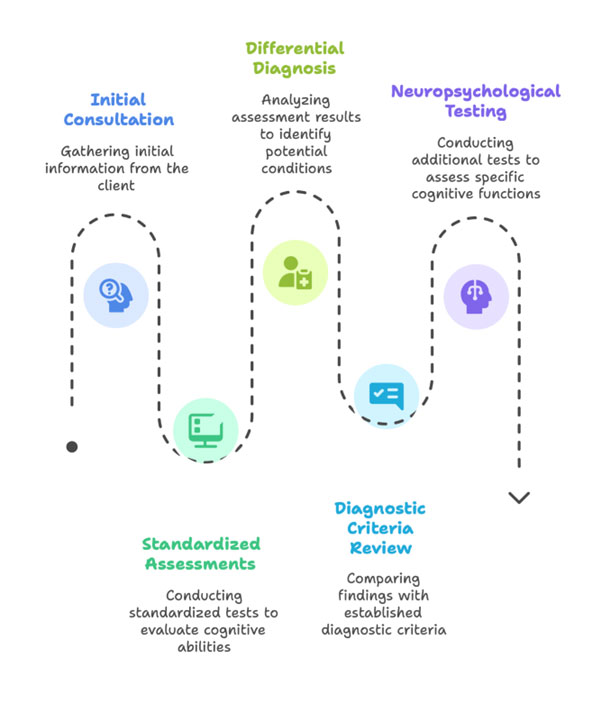
The Diagnostic Process
Diagnosis typically involves a comprehensive evaluation by a qualified professional, such as a developmental pediatrician, child psychiatrist, or clinical psychologist. This thorough process usually includes:
Step 1: Initial Consultation
- Detailed developmental history from parents/caregivers
- Family history of ADHD and related conditions
- Medical history to rule out other causes
- School performance and behavioral reports
Step 2: Standardized Assessments
- Rating scales completed by parents and teachers (e.g., Conners-3, Vanderbilt). These are crucial as symptoms must be present in multiple settings.
- Behavioral observations in clinical settings
- Cognitive testing to assess attention, memory, and processing speed
Step 3: Differential Diagnosis
The evaluator must rule out other conditions that can mimic ADHD:
- Anxiety disorders that cause restlessness or inattention
- Depression leading to concentration difficulties
- Learning disabilities causing academic struggles
- Sleep disorders affecting attention and behavior
- Trauma-related symptoms that look like ADHD
Step 4: Diagnostic Criteria Review
For an ADHD diagnosis, children must meet specific criteria:
- Six or more symptoms from either category (ages 6-16)
- Symptoms present before age 12
- Impairment in two or more settings (home, school, social)
- Significant functional impairment
- Symptoms not better explained by another condition
- Neuropsychological Testing (Sometimes): May be used to assess executive functions, attention, and to rule out other co-occurring learning disabilities.
Navigating the healthcare system for diagnosis and ongoing care can be daunting.12 Start by contacting your pediatrician for a referral, but be prepared to advocate fiercely for your child. If your pediatrician dismisses your concerns as "normal kid behavior," seek a second opinion from a specialist. Research local developmental pediatricians or child psychiatrists, and don't hesitate to inquire about their diagnostic process and current wait times.
Effective ADHD Treatment Options for Kids: A Multimodal Approach
Effective management of ADHD is rarely a one-size-fits-all solution. The most successful approach is typically multimodal, combining several strategies tailored precisely to your child's unique needs.
For children over age 6, stimulant medications are often highly effective, helping 70-80% of children with ADHD. These medications work by increasing dopamine and norepinephrine levels in the brain, improving attention, focus, and impulse control.
Common ADHD Medications
Stimulants:
- Methylphenidate (Ritalin, Concerta, Daytrana)
- Amphetamines (Adderall, Vyvanse, Dexedrine)
Non-Stimulants:
- Atomoxetine (Strattera)
- Guanfacine (Intuniv)
- Clonidine (Catapres)
Medication: Myths vs. Realities
For many children over age 6, medication is a cornerstone of ADHD treatment and can be profoundly impactful. As one parent shared, "Medication + therapy... medication helps give kids a little nudge in order to be able to listen to and accept the therapies and supports."13 Another reported, "With meds he’s a different child. His teacher told me last week that he is the most focused child in class."14
How Medication Works: Stimulant medications (e.g., methylphenidate, amphetamines) are the most commonly prescribed and effective. They work by increasing levels of crucial neurotransmitters (dopamine and norepinephrine) in the brain, which are vital for attention, focus, and impulse control. Non-stimulant options are also available.
Addressing Medication Concerns
Many parents have understandable concerns about medication:
"Will medication change my child's personality?"
When properly prescribed and monitored, medication should help your child feel more like themselves, calmer, more focused, and better able to succeed.
"Are there serious side effects?"
Most side effects are mild and temporary, including decreased appetite, sleep difficulties, or mild mood changes. Serious side effects are rare but require medical monitoring.
"Will my child become dependent?"
When used as prescribed, ADHD medications don't cause addiction. They may actually reduce the risk of substance abuse by helping children succeed academically and socially.
"Should we try everything else first?"
While behavioral interventions are crucial, medication often provides the foundational improvement that makes other strategies more effective.
Common Misconceptions (and why they're often misleading):
- "Don't put her on drugs whatever you do."15 This sentiment is common, but as medical professionals often counter, "You wouldn’t withhold an inhaler for a kid with asthma, so it’s unfair to her to withhold meds for ADHD."16 Medication helps balance brain chemistry, creating a foundation for your child to better access their own coping skills and benefit from therapy.
- "Medication is a 'lazy' solution." This is a harmful myth. For countless individuals, medication is a vital tool that enables them to function, learn, and build crucial self-esteem. "It’s not worth the self esteem issues. He IS so much happier and he closed his learning gap," a parent shared, highlighting the real-world impact.17
- "Being medicated young had a profoundly negative impact on my life."18 While some individuals may have negative experiences (often due to incorrect dosing or lack of proper monitoring), countless others report life-changing positive effects. The key is careful oversight by a qualified medical professional to find the right medication and dosage, and to diligently monitor for side effects.
Important Considerations:
- For children under 6, behavior therapy with a Mental health therapist in Chicago, particularly parent training in behavior management, is recommended as the first line of treatment before medication is considered.19
- Medication is not a "cure." It helps manage symptoms, creating a crucial window of opportunity for behavioral strategies to be more effective and for your child to learn and grow.
Behavioral Interventions: Beyond Punishment
Behavioral therapy with a Mental health therapist in Chicago is recommended as the first-line treatment for preschoolers and an essential component for all children with ADHD.
Behavior therapy with a Mental health therapist in Chicago is crucial for all ages, teaching children and parents practical skills to manage ADHD symptoms. For young children, parent training in behavior management is highly effective, empowering you with strategies to improve communication, foster positive behaviors, and gently reduce challenging ones.
Moving Beyond Punishment: Many traditional disciplinary methods are ineffective for ADHD behaviors, which often stem from neurological differences, not defiance. As parents wisely note, "Punishments don’t work great," and "Punishment? For being neuro divergent? The behavior is a symptom and should be managed and discussed."20
Instead, focus on strategies that support your child's unique brain:
- Clear Expectations & Consistent Routines: ADHD brains thrive on predictability. Use visual schedules, checklists, and consistent daily rhythms to help your child know what to expect.
- Positive Reinforcement: Catch your child being good! Praise, rewards, and positive attention are far more effective than punishment for shaping desired behaviors.
- Natural Consequences: Instead of arbitrary punishments, allow natural consequences to occur when safe and appropriate (e.g., if a toy is left out and broken, it's gone).
- "Picking Your Battles": Not every behavior warrants a confrontation. Prioritize safety and core family values, and learn to let go of the rest.
- Emotion Coaching: Help your child identify and label their intense feelings, then guide them in healthy coping strategies. This is especially vital for emotional dysregulation.
Therapies to help support Children with ADHD
When it comes to helping your child with ADHD, certain types of therapy have been proven to work really well. Think of these as tools in your toolbox - some will be perfect for your child, others might not be needed. Here's what actually works:
- Behavioral Parent Training (BPT) - The Foundation
This is like going to "parenting school" specifically designed for ADHD families
What you'll actually do:
- Attend 8-12 weekly sessions (usually 1-2 hours each) with other parents or one-on-one with a best psychologist in Dallas
- Learn specific techniques that work better for ADHD brains than traditional parenting methods
- Practice new strategies in a safe space before trying them at home
- Get homework assignments to try new approaches with your child
- Receive ongoing support as you implement changes
What makes this so effective:
- Understanding ADHD first: Learn that your child's brain works differently - it's not defiance or laziness
- Prevention strategies: How to set up situations so problems are less likely to happen
- Positive reinforcement: Catching your child being good and making a big deal about it
- Reward systems: Using sticker charts, point systems, or special privileges to motivate good behavior
- Strategic ignoring: Learning when to ignore minor attention-seeking behaviors
- Effective consequences: Time-outs and natural consequences that actually work for ADHD kids
Real-world example: Instead of saying "Clean your room," you'll learn to say "Please put all the Legos in the blue bin. When that's done, come show me and we'll move to the next step."
Why it works so well: Parents report feeling more confident, less stressed, and seeing real improvements in their child's behavior that last over time.
- School-Based Behavioral Support
Getting your child's teacher on the same team using proven classroom strategies
Daily Report Cards:
- Your child gets rated on specific behaviors throughout the school day (like "stayed in seat during math" or "followed directions the first time")
- Teacher sends home a simple report each day
- You provide rewards at home based on how they did at school
- Creates a bridge between home and school expectations
Classroom Management Strategies:
- Token systems: Kids earn points or tokens for good behavior that can be "spent" on privileges
- Losing privileges: Clear consequences when rules are broken (like losing computer time)
- Environmental changes: Better seating, movement breaks, visual reminders posted around the room
- Group activities: Games that make the whole class work together toward good behavior
- Individual Therapy for Your Child
One-on-one sessions with best psychologist in Dallas can help your child learns specific skills
Cognitive Behavioral Therapy (CBT) - "Brain Training":
- Executive function coaching: Learning how to plan, organize, and manage time
- Problem-solving skills: "What do I do when I'm frustrated?" or "How do I remember my homework?"
- Self-awareness training: Helping your child notice their own behavior and feelings
- Coping strategies: Practical tools for handling big emotions
- Social skills: How to make friends, take turns, and handle conflicts
Organizational Skills Training:
- HOPS Program: Homework, Organization, and Planning Skills - basically teaching your child to be their own secretary
- Time management: Using timers, calendars, and schedules
- Assignment tracking: Systems for remembering what's due when
- Study skills: How to actually prepare for tests and complete projects
Important note: This works best for kids who are at least 8-10 years old and can engage in conversations about their behavior.
- Social Skills Training
Group or individual sessions with best psychologist in Dallas focused on making and keeping friends
What your child will learn:
- How to start conversations and join groups
- Reading facial expressions and body language
- Taking turns and sharing attention
- Handling disagreements without losing friends
- Understanding others' perspectives ("How would you feel if...")
Works best when: Combined with parent training and school support so skills transfer to real life.
- Neurofeedback - "Video Games for Your Brain"
Using computer programs to train brain waves
- Your child plays games or watches videos while sensors monitor their brain activity
- When their brain produces the "right" patterns, they get rewarded in the game
- Small but real improvements in attention, but we're still learning about long-term benefits
- Expensive and time-intensive (usually 30-40 sessions)
- Computer-Based Brain Training
Programs that target working memory and attention
- Cogmed: Memory training games your child plays for 5 weeks
- Attention training programs: Computer exercises designed to improve focus
- The reality: These programs can improve performance on the specific games, but doesn't always transfer to better behavior at home or school
- Mindfulness and Relaxation Training
Teaching your child to calm their mind and body
- Age-appropriate meditation: Usually 5-10 minute sessions
- Breathing exercises: Simple techniques they can use when frustrated
- Body awareness: Learning to notice tension and relax muscles
- Mindful movement: Yoga or walking meditation
- Early positive results, but more research is needed
- Trauma-Informed Therapy
Essential when your child has experienced scary or overwhelming events
Signs you might need this:
- ADHD symptoms got much worse after a specific event
- Extreme emotional reactions that seem out of proportion
- Nightmares, fears, or avoidance of certain places/people
- Regression in skills they had already mastered
Treatment approaches:
- EMDR: A specific technique for processing traumatic memories
- Play therapy: For younger children who can't yet talk about their experiences
- Somatic therapy: Focusing on how the body holds stress and trauma
- Family Therapy
When ADHD is affecting everyone in the family, the best psychologist in Dallas can help you.
You might need this if:
- Siblings are resentful or acting out
- Parents are constantly fighting about discipline
- Family activities always end in meltdowns
- Everyone is walking on eggshells
Focus areas:
- Improving communication between family members
- Addressing sibling concerns about "unfair" treatment
- Helping parents get on the same page
- Creating family rules that work for everyone
Choosing What's Right for Your Child Based on How Severe the ADHD Is
Mild ADHD:
- Parent training might be all you need
- School accommodations (like extra time on tests)
- Specific skill training for problem areas
Moderate ADHD:
- Multiple approaches working together
- Consider medication along with therapy with best psychologist in Dallas
- Regular check-ins to adjust strategies as needed
Severe ADHD:
- Intensive support across all areas of life
- Medication usually necessary to provide a foundation for learning
- Possible special education services
- Family support services to prevent burnout

Parenting Tips for Children with ADHD: Building Connection and Resilience
Parenting a child with ADHD requires immense patience, creativity, and a willingness to adapt traditional parenting styles. We hear you when you say, "Please… need general parenting tips for an ADHD child. I’m losing my $#!t."21Here's how to build connection and resilience:
- Embrace Structure and Routine: Predictability provides a crucial sense of security and helps manage executive function challenges. Implement visual schedules, timers, and consistent daily rhythms.
- Prioritize Connection Over Correction: Your child desperately needs to feel seen, heard, and loved for who they are. Dedicate positive, one-on-one time. A strong parent-child bond is the unwavering foundation for all other interventions.
- Break Down Tasks: Large tasks are inherently overwhelming for an ADHD brain. Break them into smaller, manageable steps. Instead of "Clean your room," try "First, put your dirty clothes in the hamper. Then, put your books on the shelf."
- Use External Cues: ADHD brains often struggle with internal motivation and memory. Leverage alarms, visual reminders, checklists, and apps to help with transitions and tasks.
- Practice Positive Reinforcement: Actively look for and celebrate what your child is doing well. Celebrate small victories. Specific praise ("I love how you remembered to put your plate in the sink!") is far more effective than general praise.
- Teach Emotional Regulation: Help your child identify and label their intense feelings, then provide concrete tools to cope (e.g., deep breaths, sensory breaks, a designated "calm-down corner"). Validate their emotions, even if their expression is challenging.
- Choose Your Battles Wisely: Not every non-compliance requires a power struggle. Decide what's truly important for safety and core values, and learn to let go of the rest.
- Model Self-Regulation: Children learn by watching. When you feel overwhelmed, model healthy coping strategies for them to observe and emulate.
- Educate Yourself and Others: The more you understand ADHD, the better equipped you'll be to advocate fiercely for your child and explain their needs to others with clarity and confidence.
- Parental Self-Care is Non-Negotiable: We understand, "I’m so burnt out that the idea of having to read another book and implement more strategies feels overwhelming right now."22 But you absolutely cannot pour from an empty cup. Seek support groups, therapy, or simply carve out small, consistent moments for yourself. Addressing your own emotional landscape is not selfish; it's essential for your child's well-being and your family's harmony. Many parents even find that getting their own ADHD diagnosis and support significantly improves family dynamics.23
This reddit user shared,
“Punishments don’t work great with my ADHD kid. Taking things away just makes them spiral harder. Positive reinforcement is the only thing that sticks.”
Another user said,
“Helping my son name his feelings instead of shutting them down reduced the meltdowns. He feels heard now, not punished.”
“We started using a ‘calm-down corner’ with sensory tools. At first I thought it was silly, but it gave my daughter space to regulate instead of escalating fights.”
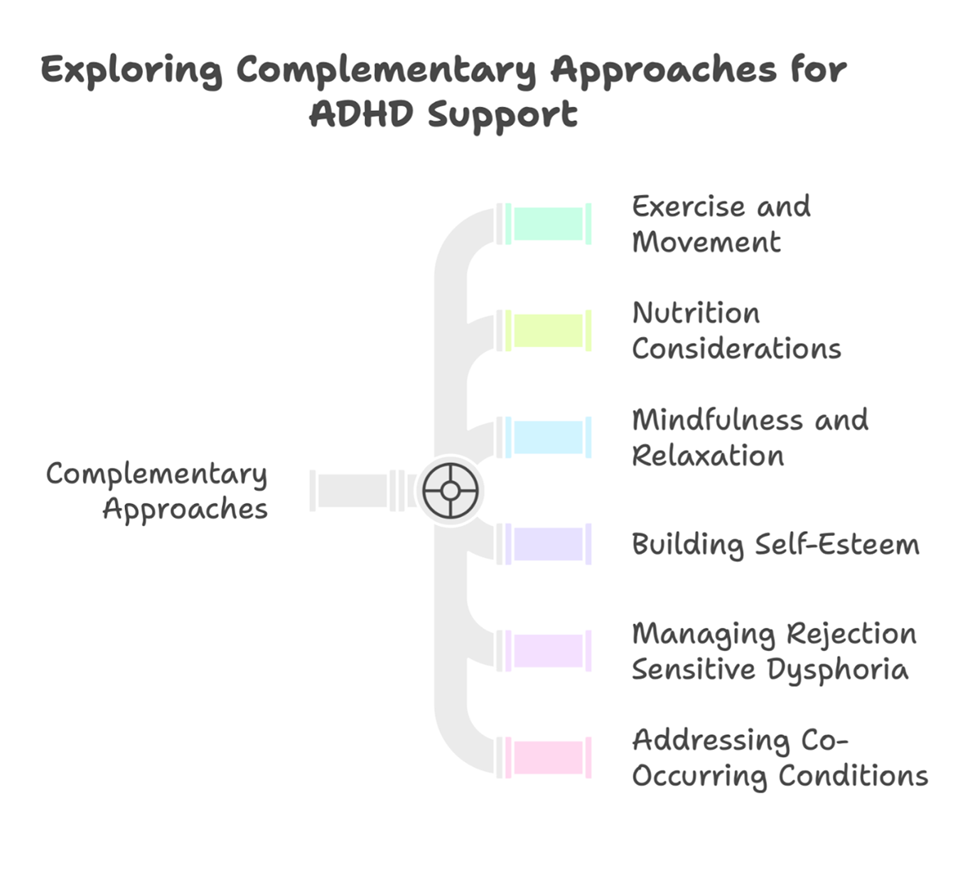
Complementary Approaches
While medication and behavioral therapy are the gold standard, these approaches may provide additional support:
Exercise and Movement
- Regular physical activity can improve attention and mood
- Martial arts may help with self-control and focus
- Team sports can build social skills and self-esteem
Nutrition Considerations
- Regular, balanced meals help maintain steady blood sugar
- Omega-3 supplements may provide modest benefits for some children
- Limiting processed foods might help sensitive children
- Adequate sleep is crucial for attention and emotional regulation
Mindfulness and Relaxation
- Age-appropriate meditation can improve self-awareness
- Deep breathing exercises for emotional regulation
- Progressive muscle relaxation for hyperactive children
Supporting Your Child's Emotional Well-Being
Children with ADHD face unique emotional challenges that require understanding and support.
Building Self-Esteem
Many children with ADHD struggle with low self-worth due to frequent criticism and failures. Help build confidence by:
- Focusing on strengths and interests
- Celebrating small victories and effort, not just outcomes
- Providing opportunities for success in areas of strength
- Teaching self-advocacy skills as they mature
- Connecting with other families dealing with ADHD
Managing Rejection Sensitive Dysphoria (RSD)
Many children with ADHD experience extreme sensitivity to criticism or rejection. Support them by:
- Validating their feelings without dismissing the intensity
- Teaching coping strategies for disappointment
- Preparing them for social situations that might be challenging
- Working with teachers to provide feedback constructively
- Building resilience through successful experiences
Addressing Co-Occurring Conditions
ADHD rarely occurs alone. Common co-occurring conditions include:
- Anxiety disorders (25-40% of children with ADHD)
- Learning disabilities (45-60%)
- Oppositional defiant disorder (40-60%)
- Depression (especially in adolescence)
- Sleep disorders (25-50%)
Each co-occurring condition requires specific treatment approaches, making comprehensive assessment crucial.

Practical Parenting Strategies
Creating Structure at Home
Children with ADHD thrive on predictability and clear expectations:
Daily Routines:
- Consistent wake-up, meal, and bedtime schedules
- Visual schedules for morning and evening routines
- Regular homework time and location
- Planned physical activity and free time
Organization Systems:
- Designated places for backpacks, homework, and belongings
- Color-coding for different subjects or activities
- Simple filing systems for important papers
- Regular decluttering sessions
Managing Challenging Behaviors
Before Behaviors Occur:
- Identify triggers and early warning signs
- Provide advance notice of transitions
- Ensure basic needs are met (hunger, fatigue, stimulation)
- Create calm, organized environments
During Challenging Moments:
- Stay calm and avoid power struggles
- Acknowledge feelings while maintaining boundaries
- Offer choices when possible
- Use distraction or redirection for younger children
After Incidents:
- Process what happened once everyone is calm
- Problem-solve together for future situations
- Repair relationships if needed
- Learn from what triggered the behavior
Supporting Executive Function Development
Help your child develop crucial life skills:
Time Management:
- Use visual timers for tasks and transitions
- Break large projects into smaller, manageable steps
- Create realistic schedules with buffer time
- Teach time estimation through practice
Organization:
- Start with simple systems and build complexity gradually
- Use checklists for multi-step tasks
- Implement "one thing at a time" rules
- Model organization strategies yourself
Planning and Problem-Solving:
- Involve your child in planning family activities
- Teach backward planning (starting with the end goal)
- Practice "what if" scenarios
- Encourage reflection on what works and what doesn't
Unlocking Potential: Leveraging ADHD Strengths
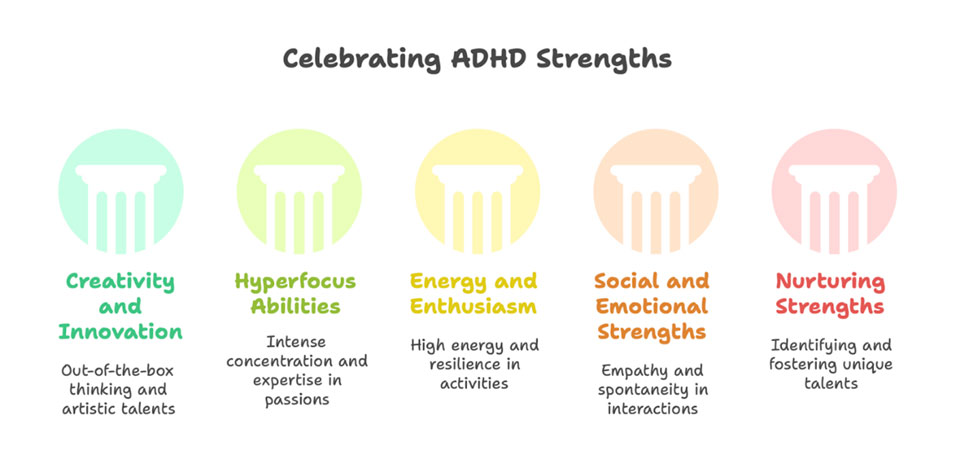
While ADHD certainly presents challenges, it also comes with a remarkable set of unique strengths that, when nurtured, can lead to incredible success and innovation. Embracing a neurodiversity-affirming approach is crucial for building your child's self-esteem and helping them see their ADHD as an integral part of their unique identity, not solely a deficit.
Common and powerful ADHD strengths include:
Hyperfocus and Intense Concentration:
- Deep immersion: Ability to focus intensely on subjects or activities that capture their interest
- Expertise development: Can become remarkably knowledgeable in areas of passion
- Productivity bursts: Accomplish enormous amounts when engaged and motivated
- Flow states: Experience of complete absorption and peak performance
Creativity and Innovation:
- Divergent thinking: Generate multiple, original solutions to problems
- Artistic talents: Often excel in creative fields like art, music, writing, or performance
- Entrepreneurial spirit: Think outside the box and see opportunities others miss
- Novel connections: Make unexpected links between seemingly unrelated concepts
High Energy and Enthusiasm:
- Infectious passion: Their excitement and energy can motivate and inspire others
- Stamina for preferred activities: Sustained energy when doing something they love
- Dynamic presence: Bring life and vibrancy to groups and relationships
- Spontaneity: Willingness to try new experiences and take on adventures
Resilience and Determination:
- Bouncing back: Years of facing challenges build incredible grit and persistence
- Problem-solving tenacity: Don't give up easily when motivated to find solutions
- Adaptability: Learn to navigate changing circumstances and find alternative approaches
- Strength through struggle: Develop empathy and understanding for others who face difficulties
Social and Emotional Strengths:
- Empathy: Often highly sensitive to others' emotions and experiences
- Authenticity: Tend to be genuine, direct, and honest in their interactions
- Loyalty: Form deep, committed friendships when connections are made
- Justice sensitivity: Strong sense of fairness and willingness to advocate for others
Cognitive Strengths:
- Quick thinking: Rapid processing in dynamic or crisis situations
- Big-picture vision: See patterns, connections, and possibilities others might miss
- Multitasking ability: Can juggle multiple interests and projects simultaneously
- Intuitive insights: Often have strong gut instincts about people and situations
Ways to nurture these strengths:
Identify and celebrate interests:
- Pay attention to what naturally captures your child's attention
- Provide opportunities to explore and develop passionate interests
- Connect with mentors or communities related to their areas of strength
- Allow time for deep dives into subjects they love
Create strength-based opportunities:
- Choose activities that leverage their natural abilities
- Look for leadership opportunities that utilize their energy and creativity
- Encourage projects that allow for innovation and original thinking
- Connect their strengths to potential future careers or paths
Reframe challenges as strengths:
- Hyperactivity → High energy available for exciting projects
- Impulsivity → Quick decision-making and spontaneous creativity
- Distractibility → Awareness of environment and ability to notice details others miss
- Emotional intensity → Deep capacity for passion and empathy
Build identity around strengths:
- Help your child see their ADHD traits as part of what makes them special
- Share stories of successful people with ADHD who used their strengths
- Encourage self-advocacy based on knowing their strengths and needs
- Celebrate efforts and growth, not just traditional achievements
Examples of ADHD strengths in action:
- The artist who creates stunning work during hyperfocus sessions
- The athlete whose high energy and quick reflexes excel in sports
- The entrepreneur who sees opportunities and acts on innovative ideas
- The performer whose natural charisma and spontaneity captivate audiences
- The helper whose empathy and energy make them natural counselors or advocates
By actively focusing on and celebrating these strengths, you can help your child build profound confidence and discover pathways where their unique brain wiring is not just accepted, but a true asset.
Long-Term Outcomes and Prognosis
With proper support and intervention, children with ADHD can achieve excellent outcomes:
Factors for Positive Outcomes
- Early identification and intervention
- Comprehensive, multimodal treatment
- Strong family support and understanding
- Appropriate school accommodations
- Treatment of co-occurring conditions
- Development of self-advocacy skills
Transitioning Through Life Stages
Elementary School (Ages 5-11):
- Focus on building fundamental skills and self-esteem
- Establish effective behavioral management strategies
- Create strong home-school partnerships
Middle School (Ages 11-14):
- Address increasing academic and social demands
- Support identity development and self-advocacy skills
- Monitor for emerging mental health concerns
High School (Ages 14-18):
- Prepare for increased independence and responsibility
- Explore career interests and post-secondary options
- Develop life skills and self-management strategies
Adulthood:
- Many adults with ADHD lead successful, fulfilling lives
- Ongoing support may be needed for relationships, career, and parenting
- Strengths often become more apparent and valuable with maturity
ADHD Support in Schools: Advocating for Your Child's Needs
School can be a particularly challenging environment for children with ADHD, often leading to feelings of shame and damaged self-esteem.24 As one adult with ADHD recalled, "I hated school because I was singled out so much for my symptoms."25 Effective school support requires strong parental advocacy and proactive collaboration with educators.
Key Accommodations and Plans
Understanding your child's rights and available support is paramount:
- 504 Plan: A legal document under Section 504 of the Rehabilitation Act of 1973, providing accommodations to ensure a child with a disability has equal access to education. This might include preferential seating, extended time on tests, movement breaks, or reduced homework.
- Individualized Education Program (IEP): For children whose ADHD significantly impacts their academic performance, an IEP under the Individuals with Disabilities Education Act (IDEA) provides specialized instruction and related services.
- Essential Classroom Accommodations:
- Flexible Seating: "Flexible furniture! It was a huge upgrade for my high school students... Yoga balls, rolling chairs, bean bags, etc."26
- Movement Breaks: Planned opportunities to move or fidget.
- Noise Management: "Allow them to use headphones to block out noise whenever they need to (except during instruction obviously)."27
- Clear, Multi-Modal Instructions: Break down multi-step instructions and provide them both verbally and visually.
- Reduced Distractions: Seating away from windows or high-traffic areas.
- Positive Reinforcement: Teachers recognizing and praising effort and positive behaviors.
- Processing Time: "Give everyone time to come up with an answer and don’t always let the first person to raise their hand have the chance to answer."28
- Pacing Flexibility: "Working at my own pace (typically working ahead) made a HUGE difference."29
- Manageable Homework Burden: "What destroyed both my kids was in middle school when the teachers were “trying to prepare them for high school” by loading them up with graded homework assignments."30
Collaboration with Teachers
Open, consistent communication is vital. Share information about your child's ADHD, what strategies work effectively at home, and any challenges they face. Frame it as a partnership with a shared goal: your child's success. If in-school behavior issues are "bottling up and then exploding at home," as one parent described31, this signals a critical need for school staff to better understand and manage ADHD symptoms within the classroom environment.
Teaching Coping Mechanisms to Kids with ADHD
Equipping your child with effective coping mechanisms is essential for their long-term well-being, confidence, and independence.
- Emotional Regulation Skills: Teach deep breathing techniques, introduce mindfulness practices, create a designated "calm-down corner," or help them identify safe adults to talk to when overwhelmed.
- Executive Function Strategies:
- Organization: Implement color-coding, labels, and clear, consistent systems for belongings.
- Planning: Break down large projects into smaller, manageable steps; encourage the use of calendars and planners.
- Time Management: Utilize timers, visual schedules, and guide them in estimating how long tasks will truly take.
- Problem-Solving: Guide them through identifying challenges and brainstorming multiple solutions.
- Self-Advocacy: As they mature, empower your child to understand their ADHD and confidently articulate their needs to teachers, friends, and family. This crucial skill helps combat feelings of being "very different than other kids, and are treated as such."32
Long-Term Prognosis for Children with ADHD: A Lifelong Journey
ADHD is a lifelong condition, but its presentation and needs gracefully evolve as your child grows into adolescence and adulthood. Understanding this long-term trajectory is key to sustained success and proactive support.
- Evolving Symptoms: While hyperactivity often decreases with age, inattention and impulsivity can persist, and emotional dysregulation may become even more prominent.
- Major Life Transitions: Puberty, middle school, high school, college, and entering the workforce all present new and significant challenges for executive function and self-management. Proactively preparing for these transitions is vital.
- Common Co-occurring Conditions: ADHD rarely travels alone. Many children with ADHD also experience:
- Anxiety Disorders: Up to 50% of children with ADHD also have an anxiety disorder.33
- Depression: Especially as they enter adolescence, often due to struggles with self-esteem and social challenges.
- Learning Disabilities: Dyslexia, dysgraphia, and dyscalculia are common co-occurring conditions.
- Oppositional Defiant Disorder (ODD) or Conduct Disorder (CD): More severe behavioral challenges that require specific interventions.
- Sleep Disorders: Difficulty falling asleep or staying asleep is common and can exacerbate ADHD symptoms.
Addressing co-occurring conditions is crucial for truly comprehensive care. An integrated treatment plan that considers all aspects of your child's well-being will consistently yield the best outcomes.
The Broader Family Impact: Siblings and Beyond
The impact of ADHD extends beyond the child and primary caregivers, significantly shaping siblings and broader family dynamics. It's essential to acknowledge and support everyone in the family unit.
Siblings of children with ADHD may experience:
- Feeling Overlooked: Parents' attention and energy are often heavily directed towards the child with ADHD, potentially leading to feelings of neglect or jealousy.
- Increased Responsibilities: Older siblings might be expected to take on more chores or caregiving roles.
- Emotional Strain: Witnessing intense meltdowns or challenging behaviors can be stressful, confusing, and even frightening for siblings.
- Resentment: Towards the sibling with ADHD for perceived "special treatment" or the disruption they cause.
- Profound Empathy and Understanding: Conversely, many siblings develop deep empathy, incredible resilience, and a strong protective instinct for their neurodivergent sibling.
To support all your children and foster a harmonious family environment:
- Educate Them: Explain ADHD in age-appropriate terms, emphasizing it's a difference, not a choice or a fault.
- Dedicated One-on-One Time: Ensure consistent, quality one-on-one time with each child, focusing solely on their individual interests and needs.
- Validate Their Feelings: Acknowledge and validate their frustrations, jealousy, sadness, or confusion without judgment.
- Encourage Their Strengths: Actively celebrate their achievements and unique qualities.
- Seek External Support: Consider sibling support groups or family therapy if dynamics are strained or if siblings are struggling significantly.
When to Seek Professional Help
Consider professional support if:
- Symptoms significantly interfere with daily functioning at home or school
- Behavioral strategies aren't working despite consistent implementation
- Your child is experiencing anxiety, depression, or other emotional difficulties
- Family stress is high and relationships are suffering
- You need guidance on medication decisions or treatment planning
- School performance is declining despite accommodations
Caring for Yourself as a Parent
Parenting a child with ADHD can be exhausting and emotionally challenging. Your well-being directly impacts your ability to support your child effectively.
Preventing Parental Burnout
Recognize the signs:
- Chronic exhaustion despite adequate rest
- Feeling emotionally disconnected from your child
- Increased irritability or impatience
- Neglecting your own needs and relationships
Protective strategies:
- Build a support network of other parents who understand
- Seek respite care when needed
- Practice self-compassion instead of self-criticism
- Maintain your own interests and relationships
- Consider therapy for yourself, especially if you also have ADHD
Addressing Your Own ADHD
Many parents discover their own ADHD during their child's diagnostic process. If you suspect you might have ADHD:
- Seek proper evaluation from an adult ADHD specialist
- Consider treatment options including medication and therapy
- Join adult ADHD support groups
- Learn about how your ADHD affects parenting and develop strategies
Remember: Taking care of your own mental health isn't selfish, it's essential for your family's well-being.
Empowering Your Child, Confident Parenting
Raising a child with ADHD is undeniably one of life's most challenging yet profoundly rewarding journeys. It's an opportunity to witness incredible resilience, boundless creativity, and unique ways of experiencing the world. By embracing a neurodiversity-affirming approach, combining evidence-based treatments with empathetic parenting strategies, and advocating fiercely for your child's needs in all settings, you can shift from merely coping to truly thriving.
Remember this truth: You are not failing. You are navigating "hard mode" with immense love, dedication, and an extraordinary commitment. Seek support, practice radical self-compassion, and celebrate every small victory, for your child and for yourself. Your child's journey with ADHD is unique, and with your unwavering support, they can absolutely unlock their full potential and lead a happy, fulfilling, and remarkable life.
What's one step you'll take today to empower your child, or yourself, on this journey? Share your thoughts or questions in the comments below. We're here to support you.
FAQs
Absolutely not. ADHD is a neurobiological condition with strong genetic foundations, not a result of parenting choices or failures. Research consistently shows that ADHD involves structural and functional differences in the brain, particularly in areas responsible for attention, impulse control, and executive functioning.
The science is clear:
- Genetics account for 70-80% of ADHD traits
- Twin studies show that if one identical twin has ADHD, the other has a 70-80% chance of also having it
- Brain imaging reveals consistent differences in brain structure and neurotransmitter function
- Family studies demonstrate clear hereditary patterns across generations
What parents CAN do is learn evidence-based strategies to support their child's unique brain wiring. While you didn't cause your child's ADHD, your response to it makes a profound difference in their development, self-esteem, and long-term outcomes. Effective parenting strategies for ADHD include providing structure, using positive reinforcement, creating predictable routines, and working collaboratively with healthcare providers and schools.
Important perspective: Many parents discover their own undiagnosed ADHD after their child's diagnosis. This often brings relief and understanding—you're not a "bad parent," you may simply have been navigating life with your own unrecognized neurological differences.
This pattern is actually very common in children with ADHD and doesn't rule out the diagnosis. What you're observing is likely "after-school restraint collapse" or "masking exhaustion", phenomena well-recognized by ADHD specialists.
Why this happens:
- Masking effort: Children with ADHD often work incredibly hard to appear "normal" at school, suppressing their impulses, forcing focus, and managing sensory overload
- Executive function depletion: The mental energy required to regulate behavior all day creates genuine neurological fatigue
- Safe space release: Home represents emotional safety where children finally feel they can let their guard down
- Cumulative stress: Eight hours of fighting their natural brain patterns creates a pressure cooker effect
What you might see:
- Intense emotional outbursts immediately after school
- Hyperactivity that seems to explode once they're home
- Defiance or meltdowns over simple requests
- Complete inability to do homework or follow directions
- Physical exhaustion or emotional flooding
This pattern actually supports an ADHD diagnosis rather than contradicting it. The fact that your child CAN regulate at school shows they have some capacity for self-control, but it's coming at enormous cost to their nervous system. A comprehensive ADHD evaluation should include detailed information about both home and school behaviors, with understanding that these environments may elicit very different presentations.
ADHD is fundamentally different from laziness, and understanding this distinction is crucial for your child's well-being and your family relationships.
Laziness characteristics:
- Choice-based: The person chooses not to engage despite having the ability
- Low distress: Generally doesn't come with guilt, shame, or emotional turmoil
- Situational: Usually temporary and context-specific
- Consistent low effort: Applies relatively equally across different types of tasks
- Time awareness: Knows how long things take but chooses not to do them
ADHD characteristics:
- Neurologically-based: The brain struggles with executive functions like task initiation, sustained attention, and follow-through
- High internal distress: Often accompanied by frustration, shame, anxiety, and self-criticism
- Persistent across settings: Shows up at home, school, and social situations
- Inconsistent performance: Can hyperfocus on preferred activities while completely unable to start boring ones
- Time blindness: Genuine difficulty estimating how long tasks will take
Key questions to consider:
- Does your child want to succeed but seem unable to follow through?
- Do they show intense focus on preferred activities while struggling with routine tasks?
- Are there frequent emotional outbursts around homework or chores?
- Do they lose track of time or underestimate how long things take?
- Do simple tasks seem to require excessive mental effort?
- Are they forgetful even about things they care about?
If daily functioning is consistently impacted across multiple areas (school, home, friendships), and your child seems to be trying but struggling, it's worth seeking a professional evaluation. A child who is lazy typically doesn't experience the emotional distress and genuine effort that characterizes ADHD struggles.
ADHD symptoms typically appear before age 12, and formal diagnosis guidelines apply to children ages 4-18 years. However, the diagnostic process varies significantly by age due to developmental considerations.
Age-specific considerations:
Ages 3-4 (Preschool):
- Diagnosis is challenging but possible in extreme cases
- Symptoms must be severe and persistent across multiple settings
- Requires specialist evaluation (developmental pediatrician, child psychiatrist, or psychologist)
- Higher chance of misdiagnosis due to normal developmental variation
- Hyperactivity is typically the most prominent symptom at this age
Ages 4-6 (Early Elementary):
- More reliable diagnosis becomes possible
- American Academy of Pediatrics guidelines specifically address this age group
- Behavioral therapy is typically recommended before medication
- Comprehensive evaluation includes parent, teacher, and caregiver input
Ages 6-12 (Elementary School):
- Peak diagnosis period when academic demands make symptoms more apparent
- Inattention symptoms become more prominent as school expectations increase
- Standardized rating scales become more reliable
- Both medication and behavioral interventions are typically considered
Ages 13-17 (Adolescence):
- Symptoms may look different (restlessness instead of hyperactivity)
- Emotional regulation challenges often become more apparent
- Risk-taking behaviors may emerge
- Five symptoms required (instead of six) for ages 17 and older
Important diagnostic requirements regardless of age:
- Symptoms present for at least 6 months
- Significant impairment in two or more settings (home, school, social)
- Symptoms interfere with developmental functioning
- Symptoms not better explained by another condition
While symptoms often appear in preschool years, most children are diagnosed between ages 6-12 when the demands of formal education make attention and impulse control challenges more apparent. Early identification and intervention can prevent years of academic struggles and damaged self-esteem.
Medication can be highly effective for many children with ADHD, but the decision should always be made thoughtfully with a trusted healthcare provider, considering your child's specific needs, age, and family circumstances.
The evidence for medication:
- 70-80% of children show significant improvement with stimulant medications
- Stimulants work by increasing dopamine and norepinephrine in the brain, improving attention, focus, and impulse control
- Academic performance often improves substantially
- Social relationships may benefit from better self-control
- Self-esteem frequently improves as children experience more success
Age considerations:
- Under age 6: Behavioral therapy is typically tried first
- Ages 6 and older: Medication combined with behavioral strategies is often most effective
- Adolescents: May particularly benefit from medication as academic and social demands increase
Types of medications:
- Stimulants (methylphenidate, amphetamines): Most commonly prescribed and effective
- Non-stimulants (atomoxetine, guanfacine): Alternative options for children who don't respond well to stimulants
Common concerns addressed:
- "Will it change my child's personality?" Properly prescribed medication should help your child feel more like themselves, calmer, more focused, better able to succeed
- "Are there serious side effects?" Most side effects are mild (decreased appetite, sleep issues) and can be managed with dosage adjustments
- "Is it addictive?" When used as prescribed, ADHD medications don't cause addiction and may actually reduce substance abuse risk
- "Should we try everything else first?" While behavioral strategies are important, medication often provides the foundation that makes other interventions more effective
Medication works best when combined with:
- Behavioral strategies and parenting techniques
- School accommodations and support
- Regular monitoring by healthcare providers
- Lifestyle factors like adequate sleep, exercise, and nutrition
The decision is deeply personal and should consider your child's symptom severity, impact on daily functioning, your family's comfort level, and input from your child (when age-appropriate). Many families find that medication provides the stability needed for children to build confidence, learn coping skills, and experience success.
Yes, ADHD symptoms typically evolve significantly as children develop, though the core challenges with attention, impulse control, and executive functioning often persist in some form throughout life.
Typical changes by developmental stage:
Early Childhood (3-6 years):
- Hyperactivity dominates: Constant motion, climbing, running inappropriately
- Impulsivity: Acting without thinking, difficulty waiting turns
- Emotional intensity: Frequent meltdowns, extreme reactions
- Less obvious inattention: May be overshadowed by hyperactive behaviors
School Age (6-12 years):
- Inattention becomes more apparent as academic demands increase
- Hyperactivity may decrease but restlessness continues
- Executive function challenges emerge (organization, planning, time management)
- Social difficulties may develop due to impulsivity and emotional regulation issues
Adolescence (13-18 years):
- Hyperactivity transforms into internal restlessness, impatience, or feeling "driven"
- Inattention and impulsivity typically persist and may worsen under academic pressure
- Emotional dysregulation often intensifies with hormonal changes
- Risk-taking behaviors may emerge (substance use, unsafe driving, sexual behavior)
- Identity and self-esteem issues become more complex
Young Adulthood and Beyond:
- Hyperactivity continues to decrease but may manifest as restlessness or difficulty relaxing
- Executive function challenges remain significant (time management, organization, follow-through)
- Emotional regulation may improve with maturity and coping strategies
- Some symptoms may become less impairing as individuals find environments that match their strengths
Factors that influence symptom changes:
- Brain maturation: The prefrontal cortex continues developing until mid-20s
- Coping strategy development: Children learn ways to manage their symptoms
- Environmental changes: Some settings may be more accommodating than others
- Treatment effectiveness: Consistent intervention can significantly improve outcomes
- Co-occurring conditions: Anxiety, depression, or learning issues may influence symptom presentation
What tends to persist:
- Core attention challenges (distractibility, difficulty sustaining focus)
- Executive function difficulties (planning, organization, time management)
- Emotional intensity (though regulation skills can improve)
- Impulsivity (though often becomes more subtle)
What often improves:
- Obvious hyperactivity (running, climbing inappropriately)
- Extreme emotional outbursts (with maturity and coping skills)
- Social awareness (understanding of social expectations)
- Self-advocacy skills (ability to ask for help or accommodations)
While ADHD is a lifelong condition, symptoms are not static. With proper support, intervention, and understanding, children with ADHD can develop significant coping skills and find ways to thrive at each developmental stage. The goal isn't to eliminate ADHD traits but to help your child manage them effectively while building on their unique strengths.
Co-occurring conditions are extremely common with ADHD, and addressing this complexity requires specialized, trauma-informed care that understands how these conditions interact and influence each other.
The overlap is significant:
- 25-40% of children with ADHD also have anxiety disorders
- ADHD and trauma symptoms can look remarkably similar (difficulty concentrating, hyperactivity, emotional dysregulation)
- Children with ADHD are four times more likely to develop PTSD after traumatic experiences
- Chronic stress can create ADHD-like symptoms even in children without genetic vulnerabilities
Why the connection exists:
- Shared brain regions: Both ADHD and trauma affect areas responsible for attention, emotional regulation, and executive functioning
- Increased vulnerability: ADHD symptoms can lead to more rejection, criticism, and stressful experiences
- Diagnostic complexity: Hypervigilance from trauma can look like ADHD hyperactivity; trauma-related dissociation can appear as inattention
Common overlapping symptoms:
- Difficulty concentrating (ADHD inattention vs. trauma-related intrusive thoughts)
- Hyperactivity/restlessness (ADHD brain differences vs. trauma hypervigilance)
- Emotional outbursts (ADHD dysregulation vs. trauma responses)
- Sleep difficulties (both conditions commonly affect sleep)
- Social challenges (executive function issues vs. trust and attachment difficulties)
Assessment challenges:
- Timing matters: Did symptoms appear before or after traumatic experiences?
- Triggers: Are behaviors consistent across situations or linked to specific reminders?
- Response to interventions: Traditional ADHD strategies may be less effective when trauma is present
- Family history: Genetic patterns may suggest primary ADHD vs. trauma-induced symptoms
Treatment implications:
- Trauma-informed ADHD care: Professionals who understand both conditions and their interaction
- Safety first: Creating emotional safety before addressing ADHD symptoms
- Modified medication approach: Stimulants can sometimes increase anxiety/hypervigilance in traumatized children
- Integrated therapy: Addressing both ADHD skills and trauma processing
- Family involvement: Supporting parents/caregivers who may also have trauma histories
What parents can do:
- Seek specialized evaluation from professionals experienced in both ADHD and trauma
- Provide complete history including family stress, adverse experiences, and environmental factors
- Consider trauma-informed therapies like EMDR, somatic approaches, or play therapy
- Focus on co-regulation: Your calm, regulated presence helps your child's nervous system
- Address your own trauma: Parents' unresolved trauma can impact their ability to attune to their child
Hope for healing: When both ADHD and trauma/anxiety are properly identified and treated, children can experience remarkable improvements. The key is finding professionals who understand the complex interplay and can address your child's unique presentation with both neurobiological support and trauma-informed care.
Red flags that suggest trauma involvement:
- Sudden onset or worsening of ADHD symptoms after a stressful event
- Extreme emotional reactions that seem disproportionate
- Regression in previously mastered skills
- Sleep disturbances, nightmares, or bedtime fears
- Avoidance of specific people, places, or activities
- Hypervigilance or constant alertness to danger
Effective communication with your child's teacher requires preparation, collaboration, and ongoing dialogue to create the best possible learning environment for your child.
Before the conversation:
Prepare specific information:
- Detailed symptom descriptions: "He has trouble staying in his seat during independent work time" rather than "he's hyperactive"
- Successful strategies from home: "Using a visual timer helps him transition between activities"
- Previous accommodations that worked: "Last year, sitting near the teacher really helped his focus"
- Current treatment plan: Medications, therapy, or other interventions
- Your child's strengths: "He's excellent at creative problem-solving and helps other students"
Gather documentation:
- Medical diagnosis and evaluation reports
- Previous IEPs or 504 Plans
- Medication information (if relevant)
- Examples of your child's work showing both strengths and challenges
During the conversation:
Start positively:
- Express appreciation for the teacher's time and expertise
- Share your child's excitement about their class or specific subjects
- Acknowledge that you want to work as partners
Share specific challenges and solutions:
- "Sarah has trouble organizing her assignments. At home, we use color-coded folders, would something similar work in class?"
- "Alex gets overwhelmed during transitions. A 5-minute warning really helps him prepare."
- "Maya hyperfocuses on art projects but struggles to start math homework. Breaking it into smaller chunks helps."
Ask about classroom observations:
- "What have you noticed about his attention during different types of activities?"
- "Are there times of day when she seems to focus better?"
- "Have you seen any triggers for his restless behavior?"
Discuss specific accommodations:
- Seating arrangements: Near the teacher, away from distractions, or with flexible seating options
- Movement breaks: Planned opportunities to move, stretch, or take sensory breaks
- Assignment modifications: Breaking down multi-step instructions, providing written directions, or adjusting homework load
- Testing accommodations: Extended time, quiet environment, or alternative formats
- Behavioral supports: Clear expectations, consistent routines, and positive reinforcement systems
Address potential concerns:
- Medication timing: "His medication is most effective from 8am-2pm"
- Afternoon challenges: "He typically struggles more after lunch, would morning testing work better?"
- Peer relationships: "We're working on social skills at home, please let us know if you see difficulties with friendships"
Establish ongoing communication:
- Regular check-ins: Weekly emails, monthly meetings, or daily behavior charts
- Shared strategies: "If you discover something that works well, please let us know so we can use it at home too"
- Problem-solving approach: "When challenges arise, let's work together to find solutions rather than just consequences"
Follow-up actions:
- Document the conversation: Take notes and send a follow-up email summarizing agreements
- Monitor progress: Stay in regular contact about what's working and what needs adjustment
- Express gratitude: Acknowledge the teacher's efforts and flexibility
- Advocate when needed: If accommodations aren't being implemented, work through proper channels
For difficult conversations:
- Stay child-focused: "What would help Jamie succeed in your classroom?"
- Bring data: Specific examples and observations rather than general complaints
- Suggest solutions: Come prepared with ideas rather than just problems
- Know your child's rights: Understand 504 Plans and IEP processes if needed
- Seek support: Involve school counselors, administrators, or outside advocates if necessary
Children with ADHD possess remarkable strengths that, when recognized and nurtured, can lead to extraordinary success and innovation. Understanding these strengths is crucial for building your child's self-esteem and helping them see ADHD as part of their unique identity, not just a collection of deficits.
Common ADHD strengths include:
Hyperfocus and Intense Concentration:
- Deep immersion: Ability to focus intensely on subjects or activities that capture their interest
- Expertise development: Can become remarkably knowledgeable in areas of passion
- Productivity bursts: Accomplish enormous amounts when engaged and motivated
- Flow states: Experience of complete absorption and peak performance
Creativity and Innovation:
- Divergent thinking: Generate multiple, original solutions to problems
- Artistic talents: Often excel in creative fields like art, music, writing, or performance
- Entrepreneurial spirit: Think outside the box and see opportunities others miss
- Novel connections: Make unexpected links between seemingly unrelated concepts
High Energy and Enthusiasm:
- Infectious passion: Their excitement and energy can motivate and inspire others
- Stamina for preferred activities: Sustained energy when doing something they love
- Dynamic presence: Bring life and vibrancy to groups and relationships
- Spontaneity: Willingness to try new experiences and take on adventures
Resilience and Determination:
- Bouncing back: Years of facing challenges build incredible grit and persistence
- Problem-solving tenacity: Don't give up easily when motivated to find solutions
- Adaptability: Learn to navigate changing circumstances and find alternative approaches
- Strength through struggle: Develop empathy and understanding for others who face difficulties
Social and Emotional Strengths:
- Empathy: Often highly sensitive to others' emotions and experiences
- Authenticity: Tend to be genuine, direct, and honest in their interactions
- Loyalty: Form deep, committed friendships when connections are made
- Justice sensitivity: Strong sense of fairness and willingness to advocate for others
Cognitive Strengths:
- Quick thinking: Rapid processing in dynamic or crisis situations
- Big-picture vision: See patterns, connections, and possibilities others might miss
- Multitasking ability: Can juggle multiple interests and projects simultaneously
- Intuitive insights: Often have strong gut instincts about people and situations
Ways to nurture these strengths:
Identify and celebrate interests:
- Pay attention to what naturally captures your child's attention
- Provide opportunities to explore and develop passionate interests
- Connect with mentors or communities related to their areas of strength
- Allow time for deep dives into subjects they love
Create strength-based opportunities:
- Choose activities that leverage their natural abilities
- Look for leadership opportunities that utilize their energy and creativity
- Encourage projects that allow for innovation and original thinking
- Connect their strengths to potential future careers or paths
Reframe challenges as strengths:
- Hyperactivity → High energy available for exciting projects
- Impulsivity → Quick decision-making and spontaneous creativity
- Distractibility → Awareness of environment and ability to notice details others miss
- Emotional intensity → Deep capacity for passion and empathy
Build identity around strengths:
- Help your child see their ADHD traits as part of what makes them special
- Share stories of successful people with ADHD who used their strengths
- Encourage self-advocacy based on knowing their strengths and needs
- Celebrate efforts and growth, not just traditional achievements
Examples of ADHD strengths in action:
- The artist who creates stunning work during hyperfocus sessions
- The athlete whose high energy and quick reflexes excel in sports
- The entrepreneur who sees opportunities and acts on innovative ideas
- The performer whose natural charisma and spontaneity captivate audiences
- The helper whose empathy and energy make them natural counselors or advocates
Remember: Every child with ADHD has a unique profile of strengths and challenges. The key is helping them understand their own superpowers while building skills to manage areas of difficulty. When children know their strengths, they're more motivated to work on challenges and more resilient when facing setbacks.
Parenting a child with ADHD is genuinely exhausting, and prioritizing your own well-being isn't selfish—it's essential for your child's success and your family's harmony. You cannot pour from an empty cup.
Understanding the unique stresses:
Parental burnout is common:
- Parents of children with ADHD are four times more likely to experience burnout compared to other parents
- Chronic hypervigilance: Constantly monitoring, redirecting, and managing behaviors
- Decision fatigue: Making countless daily decisions about accommodations, consequences, and support
- Social isolation: Feeling judged by other parents or avoiding social situations due to your child's behaviors
- Guilt and self-doubt: Questioning your parenting abilities and feeling responsible for your child's struggles
Physical and emotional impacts:
- Sleep disruption: From worry, your child's sleep issues, or hypervigilant nervous system
- Relationship strain: ADHD parenting stress can affect marriages and family relationships
- Career challenges: School calls, appointments, and behavioral issues affecting work performance
- Health neglect: Putting your own medical, mental health, and self-care needs last
Essential self-care strategies:
Build your support network:
- Connect with other ADHD parents: Join support groups, online communities, or local meetups
- Maintain friendships: Make time for relationships outside of your parenting role
- Family support: Ask for help from relatives who understand and accept your child
- Professional support: Consider therapy, coaching, or counseling for yourself
Address your own mental health:
- Screen yourself for ADHD: Many parents discover their own ADHD during their child's journey
- Treat anxiety or depression: Parenting stress can trigger or worsen mental health conditions
- Practice stress management: Develop coping strategies for overwhelm and emotional regulation
- Consider medication: If you have ADHD or other conditions, treatment can improve your parenting capacity
Create boundaries and structure:
- Set realistic expectations: Accept that some days will be harder than others
- Choose your battles: Not every behavior needs immediate correction
- Schedule downtime: Protect time for rest, hobbies, or activities you enjoy
- Delegate when possible: Share responsibilities with partners, family, or hired help
Develop your own regulation skills:
- Practice mindfulness: Even 5-10 minutes daily can improve emotional regulation
- Breathing exercises: Use during moments of high stress or before addressing difficult behaviors
- Physical activity: Regular exercise reduces stress hormones and improves mood
- Sleep hygiene: Prioritize adequate rest as much as possible
Practical daily strategies:
Morning routine:
- Prepare the night before to reduce morning chaos
- Build in buffer time for inevitable delays or meltdowns
- Start with connection rather than immediately launching into demands
During difficult moments:
- Take breaks when needed: "I need a moment to calm down before we continue"
- Use co-regulation: Focus on regulating your own nervous system first
- Remember it's not personal: Your child's behavior reflects their brain wiring, not your parenting
Evening routine:
- Celebrate small wins from the day
- Reflect on what worked rather than dwelling on challenges
- Prepare for tomorrow while accepting you can't control everything
Seek professional help when:
- You feel constantly overwhelmed despite support strategies
- Your physical health is being impacted by chronic stress
- Relationship problems are developing or worsening
- You're using unhealthy coping mechanisms (excessive alcohol, social isolation, etc.)
- You have thoughts of harming yourself or your child
- Your own ADHD symptoms are interfering with parenting effectiveness
Resources for parents:
- CHADD (Children and Adults with ADHD): Offers support groups and educational resources
- ADDitude Magazine: Practical strategies and community support
- Local support groups: Search hospitals, community centers, or mental health organizations
- Parent training programs: Evidence-based courses in ADHD-specific parenting strategies
- Individual or family therapy: Professional support for complex family dynamics
Remember the long view:
- ADHD parenting is a marathon, not a sprint: Pace yourself for the long journey
- Your child needs you to be well: A regulated, supported parent is more effective
- It's okay to not be perfect: Good enough parenting is actually good enough
- Your efforts matter: Even when it doesn't feel like it, your love and support make a profound difference
- Things often improve: With time, intervention, and maturity, many challenges become more manageable


