Your Compassionate Guide to Understanding, Healing, and Thriving with PTSD
Does it feel like the world moved on, but you're still trapped in a loop of past pain? Living with the aftermath of trauma can feel like navigating a landscape forever altered, where the echoes of distressing events don't fade with time. For millions, these echoes persist, manifesting as Post-Traumatic Stress Disorder (PTSD). This isn't just "being stressed" or "overreacting"; it's a profound mental health condition that can hijack your sense of safety, disrupt relationships, and make daily life an exhausting struggle 1. You might feel isolated, invalidated, or profoundly misunderstood, wondering why this experience feels so different and debilitating. Many describe the exhaustion after a difficult therapy session as feeling "physically... like I've been hit by a car," or question if their trauma is "bad enough" to warrant help 2.
This guide aims to cut through the noise, offering a comprehensive, empathetic, and actionable understanding of PTSD. We're here to validate your experience, equip you with knowledge, and empower you on your path toward recovery. Our goal is to show you that while there may be no "cure" in the traditional sense, profound healing and post-traumatic growth are absolutely possible 3.
Already know you need support? Skip ahead and speak with an RCI-registered trauma-informed therapist — no need to read the whole guide first.
What is PTSD? Unpacking the Core Definition
Imagine this: you’re walking through life as a whole, connected being. Then something happens, something so overwhelming, terrifying, or shameful that your mind cannot process it on its own in real time.
Rather than flowing through you like other experiences, this moment shatters you into fragments.
One part of you keeps going with daily life, attending school, going to work, caring for children, maintaining the routine of living. However, the other part of you, created in the moment of the trauma, becomes trapped in that moment of impact, holding all the terror, helplessness, shame, or grief that was too much to bear. It’s as if that part of you is frozen in time, like a photograph that never fades, disconnected from the rest of your being.
PTSD is a condition where the body keeps reliving trauma through flashbacks, nightmares, startle responses, chronic tension, and an inability to fully inhabit the present. You exist in two realities: one part that knows "I'm safe now, that was then, this is now," and another part that is stuck believing "I'm still in danger. It's still happening."
The Clinical Definition and Scope
Post-Traumatic Stress Disorder (PTSD) is a mental health condition triggered by experiencing or witnessing a terrifying event. While commonly associated with combat veterans, PTSD can affect anyone who has lived through or been exposed to trauma, including:
- Natural disasters
- Accidents
- Abuse
- Violence
- Significant medical events
The defining characteristic is that symptoms persist for over a month and cause significant distress or functional impairment in daily life.
Historical Context: How Our Understanding Evolved
Our understanding of trauma and its psychological impact has evolved significantly over time. Though recognized in various forms throughout history, such as "shell shock" in WWI and "combat fatigue" in WWII, PTSD was officially recognized as a diagnosis in the Diagnostic and Statistical Manual of Mental Disorders (DSM-III) in 1980. This formal recognition was a pivotal step in validating the experiences of countless individuals.
What Qualifies as Trauma: The DSM-5 Criteria
According to the DSM-5 criteria, a diagnosis of PTSD requires exposure to actual or threatened death, serious injury, or sexual violence. This exposure can occur through:
- Direct experience - Living through the traumatic event yourself
- Witnessing - Seeing the event happen to others in person
- Learning about it - Discovering that a traumatic event occurred to a close family member or friend
- Repeated exposure - Experiencing repeated or extreme exposure to disturbing details of traumatic events (such as first responders collecting human remains)
It's important to note that while the definition of a "traumatic event" is generally broad, common stressors like relationship break-ups, while painful, are typically not considered traumas for a PTSD diagnosis unless they involve elements of threatened death, serious injury, or sexual violence.
Core Symptom Clusters
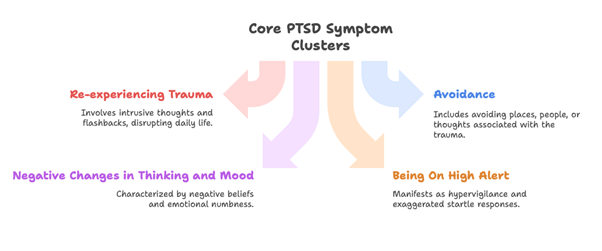
PTSD symptoms are organized into four main categories:
- Re-experiencing the Trauma (Intrusion Symptoms)
When the past invades the present
Your mind keeps bringing the trauma back, even when you don't want it to:
Flashbacks: The most disorienting symptom, feeling or acting as if the traumatic event is happening again. These aren't just memories; they're vivid, immersive re-livings where you feel transported back in time.
Traumatic nightmares: Recurring, distressing dreams about what happened. Many desperately seek relief, asking if there's "some magic way to get rid of nightmares."
Intrusive memories: Unwanted, upsetting memories that pop up out of nowhere, invading your thoughts without warning.
Intense distress at reminders: Psychological or physical reactions to anything that symbolizes or resembles the trauma, your body responding as if the danger is immediate.
Physical reactions: Sweating, heart racing, nausea, or feeling sick when triggered by reminders.
- Avoidance
When staying away feels like staying alive
- You deliberately try to stay away from anything that brings the trauma back:
- Mental avoidance: Avoiding thoughts, feelings, or memories about what happened, trying not to think or talk about the traumatic event.
- External avoidance: Staying away from places, people, activities, objects, or situations that trigger memories. This might mean not driving after a car accident, avoiding crowds after an attack, or isolating yourself socially.
- This protective mechanism can shrink your world, limiting your life to feel safe.
- Negative Changes in Thinking and Mood
When the world and yourself feel fundamentally different
- Memory gaps: Unable to remember important parts of what happened.
- Distorted beliefs: Persistent negative beliefs about yourself ("I'm worthless," "I'm bad") or the world ("Nowhere is safe," "No one can be trusted").
- Distorted blame: Blaming yourself or others for what happened in ways that don't match reality.
- Persistent negative emotions: Feeling sad, angry, fearful, guilty, or ashamed most of the time.
- Anhedonia: Losing interest in things you used to enjoy, nothing feels pleasurable anymore.
- Emotional detachment: Feeling disconnected from family and friends, as if there's an invisible wall between you and others.
- Emotional numbing: Persistent inability to experience positive emotions like happiness, satisfaction, love, or joy.
- Being On High Alert (Arousal and Reactivity)
When your body stays in "danger mode"
- Your nervous system remains activated as if threat is imminent:
- Hypervigilance: Always watching for danger, constantly scanning for threats, feeling unsafe even in objectively safe environments.
- Irritability and aggression: Getting angry or having outbursts easily, with little or no provocation, expressed as verbal or physical aggression.
- Exaggerated startle response: Jumping or being easily startled by loud noises, sudden movements, or unexpected touch.
- Reckless behavior: Taking dangerous risks or being self-destructive, as if your safety doesn't matter.
- Concentration problems: Difficulty focusing, thinking clearly, or making decisions.
- Sleep disturbances: Trouble falling asleep, staying asleep, or experiencing restful sleep.
For a PTSD diagnosis, symptoms must last more than a month and significantly interfere with your daily life.
Hidden Symptoms: Beyond Flashbacks:
Many individuals experience symptoms that aren't always highlighted in general descriptions, leading to feelings of invalidation. These "hidden" symptoms are particularly common and deserve recognition — we explore what emotional trauma really means in more depth separately:
- Physical Manifestations -
Your body keeps the score through:
- Chronic pain and muscle tension
- Digestive issues and gut problems
- Persistent fatigue and headaches
- Autoimmune conditions linked to prolonged stress response
- Emotional and Relational Struggles -
- Self-hatred and shame: A pervasive sense of being inherently flawed or "bad," leading to self-sabotage and difficulty accepting kindness.
- Difficulty with intimacy: Struggles with forming close bonds, fear of abandonment or being overwhelmed by closeness, challenges with emotional and physical intimacy.
- Fawn response: Trying to appease or please others to avoid conflict or danger, often sacrificing your own needs to keep others happy.
- Behavioral Adaptations -
- Hyper-productivity/workaholism: Using constant activity or achievement as a way to avoid internal pain or prove your worth.
- Emotional dysregulation: Rapid, intense shifts in mood, from extreme anger to deep sadness or numbness, often without clear triggers.
- Disconnection from Self -
- Dissociation: Feeling disconnected from your body, thoughts, feelings, or surroundings. This can range from mild detachment to severe episodes where reality feels unreal or you feel like you're watching yourself from outside your body.
Recognizing these broader symptoms is crucial for self-validation and seeking appropriate, trauma-informed care. Your experience is valid, even if it doesn't match the "textbook" description of PTSD.
Understanding Why: The Science Behind PTSD
Why the Past Feels Present: The Nature of Traumatic Memory
One of the most distressing aspects of PTSD is the overwhelming sense that the traumatic event is not truly over, but is somehow continuing to intrude into the present. People often describe feeling as though they’re “back there,” reliving the trauma in their body, even when they know they’re safe in the present. This feeling is not just a matter of memory, but a core symptom of the disorder that has deep psychological and neurological roots.
How Trauma Memories Differ from Regular Memories
Unlike ordinary memories, traumatic memories are stored in the brain differently. During trauma, the brain's normal processes for encoding and storing memories become overwhelmed. Rather than being integrated into a coherent life narrative with a clear sense of time and distance, these memories remain fragmented and emotionally charged, leaving sensory details, intense emotions, and physical sensations lingering in the mind and body.
This creates what trauma specialists call the "timelessness" of traumatic memory, a hallmark of PTSD where trauma feels psychologically "frozen" in the system. The brain loses its ability to see the traumatic event as fully in the past, causing people to get stuck in "then" rather than "now." What was once a biological survival mechanism becomes maladaptive in the aftermath of trauma.
What This Feels Like in Daily Life
This is why trauma doesn't feel like a regular memory. With normal memories, you can think about them and then move on. But with trauma, you feel like you're living it all over again. The part of you that's stuck in that moment is still carrying all those terrible feelings, so your body and mind keep reacting like the bad thing is still happening.
That’s why you might:
- Hear fireworks and feel your chest tighten like you’re under attack.
- Smell a hospital disinfectant and suddenly feel panic or nausea.
- Be in a safe relationship but still get flooded with fear or mistrust.
- Work yourself to death or try to please everyone to feel worthy
- Feel like you're two different people, one who's okay and one who's falling apart
It’s not that you’re “overreacting.” It’s that your brain and body are doing their best to protect you, but they’re stuck in the trauma loop.
The Sensory Reality of Trauma Memory
Even when you know you're safe, your nervous system acts as if the trauma is still happening. This is because traumatic memory is stored not just as narrative but as sensory fragments and body states, sounds, smells, images, impulses. The rational brain may say 'it's over,' but the survival brain doesn't listen.
Flashbacks and Intrusive Symptoms
Flashbacks are the most vivid example of this phenomenon. Flashbacks are vivid, involuntary re-experiences where it feels as if the trauma is happening all over again. These are not simply memories, but immersive relivings involving sights, sounds, smells, sensations, and even physical reactions like increased heart rate or sweating.
Flashbacks can be triggered by places, people, sounds, smells, or seemingly unrelated events that resemble aspects of the trauma. The body and mind respond to these triggers as though the threat is imminent, not historical.
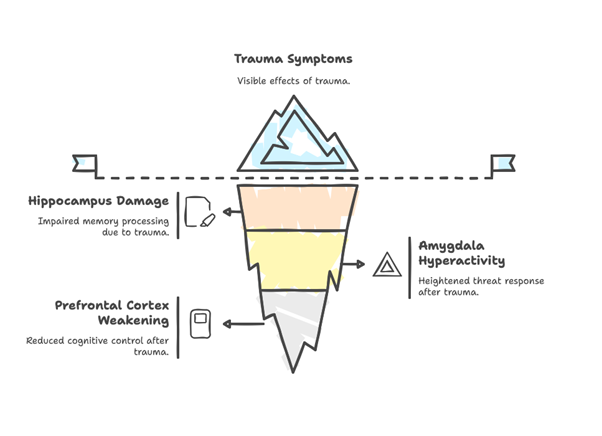
The Neurobiology of Trauma: How PTSD Changes the Brain
Structural Brain Changes
Research reveals that PTSD creates measurable changes in brain structure and function, supporting the idea that trauma is literally "stored" in the body's sensory and neural systems, leaving it’s imprints behind long after the traumatic event has passed away.
- The Memory Room (Hippocampus)
This part of your brain is like your filing cabinet, it organizes memories and helps you tell the difference between past and present. When trauma strikes:
- This area actually shrinks from being flooded with stress chemicals
- The "filing system" gets damaged, making it hard to store the trauma as a regular memory Hippocampus, is unable to differentiate past memories from present, recording information in a fragmented manner with no clear beginning, middle and end.
- That's why traumatic memories feel like they're happening right now instead of feeling like something from the past
- The Alarm System (Amygdala)
This is your brain's smoke detector, it's supposed to warn you about danger. But trauma makes this alarm system go haywire:
- Amygdala becomes hyper-alert, going off even when you're safe.
- It treats harmless things as threats (like a car backfiring sounding like gunshots)
- It stays on high alert 24/7, exhausting your whole system
- It makes fear memories extra-strong and hard to forget
- The Control Center (Prefrontal Cortex)
This is like your brain's wise, calm CEO who usually keeps everything under control. Trauma weakens this part:
- It gets smaller and less active
- You lose the ability to talk yourself down when panicked
- Your rational brain, Prefrontal Cortex, is unable to make sense of whatever happened.
- It becomes harder to think clearly or make good decisions
- You can't easily "turn off" the alarm system when it goes off
Your Brain's Chemical System Goes Haywire
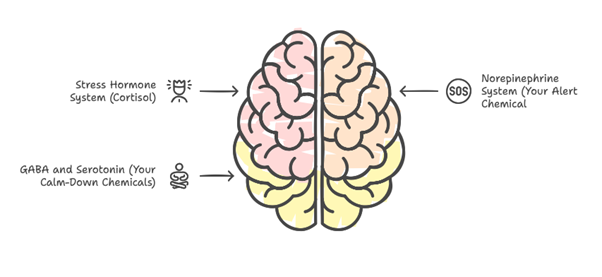
PTSD disrupts the delicate balance of brain chemicals that control mood, alertness, and stress response:
- Stress Hormone System (Cortisol)
Surprisingly, people with PTSD often have unusually low cortisol levels most of the time. But when triggered:
- The stress system becomes hyperresponsive (like a car with very sensitive brakes)
- There's enhanced negative feedback sensitivity (the system overcompensates trying to shut itself off)
Your stress system is like an over sensitive thermostat, usually too low, but when activated, it spikes way too high, way too fast.
- Norepinephrine System (Your Alert Chemical)
Elevated noradrenergic activity means your brain's "alertness chemical" stays too high, causing:
- Hypervigilance: You keep you scanning for danger even when you're trying to sleep
- Enhanced fear memory encoding: Scary experiences get burned deeper into memory
- Increased nervous system reactivity: Your heart races, muscles tense, breathing quickens at the slightest trigger
It's like having too much natural caffeine in your system 24/7.
- GABA and Serotonin (Your Calm-Down Chemicals)
These chemicals usually help you feel peaceful and steady, but in PTSD they show inadequate regulatory effects:
- Reduced ability to calm overactive stress responses: Like having broken brakes on a car, you can't slow down even when you want to.
- Contributing to anxiety and mood symptoms: Without enough "calm-down" chemicals, anxiety and depression get worse
Your brain's natural tranquilizers stop working properly.
What Happens Inside Brain Cells
Recent cutting-edge research just discovered even tinier changes happening inside individual brain cells:
- Your Brain's "Quiet Down" Cells Stop Working:
Decreased communication from inhibitory neurons: Special brain cells that usually tell other cells to "calm down and stop firing" can't do their job properly in PTSD. It's like having a classroom where the teacher can't get the noisy students to be quiet
- Your Brain's Cleanup Crew Gets Confused:
Special cells called microglia are like janitors that usually clean up the damage in your brain. In PTSD, they show under-communication and can't coordinate properly with other cells. The brain's maintenance system breaks down
- Your Brain's Protective Barrier Gets Leaky:
Your brain usually has endothelial cells that form a protective wall around your brain that keeps harmful chemicals out. Trauma makes this barrier weaker. When they're not working right, stress chemicals that should stay out can sneak into brain tissue and cause more damage. It's like having a leaky roof that lets damaging chemicals drip into places they shouldn't go.
The Spectrum of Trauma: PTSD vs. Complex PTSD (C-PTSD)
While the core definition of PTSD covers a wide range of traumatic experiences, many individuals find that their symptoms don't fully fit the traditional mold, especially if their trauma was prolonged, repeated, or occurred in childhood. This often points to Complex PTSD (C-PTSD), a related but distinct condition.
What Causes C-PTSD
C-PTSD typically arises from chronic, prolonged, and inescapable trauma, often interpersonal in nature, such as:
- Childhood abuse or neglect
- Domestic violence
- Human trafficking
- Torture
- Long-term captivity
Unlike single-incident PTSD, C-PTSD often involves profound difficulties with emotional regulation, self-perception, relationships, and a persistent feeling of being "broken" or "worthless" 12. Many who struggle with C-PTSD report feeling invalidated in general support settings, experiencing a "trauma Olympics" dynamic where their pain feels minimized compared to others' 13. It's crucial to acknowledge that all trauma is valid, and the severity of its impact is not a competition.
Here's a simplified comparison of key differences:

While C-PTSD is not yet an official diagnosis in the DSM-5, it is recognized in the International Classification of Diseases (ICD-11) as "Complex Post Traumatic Stress Disorder". This distinction is vital for accurate diagnosis and tailored treatment approaches, validating the complex and often hidden struggles of those who've endured prolonged trauma.
This reddit user said,
“The simplest, most boiled-down answer is that PTSD forms from a singular traumatic moment… while C-PTSD forms from long-term trauma… growing up in an abusive household, being in a long-term abusive relationship, being bullied… and so on.”
Additional Symptom Clusters:
Beyond core PTSD symptoms, C-PTSD includes:
Emotional Dysregulation
- Difficulty controlling intense emotions
- Emotional numbness alternating with overwhelming feelings
- Chronic suicidal ideation or self-harm behaviors
Negative Self-Concept
- Persistent feelings of worthlessness, guilt, or shame
- Sense of being fundamentally different from others
- Belief that no one can understand their experience
Interpersonal Difficulties
- Chronic problems maintaining relationships
- Either complete avoidance of relationships or pattern of abusive relationships
- Persistent distrust and fear of abandonment
Dissociative Symptoms
- Depersonalization (feeling detached from oneself)
- Derealization (feeling that surroundings are unreal)
- Emotional flashbacks rather than visual memories
Causes and Risk Factors of PTSD
While a traumatic event is the trigger, not everyone exposed to trauma develops PTSD. Several factors can increase or decrease the risk:
Types of Traumatic Events
Any event involving actual or threatened death, serious injury, or sexual violence can lead to PTSD. Common examples include:
- Combat exposure 26
- Child physical or sexual abuse 27
- Sexual assault 28
- Serious accidents (e.g., car crashes) 29
- Natural disasters (e.g., hurricanes, earthquakes) 30
- Terrorist attacks 31
- Experiencing or witnessing violence (e.g., mugging, shooting) 32
- Severe medical events or procedures 33
Risk Factors
Biological & Psychological Factors
- Brain Chemistry: Trauma can alter brain structures and neurotransmitter systems involved in fear, memory, and stress response, such as the amygdala, hippocampus, and prefrontal cortex 34.
- Genetics: A family history of mental illness, particularly anxiety or depression, may increase vulnerability 35.
- Pre-existing Mental Health Conditions: Individuals with a history of anxiety, depression, or other mental health disorders may be more susceptible 36.
- Coping Style: Avoidant coping mechanisms or a tendency to ruminate can increase risk 37.
Social & Environmental Factors
- Lack of Social Support: Consistently identified as a significant risk factor. Feeling isolated or lacking a supportive network after trauma can hinder recovery 38.
- Subsequent Stressful Life Events: Experiencing additional stressors after the initial trauma can exacerbate symptoms 39.
- Poverty and Socioeconomic Status: Lower socioeconomic status can increase exposure to trauma and limit access to resources for recovery 40.
- Discrimination and Marginalization: The intersectionality of PTSD with marginalized identities (e.g., race, gender, sexual orientation, disability status, cultural background) is critical 41. Individuals from marginalized groups may experience:
- Increased exposure to trauma: Systemic racism, discrimination, and violence can be ongoing traumatic experiences 42.
- Barriers to care: Mistrust of healthcare systems, cultural insensitivity, language barriers, and lack of culturally competent therapists can prevent access to effective treatment 43.
- Compounded stress: The stress of discrimination can exacerbate PTSD symptoms and complicate recovery 44.
- Lack of validation: Experiences of trauma related to systemic issues may be dismissed or misunderstood by mainstream society 45.
- Childhood Trauma: A history of childhood abuse or neglect significantly increases the risk of developing PTSD later in life, often leading to C-PTSD 46.
Diagnosing PTSD: The Path to Understanding
The diagnosis of PTSD is primarily based on the DSM-5 criteria and involves a comprehensive clinical assessment by a qualified mental health professional 47. This process is crucial for accurate understanding and effective treatment planning.
Clinical Assessment
A mental health professional (such as a psychiatrist, psychologist, or licensed clinical social worker) will conduct an in-depth interview, asking about:
- The traumatic event(s) you experienced or witnessed.
- Your symptoms, their frequency, intensity, and how long they've been present.
- How these symptoms impact your daily life, relationships, and functioning.
- Your medical history, family history, and any other mental health concerns.
They may use standardized assessment tools or questionnaires to help evaluate the severity of your symptoms. It's important to be as open and honest as possible, even if it feels uncomfortable. This is a safe space for you to share your experiences without judgment.
Importance of a Qualified Professional
While self-diagnosis is a common first step for understanding, it is not sufficient for a formal diagnosis or treatment plan. A trained professional can differentiate PTSD from other conditions with similar symptoms (e.g., anxiety disorders, depression) and determine the most appropriate course of action 49. If you're wondering "What symptoms did you notice first?" or "What are your symptoms of PTSD?", sharing these details with a professional is key to getting the right support 50.
Treatment Options for PTSD: A Path Towards Healing
The good news is that PTSD is treatable, and many people are able to get to a point where they no longer qualify for the diagnosis or can manage their symptoms effectively 51. The primary and most effective treatments involve a combination of trauma-focused psychotherapies and/or specific medications 52.
The Core of Healing: Trauma-Focused Psychotherapies
Therapy is often the cornerstone of PTSD treatment. Many wonder, "Can someone explain what therapy actually does?" 53 In trauma-focused therapy, you work with trained therapists at Coach For Mind to process the traumatic memories and learn coping skills. It's not about forgetting the trauma, but about integrating it into your life story in a way that reduces its power over you. This process can be incredibly difficult and emotionally exhausting; as many share, it can leave you feeling "physically... like I've been hit by a car, and in addition to the pain I'm just so exhausted" 54. This is a normal part of the healing process, and preparing for this emotional toll is important.
First-Line Treatments:
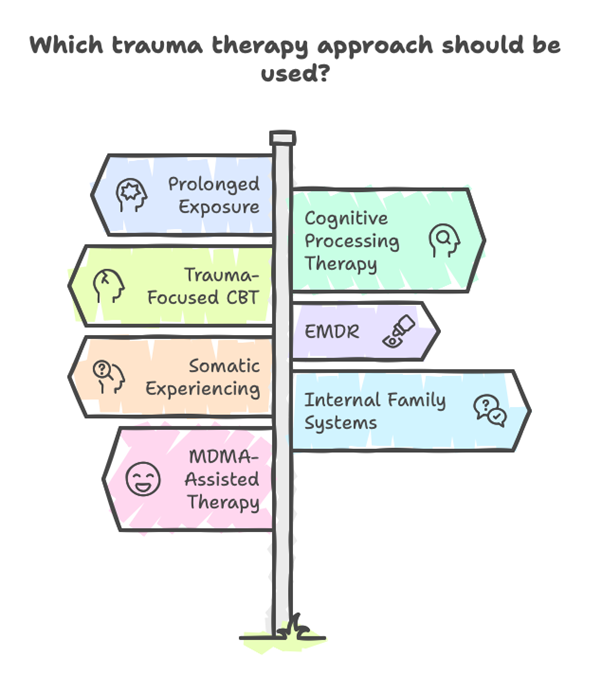
The American Psychological Association and VA/DoD Clinical Practice Guidelines strongly recommend three primary interventions:
- Prolonged Exposure (PE):
- Involves gradual exposure to trauma-related memories, feelings, and situations that you have been avoiding. This can include talking about the trauma in detail or revisiting safe places that you've avoided.
- 41-95% of participants lose their PTSD diagnosis by treatment end
- Meta-analyses show PE-treated patients fare better than 86% of control patients.
- Cognitive Processing Therapy (CPT):
- In CPT, our therapists at Coach For Mind focus on changing distorted thoughts and beliefs about the trauma. You learn to challenge unhelpful thoughts and develop a more balanced perspective
- 30-97% of participants no longer meet PTSD criteria after CPT treatment
- Maintains effectiveness at 5 and 10-year follow-up
- Trauma-Focused Cognitive Behavioral Therapy:
- In Trauma-Focused CBT, our therapists at Coach For Mind combine exposure work with cognitive restructuring
- 61-82.4% of participants lose PTSD diagnosis
- Shows superior outcomes when combining multiple CBT components
Second-Line Interventions
- Eye Movement Desensitization and Reprocessing (EMDR):
Involves focusing on a traumatic memory while simultaneously engaging in bilateral stimulation (e.g., eye movements, tapping). This process helps the brain reprocess memory, reducing its emotional intensity. EMDR has gained significant recognition as an effective trauma treatment. Dr. van der Kolk's research shows 78% of adult trauma survivors were "completely cured" using EMDR. The bilateral stimulation appears to help the brain process traumatic memories more adaptively. Our therapists at Coach For Mind can help you process traumatic memories.
As this reddit user quoted,
“EMDR did work on me and I only needed about 6–8 sessions. It didn’t cure me but it helped unlock memories which I was able to process in safe environments. This is ultimately what’s healing me… let a trained therapist act like a personal guide for the process. Get to know your therapist so you get comfortable with him/her to the fullest. That will help greatly.”
- Somatic Experiencing (SE):
This body-oriented approach treats PTSD by focusing on releasing trapped trauma energy from the body through various techniques, helping to regulate the nervous system. Preliminary evidence suggests positive effects on PTSD-related symptoms and improvements in both traumatized and non-traumatized samples. For a fuller picture of body-based trauma work, including what sessions involve, what the evidence does and does not show, and what it costs, see our guide to somatic therapy in India. Key principles include:
- Grounding techniques to maintain present-moment awareness
- Breathwork to regulate the nervous system
- Progressive muscle relaxation to release trauma-stored tension
- Body awareness practices to reconnect mind and body
- Neurofeedback:
Dr. van der Kolk identifies neurofeedback as "the biggest missing link" in trauma treatment. This approach trains specific brainwave patterns to help regulate:
- Attention and focus difficulties
- Agitated brain states
- Hyperarousal patterns
- Overall nervous system functioning
- Internal Family Systems (IFS):
Dr. Richard Schwartz's IFS model offers a revolutionary approach based on the principle that the mind is composed of different "parts" (e.g., wounded parts, protective parts) and that "there are no bad parts". This framework views PTSD symptoms as protective strategies developed by different internal "parts" and focuses on:
- Accessing the undamaged Self that possesses natural healing wisdom
- Understanding protective strategies without pathologizing them
- Healing exiled parts that carry traumatic burdens
- Integrating the internal system under Self-leadership
At Coach For Mind, our IFS therapy for trauma page goes deeper into how this parts-based approach works specifically with trauma, without requiring a detailed retelling of what happened.
Finding the "right fit" therapist is crucial. Look for someone with specialized training in trauma-informed care and specific modalities like EMDR or CPT. Don't be afraid to ask about their experience and approach during an initial consultation.
- Psychodynamic Therapy:
Psychodynamic therapy for PTSD explores how past experiences, especially from childhood, shape present patterns of thinking, feeling, and relating. Rather than focusing only on symptom reduction, it helps you understand the deeper meaning of your symptoms and how past trauma continues to influence your relationships, self-image, and coping mechanisms — building insight that supports lasting, personality-level change. It is particularly well-suited to complex or developmental trauma. Our therapists at Coach For Mind draw on psychodynamic approaches alongside EMDR and somatic work where it fits a client's needs.
- MDMA-Assisted Therapy:
Recent breakthrough research shows remarkable promise for MDMA-assisted psychotherapy. Dr. van der Kolk's largest study ($62 million, 180 participants) found that individuals who "never felt safe with anybody", traditionally the most difficult population to treat, "did exceptionally well on MDMA".
MDMA appears to facilitate:
- Deep self-acceptance and compassion
- Processing traumatic experiences with reduced fear
- Integration of fragmented memories
- Healing of attachment wounds
Medication for PTSD
Medications can help manage symptoms, especially when combined with therapy.
- SSRIs and SNRIs: Selective Serotonin Reuptake Inhibitors (SSRIs) and Serotonin-Norepinephrine Reuptake Inhibitors (SNRIs) are often the first-line medications for PTSD. They help regulate mood and reduce symptoms like depression, anxiety, and irritability 61.
- Prazosin: This medication, typically used for high blood pressure, can be prescribed off-label to help reduce nightmares and improve sleep in some individuals with PTSD 62.
- Benzodiazepines: While sometimes used for acute anxiety, many experts strongly caution against or recommend not taking benzodiazepines for long-term PTSD treatment due to their limited effectiveness for core PTSD symptoms, potential for dependence, and risk of worsening trauma processing 63.
Emerging Treatments: A Nuanced Discussion
There's growing interest and ongoing research into novel treatments for PTSD:
- Psychedelics (MDMA, Psilocybin): MDMA-assisted therapy for PTSD has shown promising results in clinical trials, with some studies indicating significant symptom reduction 64. Psilocybin (from "magic mushrooms") is also being researched for its potential therapeutic effects 65.
- Crucial Considerations & Risks: It's vital to understand that these are not recreational drugs for self-medication. They are being studied in highly controlled, therapeutic settings with trained professionals. Legal status varies widely, and unsupervised use carries significant risks, including psychological distress, exacerbation of symptoms, and potential for misuse 66. These treatments are not widely available and should only be considered under strict medical and legal guidance within clinical trials or approved frameworks.
- Cannabis: While some individuals report using cannabis to manage PTSD symptoms, the scientific evidence for its efficacy as a primary PTSD treatment is limited and mixed 67. Some research suggests potential benefits for sleep and anxiety, but other studies indicate it could worsen symptoms like dissociation or increase risk for psychosis in vulnerable individuals 68. Its legal status and recommendations vary, and it should be approached with caution and under medical supervision.
Coping Strategies for Daily Life with PTSD
Beyond formal treatment, integrating practical coping strategies into your daily life is essential for managing symptoms and building resilience.
- Practical Routines & Environmental Adjustments:
- Structure your day: Establish predictable routines for meals, sleep, and activities. This can provide a sense of control and safety.
- Create a safe space: Designate a physical space in your home where you feel calm and secure.
- Sensory regulation: Use calming sensory inputs (e.g., soft blankets, gentle music, essential oils) to self-soothe when overwhelmed.
- Digital Hygiene: Be mindful of your online consumption. Excessive exposure to distressing news, online hate speech, or digital terror can exacerbate symptoms. Curate your social media feeds and limit news intake.
- Mindfulness & Grounding Techniques:
- 5-4-3-2-1 technique: Identify 5 things you can see, 4 things you can feel, 3 things you can hear, 2 things you can smell, and 1 thing you can taste. This helps bring you back to the present moment.
- Deep breathing: Practice slow, deep breaths to activate your parasympathetic nervous system and calm your body.
- Mindful movement: Gentle activities like yoga or walking can help you reconnect with your body and release tension.
- Self-Compassion & Self-Validation:
- Journaling: Write down your thoughts and feelings without judgment. This can be a powerful tool for processing emotions and gaining insight.
- Affirmations: Develop positive affirmations that counter negative self-talk (e.g., "I am worthy of healing," "My feelings are valid").
- Acknowledge your progress: Healing is not linear. Celebrate small victories and acknowledge how far you've come, even if it feels like a struggle.
- Managing Nightmares:
- Imagery Rehearsal Therapy (IRT): This is often the "magic way" people seek to get rid of nightmares. It's a specific CBT technique where you rewrite the script of your recurring nightmare with a positive or neutral ending and rehearse it daily while awake 78.
- Sleep hygiene: Maintain a consistent sleep schedule, create a relaxing bedtime routine, and avoid caffeine/alcohol before bed 79.
- Technology as a Tool for Healing:
- Telehealth: Online therapy platforms have made mental health care more accessible, especially for those with mobility issues or living in remote areas 80. VR Therapy: Virtual reality exposure therapy is being researched and used to safely expose individuals to trauma triggers in a controlled environment, helping to reduce avoidance 81.
- Mental Health Apps: Many apps offer guided meditations, mood tracking, coping skills, and even digital CBT programs that can supplement traditional therapy 82.
Navigating the Healthcare System for PTSD
Accessing appropriate care for PTSD can be a significant challenge, often involving long waiting lists, insurance complexities, and difficulty finding qualified professionals.
- Finding Qualified Therapists:
- Specialization: Look for therapists who explicitly state their expertise in trauma, PTSD, or C-PTSD. Ask about their training in evidence-based modalities like EMDR, CPT, or PE.
- Referrals: Ask your primary care physician for referrals. Online directories (e.g., Psychology Today, GoodTherapy, EMDRIA) allow you to filter by specialization, insurance, and location.
- Consultation calls: Many therapists offer a brief, free consultation call. Use this opportunity to ask questions, assess their approach, and determine if you feel a sense of safety and connection 83.
- Understanding Insurance & Costs:
- Verify coverage: Contact your insurance provider to understand your mental health benefits, deductible, co-pays, and out-of-network options.
- Sliding scale: Many therapists offer sliding scale fees based on income. Don't hesitate to ask.
- Community mental health centers: These often provide lower-cost services.
- Managing Waiting Lists & Access Barriers:
- Multiple inquiries: Reach out to several therapists or clinics simultaneously.
- Online resources: Utilize reputable online resources and apps as interim support while waiting for in-person appointments.
- Advocacy: If you face significant barriers, consider reaching out to patient advocacy groups or local mental health organizations for guidance.
Support for PTSD: Finding Your Community
The desire for connection and understanding is profound for those with PTSD, yet many find traditional support groups challenging. While the power of group work lies in "seeing your story in someone else’s" and fostering self-compassion, many report that "support groups take more from me than give" or that "severely wounded people learn this and eventually accept that they are there to comfort others" 84. This highlights a critical need for effective, trauma-informed group dynamics.
The Nuance of Support Groups
- Why they are sought: Support groups can be "THE WAY to explore relational dynamics," "super important to heal trust and safety issues," and help "keep you grounded and not isolated" 85. The shared experience can reduce shame and build camaraderie, showing you "that you truly are not alone" 86.
- Why they can be challenging:
- "Trauma Dumping": Unregulated sharing can lead to individuals feeling overwhelmed or re-traumatized, especially if there's no clear facilitation 87.
- "Trauma Olympics": The tendency for individuals to compare traumas, leading to feelings of invalidation ("my trauma isn't as 'bad' as others") or competition 88.
- Unequal participation: Groups can be "dominated by... the most talkative people who are typically the healthiest," leaving those with more severe symptoms struggling to share or receive support 89.
- What makes an effective group:
- Strong, trauma-informed facilitation: A skilled facilitator can manage group dynamics, ensure equitable sharing, prevent re-traumatization, and foster a safe environment 90.
- Clear guidelines and boundaries: Establishing rules for respectful communication, confidentiality, and managing triggers is essential.
- Specialized groups: Groups tailored to specific types of trauma (e.g., childhood abuse, sexual assault, military combat) or specific conditions (e.g., C-PTSD, dissociative disorders) can provide a more validating and relevant environment 91.
- Focus on coping and healing: While sharing is important, effective groups also integrate practical coping strategies and focus on forward movement rather than solely rehashing trauma.
The Role of Caregivers & Family Members
PTSD doesn't just affect the individual; it impacts their entire support system. Caregivers and family members can experience secondary trauma, exhaustion, and feelings of helplessness.
- Education: Understanding PTSD symptoms and how they manifest can help family members respond with empathy rather than frustration.
- Self-Care for Caregivers: It's vital for caregivers to prioritize their own mental and physical health, as compassion fatigue is common 93.
- Support Networks for Caregivers: Seeking out support groups or therapy specifically for caregivers of individuals with mental illness can provide a much-needed outlet and practical advice 94.
- Communication: Learning effective communication techniques (e.g., active listening, setting boundaries) can improve relational dynamics and reduce conflict 95.
The Long-Term Recovery Journey: Post-Traumatic Growth & Relapse Prevention
The journey with PTSD is often described as complex and non-linear. While some believe "there is no cure for PTSD" and that "I will always have PTSD," others attest that "things get better" and that "healing doesn’t happen overnight, but it does happen". This duality reflects the reality that recovery isn't about erasing the past, but about learning to live with its impact, integrate the experience, and build a meaningful life.
Natural Recovery Trajectories
Research from the WHO World Mental Health surveys reveals encouraging recovery patterns:
- 20% of cases recover within 3 months
- 27% recover within 6 months
- 50% recover within 24 months
- 77% recover within 10 years
The steepest recovery curve occurs in the first 6 months, suggesting that early intervention may be particularly beneficial.
Realistic Expectations: Healing vs. Cure
It's more accurate to speak of "healing" or "recovery" rather than a "cure." Healing means:
- Symptom reduction: Symptoms become less frequent and intense.
- Improved functioning: You can engage more fully in work, relationships, and daily activities.
- Increased resilience: You develop better coping mechanisms for future stressors.
- Integration of trauma: The traumatic event becomes a part of your life story, but no longer defines or controls you 97.
Post-Traumatic Growth (PTG)
Paradoxically, many individuals who navigate significant trauma report experiencing Post-Traumatic Growth (PTG). This is not to say trauma is "good," but that the struggle can lead to positive psychological changes, including:
- Greater appreciation for life: A deeper sense of gratitude for everyday moments.
- Stronger relationships: Increased empathy and compassion, leading to more profound connections.
- New possibilities: A re-evaluation of life priorities and discovery of new paths or interests.
- Increased personal strength: A recognition of one's own resilience and ability to overcome adversity.
- Spiritual change: A deeper sense of meaning or purpose 99.
Relapse Prevention Strategies
Even after significant progress, symptoms can resurface, especially during times of stress or re-exposure to triggers.
- Identify early warning signs: Learn to recognize the subtle cues that indicate your symptoms might be escalating.
- Maintain coping strategies: Continue to practice the self-care and coping techniques you've learned.
- Stay connected to support: Maintain contact with your therapist, support group, or trusted friends/family.
- Booster sessions: Consider occasional "booster" therapy sessions to reinforce skills and address any new challenges 100.
- Crisis plan: Develop a plan for what to do if symptoms become overwhelming, including contact information for your therapist or a crisis hotline 101.
The Broader Impact: Societal & Economic Effects of Untreated PTSD
The individual suffering caused by PTSD ripples outwards, impacting families, communities, and society at large. Untreated PTSD can have significant economic and societal consequences:
- Employment: Individuals with PTSD may struggle with maintaining employment due to concentration difficulties, irritability, avoidance, or physical symptoms, leading to lost productivity and income 102.
- Homelessness: PTSD is a significant contributing factor to homelessness, particularly among veterans, as it can disrupt social support networks and lead to substance use or difficulty maintaining stable housing 103.
- Justice System: Untreated PTSD can contribute to increased rates of substance abuse, aggression, and involvement with the criminal justice system 104.
- Healthcare Costs: The long-term physical and mental health complications of untreated PTSD lead to higher healthcare utilization and costs 105.
Addressing PTSD is not just a matter of individual well-being; it's a public health imperative that requires systemic change, increased access to trauma-informed care, and policies that support vulnerable populations.
Conclusion: Embracing the Path Forward
Living with PTSD is an immense challenge, but it is not a life sentence. The journey to healing is deeply personal, often arduous, and rarely linear. Yet, with the right understanding, effective treatment, and compassionate support, profound recovery and even post-traumatic growth are within reach.
Remember, your experiences are valid, your pain is real, and your capacity for healing is immense. By seeking knowledge, engaging in evidence-based therapies, practicing self-compassion, and building a supportive community, you can reclaim your life from the grip of trauma. The path forward may be winding, but every step taken towards understanding and healing is a testament to your incredible strength and resilience. If you are ready to begin, working with a trauma-informed psychologist online is one of the most effective first steps you can take. If your trauma history includes emotional dysregulation, unstable relationships, or identity disturbance, a BPD assessment may also be worth exploring alongside trauma therapy.
What Our Clients Say
"After my accident, I couldn't even ride in a car without panic. EMDR helped me process it in a way I never thought possible. Now I drive regularly and the memories don't have the same power over me."
"Years of childhood trauma left me feeling broken. Somatic therapy helped me realize how much of it was stored in my body. Learning to feel safe in my body again changed everything."
"I was in an abusive relationship for years. Psychodynamic therapy helped me understand why I stayed and how to break free from those patterns. I feel like I finally understand myself."
Based in Gurgaon?
See a PTSD Therapist in Gurgaon In-Person
Our trauma therapists in Gurgaon specialise in PTSD treatment using EMDR and Somatic Therapy at Sector 70 — soundproof rooms, free parking, weekend slots available.
FAQs
While some people experience a complete remission of symptoms, it's more accurate to think of PTSD recovery as healing rather than a cure. Research from the WHO World Mental Health surveys shows that with proper treatment, approximately 30% of people fully recover, while 40% experience significant improvement with mild to moderate residual symptoms. Many individuals no longer meet the diagnostic criteria after treatment, while others learn to manage symptoms effectively and live fulfilling lives. Up to 40% of people with PTSD recover within one year naturally, and these rates improve significantly with evidence-based treatment.
Evidence-based trauma-focused therapies such as Prolonged Exposure (PE), Cognitive Processing Therapy (CPT), Trauma-Focused CBT, and EMDR are considered the gold standard. Recent meta-analyses show these treatments produce large effect sizes and sustained improvements. The "best" treatment often depends on the individual, their history, and their readiness for different approaches. Research indicates that patient preference plays a crucial role in treatment success - those who receive their preferred treatment show better adherence and outcomes.
The length varies significantly by individual and treatment type. Research from the WHO World Mental Health surveys reveals encouraging natural recovery patterns:
- 20% of cases recover within 3 months
- 27% recover within 6 months
- 50% recover within 24 months
- 77% recover within 10 years
For evidence-based treatments, research indicates that on average 15 to 20 sessions are required for 50% of patients to recover. Specific trauma-focused therapies typically range from 8-15 sessions:
- EMDR: Average 6-12 sessions, with 84-90% of single-trauma victims no longer having PTSD after only 3 sessions
- PE: 8-15 sessions of 90 minutes (though 60-minute sessions are equally effective)
- CPT: Usually 12-16 sessions
The steepest recovery curve occurs in the first 6 months, suggesting that early intervention may be particularly beneficial. Intensive "massed" treatment approaches can achieve recovery in as little as 10-12 days.
Not always. Some therapies like Prolonged Exposure involve discussing the trauma in detail, but others like EMDR, Somatic Experiencing, or Internal Family Systems (IFS) don't require you to give explicit details. Our therapists at Coach For Mind will tailor the approach to what feels safe for you. EMDR, for instance, allows you to process trauma without necessarily verbalizing all the details, while somatic approaches focus more on body sensations and nervous system regulation.
Not everyone needs medication. Many people recover with therapy alone. However, medications can be helpful, especially when combined with therapy. Research shows that SSRIs and SNRIs have significant efficacy for PTSD symptoms:
- SSRIs show moderate effect sizes (SMD = -0.33) compared to placebo
- Specific medications like paroxetine and sertraline are FDA-approved for PTSD
- However, only about 60% of PTSD patients respond to SSRI treatment, with just 20-30% achieving complete remission
- Prazosin can help with nightmares and sleep disturbances
Insufficient evidence exists to determine whether SSRIs/SNRIs or trauma-focused psychotherapy are more effective, so patient preference and shared decision-making should guide treatment choices.
While working with a trained trauma therapist is ideal, there are still options:
- Telehealth platforms for lower-cost access - research shows no significant differences in outcomes between in-person and telehealth delivery
- Sliding-scale therapy or community mental health centers
- Evidence-based self-help strategies like grounding, journaling, and mindfulness
- Trauma-informed apps and support networks while waiting for professional help
- Group therapy options, which show significant effectiveness and may be more accessible and affordable
Research shows group therapy can be effective for PTSD. Research demonstrates significant improvements in PTSD symptoms with group treatments, with exposure-based cognitive-behavioral group therapy showing particularly strong evidence. However, effectiveness depends on several factors:
Benefits of well-structured groups:
- 50% of participants typically show treatment response
- 77% treatment response rates in some group exposure protocols
- Comparable to individual therapy outcomes in many cases
Important considerations:
- Look for trauma-informed groups with strong facilitation and clear boundaries
- Groups focusing on coping strategies rather than just trauma sharing are more effective
- Gender and trauma type are important moderators of group treatment outcomes
- Without proper structure, groups can sometimes feel overwhelming or lead to "trauma dumping"
PTSD often results from a single traumatic event (e.g., accident, natural disaster, assault), while C-PTSD arises from repeated, prolonged trauma (e.g., childhood abuse, neglect, domestic violence).
C-PTSD includes all PTSD symptoms plus additional difficulties in:
- Emotional regulation (intense rage, emotional numbness)
- Self-concept (deep shame, worthlessness, self-hatred)
- Interpersonal relationships (attachment difficulties, fear of intimacy)
C-PTSD is recognized in the ICD-11 but not yet in the DSM-5. Treatment principles overlap, but C-PTSD often requires longer, more holistic therapy focusing on self-worth, relationships, and nervous system regulation. Research shows C-PTSD is associated with more severe impairment and worse quality of life.
There's growing interest and ongoing research into novel treatments for PTSD:
Psychedelics (MDMA, Psilocybin): MDMA-assisted therapy for PTSD has shown promising results in clinical trials, with some studies indicating significant symptom reduction. Psilocybin (from "magic mushrooms") is also being researched for its potential therapeutic effects. MDMA appears to facilitate:
- Deep self-acceptance and compassion
- Processing traumatic experiences with reduced fear
- Integration of fragmented memories
- Healing of attachment wounds
Crucial Considerations & Risks: It's vital to understand that these are not recreational drugs for self-medication. They are being studied in highly controlled, therapeutic settings with trained professionals. Legal status varies widely, and unsupervised use carries significant risks, including psychological distress, exacerbation of symptoms, and potential for misuse. These treatments are not widely available and should only be considered under strict medical and legal guidance within clinical trials or approved frameworks.
Cannabis: While some individuals report using cannabis to manage PTSD symptoms, the scientific evidence for its efficacy as a primary PTSD treatment is limited and mixed. Some research suggests potential benefits for sleep and anxiety, but other studies indicate it could worsen symptoms like dissociation or increase risk for psychosis in vulnerable individuals. Its legal status and recommendations vary, and it should be approached with caution and under medical supervision.
Supporting someone with PTSD requires patience, understanding, and boundaries:
Education and Understanding:
- Learn about PTSD symptoms and how trauma affects the brain and behavior
- Understand that symptoms like hypervigilance, emotional numbing, or irritability are not personal
- Recognize that recovery is often non-linear with ups and downs
Communication Strategies:
- Practice active listening without trying to "fix" their problems
- Don't push them to share trauma details before they're ready
- Avoid minimizing their experience ("just get over it," "it could be worse")
- Ask how you can best support them rather than assuming what they need
Encouragement and Boundaries:
- Encourage, but don't force, professional treatment
- Respect their pace and readiness for different activities or social situations
- Maintain your own boundaries and don't enable avoidance behaviors that limit their functioning
Self-Care for Caregivers:
- Take care of your own mental health to prevent burnout and secondary trauma
- Consider therapy or support groups for caregivers of individuals with mental illness
- Maintain your own social connections and activities
- Remember that you cannot "cure" their PTSD - recovery is their journey
Research shows that social support is one of the strongest predictors of PTSD recovery, but caregivers who don't maintain their own wellbeing often experience compassion fatigue and become less effective supporters over time.
EMDR (Eye Movement Desensitization and Reprocessing) is a therapy that helps process traumatic memories. During EMDR, you focus on the traumatic memory while experiencing bilateral stimulation, usually through guided eye movements. This helps the brain reprocess the memory, reducing its emotional charge and changing how it affects you. EMDR is recognized as an evidence-based treatment for PTSD by the World Health Organization.
Somatic therapy recognizes that trauma is stored not just in the mind, but in the body. This approach uses body awareness, breath work, movement, and physical grounding techniques to release trauma held in the nervous system. By working with sensation and the body's response to threat, somatic therapy helps restore a sense of safety and embodiment.
Psychodynamic therapy for PTSD explores how past experiences, particularly early life events, influence current patterns of thinking, feeling, and relating. It helps you understand how trauma from the past continues to affect your present — your relationships, self-image, and coping mechanisms. By gaining insight into these patterns, you can begin to change them.