
Understanding Anxious Attachment: When Love Feels Like a Rollercoaster
TL;DR
- Anxious or Preoccupied Attachment is a learned relational pattern rooted in inconsistent caregiving, where warmth and emotional availability were unpredictable.
- You crave closeness deeply, but also feel easily unsettled by small shifts like a delayed text, a change in tone, or someone taking space.
- Your nervous system stays on high alert in relationships, scanning for signs of rejection (“Did I do something wrong?”).
- Common patterns include: overthinking, needing reassurance, protest behaviors, jealousy, emotional spirals, and tying your worth to how others respond to you.
- Healing begins with regulating the nervous system, learning to self-soothe, challenging the belief of not being enough, and reducing the need for constant reassurance.
- Secure communication (naming needs cleanly, pausing before reacting, setting boundaries) helps create healthier relational patterns.
- Therapy supports rewiring deep fears, strengthening self-worth, and creating an internal sense of safety, leading to earned secure attachment over time.
INTRODUCTION
Do you ever feel as if your heart is trapped on an emotional rollercoaster when it comes to relationships? One moment you’re soaring, deeply connected, convinced everything is finally right. The next, a fear of abandonment creeps in, sending you scrambling for reassurance. Maybe you’ve even been told you’re “too much,” “clingy,” or “needy.” That stings and it can leave you blaming yourself while aching for a love that feels both passionate and safe. If any of this resonates deep in your bones, please, truly know this: you are absolutely not alone, and this is not some inherent flaw in your character. This is a learned relational pattern, a deeply ingrained, almost automatic response to early life experiences, often known as Anxious (Preoccupied) Attachment - one of the most common and most misunderstood relationship patterns.
Here’s the hopeful truth: anxious attachment is learned, and that means it can also change. Your brain and nervous system are designed for connection and capable of rewiring toward security at any age. Understanding how this pattern begins, how it shows up today, and how therapy helps is the first step toward steadier, more fulfilling relationships.
What is Anxious (Preoccupied) Attachment?
Think of anxious attachment as a relationship blueprint built on hyper-vigilance to closeness and loss. People with this style deeply value connection and intimacy but often doubt whether others will stay. They may oscillate between craving closeness and fearing abandonment, sometimes without realizing it. For those of us who experience this, there's a tendency to lean heavily on our partners for validation and security, often leading to a cycle of intense emotional highs and crushing lows.
This style describes a deep yearning for intimacy paired with a persistent fear of rejection or abandonment. The nervous system stays on high alert, scanning for any sign a loved one might pull away. That’s why ambiguous signals - a delayed text, a quiet partner can feel like proof that something is wrong.
At its core, anxious attachment is based on two beliefs about yourself and others:
- “I am not enough as I am.”
- “Others might leave when I need them most.”
These behaviors are not about being “too much.” They are survival strategies that once helped you stay connected to caregivers, even if inconsistently.
Anxious Attachment: Key Characteristics and Behavioral Patterns
So, as you read this, if a little voice inside is whispering, 'Is this me?' then take a moment. Here are some common traits and behavioral patterns we often see in individuals navigating Anxious Attachment:
- Intense Need for Closeness: Individuals with anxious attachment often have a powerful yearning for intimacy and emotional fusion. They may feel incomplete without a partner's presence and tend to prioritize relationships above other aspects of their lives. This can lead to a sense of being lost without a significant other.
- Pervasive Fear of Abandonment: A shadowy, deep-seated fear that loved ones will suddenly leave or emotionally withdraw is a hallmark of this style. This fear isn't always rational, and it can be triggered by minor events, such as a delayed text response or a partner's need for alone time. This constant "what if?" fuels a state of hypervigilance for signs of rejection.
- The "Relationship Pursuer": There's a strong inclination to be the one to initiate contact and chase after reassurance. When a partner seems distant or emotionally unavailable, someone with an anxious attachment style will often try to close the gap by over-texting, calling repeatedly, or seeking to "fix" the perceived distance.
- Protest Behaviors: When they feel threatened or unheard, individuals may engage in behaviors that are, at their core, desperate attempts to re-establish connection. These can include a flurry of calls or texts, emotional outbursts, or subtly provoking an argument to get a reaction. These behaviors are a cry for connection, even if they appear aggressive or needy.
- Emotional Hunger & "Clinginess": There's a persistent need for constant reassurance and validation. This intense emotional hunger can sometimes feel overwhelming to partners, who may misinterpret it as clinginess or neediness. However, it's less about wanting to control and more about a profound need to feel seen, loved, and secure.
- Difficulty with Self-Soothing: A key challenge is a genuine difficulty in regulating intense emotions without external help. Individuals with this style often rely heavily on others to calm their distress rather than having a robust internal toolkit for emotional comfort. They may repeatedly call friends or re-read old messages to soothe themselves when anxious.
- Low Self-Esteem & External Validation: A person's sense of self-worth often feels fragile and externally driven, deeply tied to how others perceive them. This fuels a constant, almost exhausting, need for approval and validation from the outside world, particularly from their partner.
- Jealousy and Possessiveness: This stems directly from the core fear of losing a connection. Individuals may be highly sensitive to perceived threats from rivals or a partner's independent activities, leading to heightened feelings of jealousy and possessiveness.
- The Painful Push-Pull Dynamic: This is a heartbreaking pattern where an individual may inadvertently push partners away with their intensity or perceived "neediness" in an attempt to get their needs met. They then feel the sting of abandonment and desperately try to pull the partner back, creating a painful and repetitive cycle.
Hallmarks in daily life

- Heightened Sensitivity to Cues of Distance: Individuals with anxious attachment are highly attuned to subtle shifts in a relationship. They can pick up on an unread message, a sigh, or a pause in conversation and immediately fill in the worst-case scenarios, assuming the worst.
- Approval Seeking & Over-Functioning: To "keep" someone's love, they may over-function in the relationship, constantly trying to fix problems, anticipate their partner's needs, or ignore their own needs in favor of their partner's.
- Fear of Conflict: Even in stable relationships, they may worry that any conflict means imminent rejection or abandonment, which can lead them to avoid disagreements or quickly concede to their partner's wishes.
- Intense but Short-Lived Highs: When they receive the reassurance they crave: a hug, a sweet message, a declaration of love, they feel a deep sense of relief and closeness. However, this feeling is often short-lived, as the underlying anxiety quickly returns with the next perceived trigger
- Self-soothing struggles: repeated checking of chats, calling multiple times, or replaying conversations to find safety.
The Roots of Anxious-Preoccupied Attachment: Tracing Back to Childhood
The foundations of anxious attachment are often found in early childhood experiences with caregivers. For instance, a child with an anxious-preoccupied attachment style may have had a parent who was loving but inconsistent, sometimes attentive and sometimes emotionally unavailable. This created a state of uncertainty and a powerful drive to gain the parent's attention and validation. As a result, the child learns to hyper-activate their attachment system whenever they feel a threat to a bond, a pattern that carries into adulthood relationships.
Picture, if you will, a small child whose primary caregiver was a bit like a flickering light: sometimes wonderfully warm and responsive, a beacon of comfort. But at other times? Distant, perhaps intrusive, or simply overwhelmed by their own struggles. This emotional inconsistency, this unpredictable 'on-again, off-again' presence, creates an environment where the child learns a powerful lesson: to get their fundamental needs met, they must amplify their distress signals, making themselves impossible to ignore. They learn to be hypervigilant, their little senses constantly scanning, monitoring the caregiver's every mood and flicker of availability.
This early, formative experience doesn't just pass; it deeply imprints itself on the developing brain, shaping the inner child's core beliefs about relationships and their self-worth. It plants the seeds for limiting beliefs that echo through the years: 'I'm not lovable enough, so I must earn it,'' or 'I am only worthy when I am pleasing others'. These deeply etched beliefs then become the unconscious blueprint, the very operating system, for adult relationships often recreate the very painful dynamics they desperately fear. And on a neurobiological level, this can mean an overactive stress response system becomes your default, making it feel incredibly difficult, almost impossible, to calm your own storm when triggers inevitably arise. Threat system on high alert: anxious attachment is associated with greater rejection sensitivity, lower self-esteem, and stronger negative affect when closeness feels at risk.
In many Indian households, extended family can add both support and complexity. Grandparents or older siblings may step in with warmth, while differing styles of responsiveness can create mixed signals. The result is often the same: a brilliant, adaptive child who grows into an adult wired to seek constant reassurance.
Understanding these traits is the first step toward change. While these patterns can be exhausting, they are not a life sentence. Therapy offers the kind of consistent, attuned relationship that many people missed early on. At Coach For Mind, we draw from several evidence-based approaches to meet you right where you are:
- Relational Psychodynamic Therapy: We pay close attention to what happens between you and your therapist in real time. If hesitation to trust, fear of conflict, or a sudden need for reassurance shows up in session, it becomes a gentle opportunity to explore old attachment patterns and to experience a different, steadier response.
- Attachment-Focused Therapy: These sessions help you recognize specific attachment triggers, name your needs clearly, and practice new, healthier responses while feeling supported. Over time, you begin to internalize that sense of secure connection and bring it into your relationships outside therapy.
- Cognitive-Behavioral Strategies (CBT): When anxious attachment feeds harsh self-talk or a negative view of others, CBT offers practical tools to identify distorted thoughts, challenge them, and replace them with more balanced, compassionate beliefs.
At Coach For Mind, every therapist is trained across these modalities and keeps the process collaborative and warm. Therapy can provide a space to unlearn the fear, develop self-soothing skills, and build a more stable internal compass. Individuals can learn to regulate their emotions, build a stronger sense of self-worth, and form healthier, more secure relationships. Whether you’re untangling relationship anxiety or building self-worth, we tailor the approach to your unique history and goals helping you move, step by steady step, toward the secure, fulfilling connections you deserve.
How Anxious Attachment Shows Up In Life
The Anxious-Avoidant Loop: A Common Dynamic
One of the most common and challenging patterns is the attraction to partners with an avoidant attachment style. This creates a relentless "anxious-avoidant loop," a dance where the anxiously attached person pursues intimacy, and the avoidantly attached person withdraws to maintain their independence. The anxious person's fear of abandonment is triggered by the avoidant partner's distance, leading to protest behaviors like excessive calls or emotional outbursts. In response, the avoidant partner's fear of engulfment is triggered by the pursuit, causing them to withdraw further. This cycle, while painful, can feel eerily familiar, as it often mirrors the inconsistent caregiving experienced in childhood. Breaking this cycle requires the anxious individual to choose partners who are more securely attached or committed to their own personal growth.
Broader Impact on Relationships
The influence of anxious-preoccupied attachment extends beyond romantic partnerships, subtly shaping all your relationships.
- Friendships: You might find yourself over-investing emotionally, feeling easily hurt by perceived slights, or struggling to set healthy boundaries due to a quiet fear that friends will drift away if your needs are expressed too openly.
- Family: This can manifest as difficulty in differentiating your own identity from family members, a constant need for approval, or feeling an overwhelming sense of responsibility for others' emotional states.
- Professional Life: You may tend to seek excessive praise or validation from superiors, find constructive criticism difficult to accept, and overwork yourself to gain approval, all driven by an underlying fear of job insecurity or rejection.
In all these areas, the core fear of rejection and the exhausting need for external validation can chip away at your capacity for genuine connection and personal well-being. Left unaddressed, anxious attachment can create a painful loop of pursuit–withdrawal dynamics, where the more you chase reassurance, the more partners pull back. But insight changes the script. When you recognize these patterns, you can pause, self-soothe, and choose a new response, allowing relationships to deepen instead of fray.
Breaking the Cycle: Managing Anxious (Preoccupied) Attachment
The journey to secure attachment is one of self-discovery, courage, and consistent practice. It's about shifting from reactive patterns to proactive, intentional choices.
Cultivating Self-Awareness and Emotional Regulation
The first courageous step is becoming a compassionate detective of your own inner world.
- Become a Trigger Tracker: Identify what specific situations or behaviors spark your anxiety. Is it a delayed text response, a partner's quietness, or a perceived lack of enthusiasm? Understanding your triggers is key.
- Listen to Your Inner Child: Acknowledge the old, vulnerable feelings that surface when you're triggered. Often, this is the voice of your younger self desperately seeking safety.
- Embrace Mindfulness: Learn to observe your emotions without judgment. Notice the physical sensations of anxiety in your body—the tightness, the racing heart. This creates a crucial space between stimulus and reaction.
- Build a Personal Self-Soothe Toolkit: Actively build a collection of activities that calm your nervous system, like deep breathing, quiet meditation, or nature walks. These tools reduce your reliance on others for emotional regulation.
- Journal Your Journey: Document your triggers, reactions, and the outcomes to identify recurring patterns and gain insights into your behaviors.
At Coach for Mind, our therapists blend evidence-based approaches with a warm, culturally aware perspective to help you build this self-awareness. Professional therapy offers the safe, consistent relationship many clients missed early on. So you book your free 15-minute Discovery Call with Coach For Mind today.
Building Unshakeable Self-Worth: Internal Validation
For those of us with an anxious-preoccupied style, self-worth often feels like a fragile, conditional thing, perpetually dependent on that elusive external validation. Shifting this deeply ingrained pattern isn't a quick fix; it requires intentional, heartfelt work, a true commitment to yourself:
- Bravely Challenge Those Limiting Beliefs: Actively question and begin to dismantle those insidious thoughts that whisper, 'I'm not good enough,' or 'I'm unlovable.' Pause and ask: Where did these truly come from? Are they actually accurate, here, now, at this moment? Consciously replace them with empowering, self-affirming truths.
- Gently Reduce Reassurance-Seeking Behaviors: Instead of that familiar urge to ask, 'Do you still love me?' or 'Are you mad at me?', practice the quiet strength of tolerating uncertainty. It's uncomfortable, yes, but vital. Learn to slowly, steadily trust your partner's consistent actions and genuine words over the frantic, often distorted, interpretations of your anxiety.
- Shine a Light on Your Strengths and Accomplishments: Start a gratitude journal specifically for your own incredible qualities, your small victories, your big achievements - no matter how insignificant they might seem at first glance. Celebrate your wins, truly own them.
- Set and Conquer Personal Goals: Dive into hobbies, pursue career aspirations, or embark on personal development journeys that bring you a deep, resonant sense of accomplishment entirely independent of others' opinions. This is how you forge profound, internal confidence, brick by beautiful brick.
- Embrace Radical Self-Compassion: Begin to treat yourself with the very same unconditional kindness, patience, and understanding you would instinctively offer a cherished friend. Acknowledge, gently, that you are doing your absolute best with the tools you have right now, and that this journey of growth is, by its very nature, a messy, beautiful process.
Mastering Authentic Communication: Speaking Your Needs
For those of us with an anxious-preoccupied style, self-worth often feels like a fragile, conditional thing, perpetually dependent on that elusive external validation. Shifting this deeply ingrained pattern isn't a quick fix; it requires intentional, heartfelt work, a true commitment to yourself:
- Bravely Challenge Those Limiting Beliefs: Actively question and begin to dismantle those insidious thoughts that whisper, 'I'm not good enough,' or 'I'm unlovable.' Pause and ask: Where did these truly come from? Are they actually accurate, here, now, at this moment? Consciously replace them with empowering, self-affirming truths.
- Gently Reduce Reassurance-Seeking Behaviors: Instead of that familiar urge to ask, 'Do you still love me?' or 'Are you mad at me?', practice the quiet strength of tolerating uncertainty. It's uncomfortable, yes, but vital. Learn to slowly, steadily trust your partner's consistent actions and genuine words over the frantic, often distorted, interpretations of your anxiety.
- Shine a Light on Your Strengths and Accomplishments: Start a gratitude journal specifically for your own incredible qualities, your small victories, your big achievements - no matter how insignificant they might seem at first glance. Celebrate your wins, truly own them.
- Set and Conquer Personal Goals: Dive into hobbies, pursue career aspirations, or embark on personal development journeys that bring you a deep, resonant sense of accomplishment entirely independent of others' opinions. This is how you forge profound, internal confidence, brick by beautiful brick.
- Embrace Radical Self-Compassion: Begin to treat yourself with the very same unconditional kindness, patience, and understanding you would instinctively offer a cherished friend. Acknowledge, gently, that you are doing your absolute best with the tools you have right now, and that this journey of growth is, by its very nature, a messy, beautiful process.
Mastering Authentic Communication: Speaking Your Needs
Learning to articulate your needs effectively is a transformative step.
- Embrace "I" Statements: Instead of accusatory language like, "You always ignore me," shift to owning your feelings: "I feel a sense of disconnection when I don't hear from you for a while."
- Be Specific About Your Needs: Move beyond vague requests like "I need more attention." Instead, state clearly: "I would appreciate a quick check-in text during the day."
- Communicate from a Place of Calm: Take a pause when triggered. Engage your self-soothing techniques before a conversation. A calm nervous system is your gateway to clearer, more effective communication.
- Set Healthy Boundaries: Boundaries are not walls to push people away; they are loving lines that define how you want to be treated. Learn the power of saying "no" and protecting your energy.
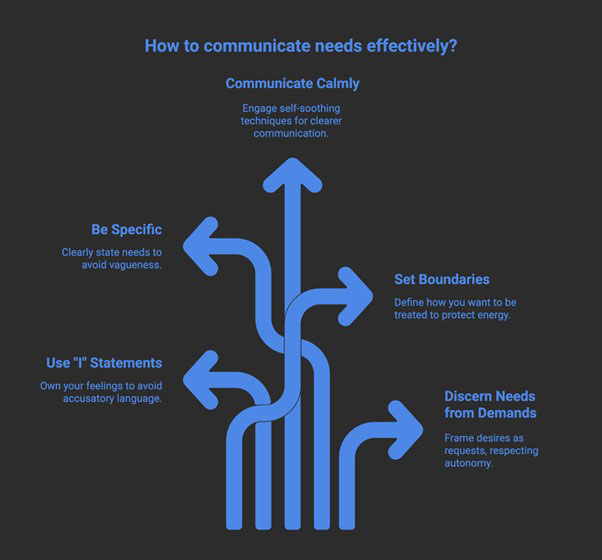
- Discern Needs from Demands: Frame your desires as invitations and requests, not ultimatums. Respect that your partner is a separate person with their own needs and autonomy.
Choosing Securely Attached Partners and Friends
While you can't change others, you can change who you choose to engage with. Breaking the anxious-avoidant cycle means seeking partners who demonstrate secure attachment traits.
- Seek Consistency: Look for partners who are dependable and emotionally available, providing a calm and steady presence.
- Cherish Clear Communication: Gravitate towards individuals who express their feelings directly and are open to discussing yours without games or guesswork.
- Observe Conflict Resolution: Pay attention to how they handle disagreements. Do they lean in to engage constructively or retreat and withdraw?
- Prioritize Emotional Maturity: Choose partners who take responsibility for their actions and are committed to their own personal and relational growth.
How Therapy Helps: From Anxiety to Earned Security
Sometimes, the journey feels too vast to navigate alone, and that's perfectly okay. Professional support can be an incredible catalyst, significantly accelerating your healing journey and offering a steady hand when you need it most. Therapy provides the steady, attuned relationship that many clients missed early on a secure base where you can safely explore fears and practice new ways of connecting. At Coach For Mind, therapists integrate evidence-based modalities tailored to your needs.
Individual Therapy
- Psychodynamic Psychotherapy: This approach gently, yet profoundly, explores the deep, often hidden origins of your attachment patterns, helping you truly understand the whispers of your inner child wounds and the limiting beliefs that, perhaps unconsciously, continue to drive your current behaviors.
- Emotionally Focused Therapy (EFT): EFT identifies the pursue–withdrawal cycle and teaches new, secure bonding behaviors.
- Internal Family Systems (IFS): Helps you meet the “parts” of you that panic or people-please with compassion, reducing inner conflict.
- Dialectical Behavior Therapy (DBT): A robust toolkit that teaches invaluable skills for emotional regulation, building distress tolerance, enhancing interpersonal effectiveness, and deepening mindfulness - all crucial for navigating and managing those intense, sometimes overwhelming, emotions.
Group Therapy and Support Networks
And sometimes, simply connecting with other brave souls who are walking a similar path can offer immense, soul-deep validation and a profound sense of 'I'm not alone' belonging. Group therapy, in particular, offers a wonderfully safe, microcosm space to gently practice new relational skills and receive compassionate, real-time feedback.
Couples Therapy
If you're in a relationship, couples therapy can be highly effective.
- Emotionally Focused Therapy (EFT): A powerful approach that guides couples to identify, understand, and ultimately break free from those painful, negative interactional cycles, fostering a much deeper emotional understanding and paving the way for truly secure bonding.
- Psychobiological Approach to Couple Therapy (PACT): This therapy delves into the fascinating neurobiological underpinnings of attachment, helping partners not just intellectually understand, but truly feel and respond to each other's nervous system responses, co-creating a truly "secure functioning" relationship.
I recently worked with Aisha and Rohan, a couple that came to therapy caught in a classic anxious–avoidant loop. When Rohan pulled back after a busy day, Aisha panicked and flooded him with texts; feeling pressured, he withdrew even more. With Emotionally Focused Therapy, they first named this unhelpful cycle then explored the feelings beneath it. Aisha’s fear of being abandoned and Rohan’s fear of being overwhelmed. With therapeutic work, Aisha learned to share her needs calmly like feeling anxious when she doesn’t hear from Rohan. And Rohan practiced offering small, steady reassurances. Over time, their reactive dance softened, and they built a steadier, more secure bond.
From Theory to Transformation: Your Phased Healing Roadmap
Understanding the theory, reading these words, is one vital step. But truly living it, putting it into the vibrant, sometimes messy, practice of your daily life? That's where the real alchemy of transformation begins. Here’s a phased roadmap, a gentle guide to illuminate your path:
Phase 1: Awareness & Compassionate Acceptance
- Goal: To gently, yet profoundly, recognize your attachment patterns without the heavy burden of judgment.
- Actions: Immerse yourself in learning (read, listen), journal your insights, vigilantly identify your triggers, and begin to truly understand the voice of your inner child. Crucially, accept that this is a deeply learned pattern, not a personal failing, but a powerful, open path to immense growth.
Phase 2: Cultivating Self-Soothe & Forging Internal Validation
- Goal: To steadily develop your innate capacity to self-soothe and consciously build an unshakeable sense of self-worth from deep within.
- Actions: Practice mindfulness daily, diligently implement your self-soothe techniques, bravely challenge those limiting beliefs, gently reduce reassurance-seeking behaviors, and intentionally focus on your personal achievements. This phase is all about the profound journey of becoming your very own, unwavering secure base.
Phase 3: Relational - Secure Connection
- Goal: To confidently, authentically, and joyfully navigate your relationships, communicate your truth with clarity, and actively foster truly secure, deeply resonant bonds.
- Actions: Practice those authentic communication scripts, courageously set clear boundaries, consciously choose partners and friends who genuinely align with secure attachment, and engage in therapy (individual or couples) as and when you feel the need. This phase is the beautiful unfolding of applying all your powerful internal work to the vibrant tapestry of your external relationships.
This phased approach, much like a trusted, practical workbook, offers you structured, tangible activities for deepening self-awareness, mastering emotional regulation, and gently, yet powerfully, shifting your behavioral patterns. It ensures you're not just 'hoarding theory' in your mind, but actively, beautifully, transforming the very fabric of your life.
Comparing Anxious-Preoccupied With Other Attachment Styles
Understanding how Anxious-Preoccupied Attachment dances with, and differs from, other attachment styles can really bring things into sharper focus, offering even greater clarity on your own unique experience:
| Feature | Anxious-Preoccupied | Dismissive-Avoidant | Fearful-Avoidant (Disorganized) | Secure |
|---|---|---|---|---|
| Core Desire | Intimacy, closeness, fear of abandonment | Independence, self-sufficiency, fear of engulfment | Intimacy but also fear of it, fear of being hurt/abandoned | Intimacy and independence, comfortable with both |
| Response to Stress | Protest behaviors, pursuit, clinginess | Withdrawal, disconnection, emotional shutdown | Erratic, unpredictable, push-pull, freezes | Seeks comfort, communicates needs, trusts partner |
| Self-Worth | Low, dependent on external validation | High (often defensively), self-reliant | Low, conflicted, feels unworthy | High, stable, internal |
| View of Others | Idealized, potential source of security | Distrustful, needy | Distrustful, scary, but also desired | Positive, trustworthy |
| Relationship Pattern | Push-pull, anxious-avoidant loop | Avoids intimacy, dismisses needs | Intense, unstable, hot-and-cold | Stable, balanced, interdependent |
| Childhood Experience | Inconsistent caregiving | Emotionally unavailable/rejecting | Frightening/frightened caregiver, trauma | Responsive, consistent, loving |
If you recognise yourself more in the "Dismissive-Avoidant" column — needing independence and pulling away when things get too close — you may relate more to understanding avoidant attachment. And if your experience feels like both at once — wanting closeness but also fearing it, in an unpredictable push-pull — that pattern is closer to disorganised attachment, often rooted in a more frightening or unpredictable early environment.
Your Next Step
Anxious-preoccupied attachment may feel like a lifelong sentence, but it’s truly a learned survival strategy—and learned patterns can be unlearned. With mindful self-work and the steady presence of a skilled therapist, you can rewrite the blueprint.
At Coach for Mind, we walk alongside you as you:
- understand the origins of your anxiety,
- practice self-soothing and inner validation, and
- build the skills for relationships that feel safe, mutual, and deeply satisfying.
If you’re ready to step off the rollercoaster and into relationships grounded in trust and calm, explore our relationship counselling in India services or reach out to begin.
Why CoachForMind?
Experienced Psychologists: We are a team of licensed RCI-registered clinical psychologists. Our team is well-experienced in various forms of therapy such as CBT, DBT, EMDR, and Narrative Therapy.
Personalized Approach: We are dedicated to treating our clients in the best-suited way, carefully curated as per the client's needs, and adhering to one-on-one, client-centered therapy.
Scientific Techniques: Our treatment plans and therapeutic methods are based on highly researched scientific findings such as CBT, DBT, EMDR and Narrative Therapy.
Quality service: We at CoachForMind ensure quality services in our treatment regime and therapeutic approaches. Our clients hold the most value to us, so we ground our techniques in empathy while maintaining professionalism.
Begin with a free 15-minute discovery call For more information, please visit our website or contact us directly at [email protected]
Written by Ms Akshita - Psychotherapist at Coach For Mind
FAQs
You didn’t choose this. Your nervous system learned a way to stay emotionally alive and safe in the only environment it knew. That pattern felt adaptive then and now it shows up as worry, hypervigilance, and needing lots of closeness and reassurance. What that usually looks like in childhood :
- Caregivers were sometimes loving but often inconsistent - warm one moment, cold or unavailable the next. You learned “I have to keep trying harder to get/keep love.”
- Or your caregivers were intrusive or overly enmeshed: they blurred boundaries and made your feelings the center of their stress, so you learned to be hyper-alert to their moods.
- Or there was unpredictability, shame, or abandonment (even emotional withdrawal). You learned that closeness is fragile and must be constantly defended.
Your nervous system becomes hyper-sensitive to cues of rejection. Tiny signals like a delayed text, a quiet evening, or perceived indifference can trigger an alarm that feels like loss. That alarm pushes you to get reassurance, to check, to text, or to try to “fix” the relationship. This pattern is about survival. When anxious clients come to therapy, we often see a mix of intense longing + fear of being too much.
How Coach for Mind helps:
- Control-Mastery: we look at the unconscious “plan” you developed (what you were trying to control or master by clinging) and notice the tests you run on others. Therapy becomes a place where those tests get a different answer.
- IFS (Internal Family Systems / parts work): we find the anxious “part” and learn to soothe instead of shame it.
- Somatic regulation: breathing, grounding, polyvagal-informed practices to calm the alarm system when it goes off.
Psychoeducation / attachment mapping: we build a simple map of triggers and protective responses so you stop blaming yourself.
You can grow more secure. It takes steady practice: learning to calm your body, to talk differently inside your head, and to test new ways of relating that disconfirm old fears.
Therapy can help by building a steady therapeutic relationship, mapping your triggers, and learning immediate regulation tools. Coach For Mind therapists use stabilization skills like distress tolerance, grounding practices, and boundary scripting to build tolerance for anxiety triggers. With deeper processing, we work to understand your testing patterns and the origins. Therapy also looks like relational experiments like trying small real-life changes (saying no, asking for support differently) and using therapy to repair when things don’t go perfectly. Building a “secure toolbox” and relapse-proofing with checklists and ongoing practice is the last step of coping.
- Polyvagal-informed work: trains your nervous system to stay regulated during closeness/uncertainty.
- Trauma-Focused CBT: processes specific painful memories that anchor your fear.
- EFT (Emotionally Focused Therapy) or attachment-focused relational therapy (for couples): builds secure bonding patterns with a partner.
They genuinely love each other. What looks like “using” is usually an attempt to keep a relationship alive - a survival strategy, not selfishness. However, when your alarms are constantly activated, you seek reassurance and closeness to calm down. If the partner responds, relief follows; if they don’t, panic escalates. From the outside, that seeking can look needy or demanding. But underneath is real care and fear of loss.
For a person with anxious attachment, the attachment system says: “If I get close enough, I’ll be safe.” So behaviors (texts, seeking reassurance) are means to an end: emotional safety. That doesn’t excuse harmful behavior, but it does explain the motivation compassionately.
How Coach for Mind helps the person with anxious attachment:
- Compassion-Focused Therapy (CFT): builds self-kindness and reduces shame about needing others.
- IFS: separates the “needy” part from your core Self so love can come from a calmer place.
- Communication skills training / DBT interpersonal effectiveness: teaches ways to ask for support that are clearer and less likely to push the partner away.
- Couples EFT or relational work: helps each partner see the anxious person’s fear without taking it personally and sets repair rituals.
Being anxious doesn’t make your love less real. Mauve the way you express it can create pressure. Therapy helps you keep the love while learning safer, more effective ways to ask for connection.
Yes, but it’s one of the most common and also one of the hardest pairings. It takes awareness, skill, and often therapy. The anxious person seeks closeness; the avoidant person pulls away when pressured. That creates a push–pull cycle: the more the anxious pursues, the more the avoidant distances, which fuels the anxiety and so on. Over time this becomes a self-fulfilling pattern.
What successful looks like:
- Both partners can notice the pattern and step out of automatic reactivity.
- The avoidant partner learns to stay present even when the other gets needy.
- The anxious partner learns to self-soothe and ask differently.
- They develop repair rituals and reliable patterns that replace chaos.
Well, it is challenging to support a part with an anxious attachment style. You can be loving and firm. Support looks like steady availability + clear boundaries. You don’t have to “fix” them just give dependable responses that reduce panic, and practice repair when friction happens.
Concrete things you can do:
- Validate quickly: “I hear that you’re scared right now; I’m here.”
- Give predictable structure: “I can’t talk for the next 30 minutes; I’ll call you at 7:30.” Predictability reduces alarm.
- Use repair language: “I’m sorry I was quiet; I didn’t intend to worry you.” Quick repair matters more than long explanations.
- Offer small, realistic reassurances: don’t overpromise; be truthful and steady.
- Set and hold boundaries calmly: “I can’t respond to messages at midnight, but I’ll reply first thing tomorrow.”
How Coach for Mind prepares partners to support effectively:
- Psychoeducation: we help you understand the difference between genuine need and reactive clutching, so you don’t take things personally.
- Communication coaching: role-play, practice “soft starts,” and develop scripts you both agree on.
- Couples therapy: we create a plan that balances reassurance with healthy limits.
Supporting someone anxious can feel pressured or resentful - that’s normal. We help you spot and manage those feelings so you stay compassionate without burning out. When your partner expresses fear, pause and say: “I see you’re scared. I’m here. Can you tell me what would help right now - a hug, a 5-minute talk, or a text?” Offer one of the options you can realistically provide.
Yes — very common. Attachment is best thought of as two dimensions (anxiety and avoidance) rather than single boxes. You can be high in anxiety and high or low in avoidance, producing different profiles (e.g., anxious-preoccupied, fearful-avoidant). You might cling in romantic relationships but be avoidant with friends, or secure with one parent and anxious with another. Context and the other person’s style shape your responses. Stress often pushes people into stronger insecure patterns that they otherwise don’t show.
How Coach for Mind helps you sort it out:
- Assessment: we may use validated measures and clinical interviews to map where you are on anxiety/avoidance.
- Tailored treatment plan: if you’re both anxious and avoidant, therapy focuses on calming the alarms and building trust while practicing closeness slowly (combining IFS, somatic work, and relational experiments).
People are complex — sometimes the same person will show very different behaviors across relationships. Therapy helps you notice the pattern rules that change by context.
For men, navigating the landscape of Anxious Attachment can feel like an especially challenging and isolating road. This is because societal pressures often, and unfairly, equate masculinity with stoicism, with a rigid emotional suppression. These traditional ideals can make it incredibly difficult, almost taboo, to acknowledge that very human emotional hunger or to openly express genuine needs, often leading to a painful surge of internal conflict and a profound sense of disconnection from oneself and others. But here's the powerful, liberating truth about redefining masculinity: it means recognizing that emotional vulnerability and authentic expression aren't weaknesses to be hidden, but profound, undeniable strengths to be embraced.
- Normalize Your Emotional Landscape: Understand, truly, that needing closeness, desiring reassurance, and feeling deeply are universal human experiences, not some 'feminine' trait or a mark of weakness. It's simply being human.
- Bravely Challenge Stoic Ideals: Give yourself permission to break free from the exhausting belief that you must always be a lone wolf, perpetually strong and self-sufficient. Remember, true, enduring strength blossoms from self-awareness and the profound courage to genuinely seek connection.
- Proactively Communicate Your Heart's Desires: Learn to articulate your deepest desires for intimacy and reassurance in a clear, open, and non-demanding way, rather than allowing them to fester into protest behaviors or passive aggression.
- Transform Jealousy into Insight: Instead of reacting impulsively to jealous feelings, take a breath. Explore the quiet, underlying fears that fuel them, and then, from a place of calm, openly communicate those fears to your partner.
- Forge a Secure Sense of Self from Within: Actively engage in pursuits and activities that genuinely foster self-worth and confidence, entirely independent of external validation. This is how you align with an emotionally intelligent, truly modern masculinity—one that is both strong and deeply felt.
What therapy helps with (Coach for Mind approach):
- Normalize and reframe vulnerability: we practice language that feels authentic and culturally resonant for you.
- Parts work (IFS): we meet the internal parts that say “be tough” and learn compassionate ways to hold them while also honoring your needs.
- Group or men’s therapy options: hearing other men talk about need reduces shame and shows different models of masculinity.
ACT, CFT, DBT: these therapies reduce shame, increase values-based action, and teach emotion regulation so you can act in ways aligned with who you want to be.


