
When Motherhood Feels Like a Shadow: Your Compassionate Guide to Understanding & Healing Postpartum Depression
The soft scent of a newborn and the tiny grasp of a hand. These are moments we're often told should be described as pure joy. But what if, for you, those vibrant colors are muted? Clouded with heaviness, persistent sadness, an overwhelming feeling you just can't quite explain? If the picture of "perfect motherhood" feels distant and unreachable, please know this: you are absolutely not alone. This isn't just the fleeting "baby blues". It might be postpartum depression (PPD), a debilitating condition that touches millions of new parents worldwide
This isn't your fault, not even a little bit. And more importantly, it's not your forever.
This comprehensive guide is meant to be your companion, a steady hand in the dark, meant to illuminate the path from shadow to a hopeful light. We'll unpack the overwhelming complexities of PPD, offering not just understanding, but how it shows up and what you can do. Our mission here is to empower you with knowledge, gently dismantle the stigma, and foster a community. A community where open, honestFat conversations about maternal mental health are encouraged, and celebrated as acts of courage. If you're ready to explore what treatment actually looks like, our guide to postpartum depression treatment walks through the full clinical picture, and our piece on the first year of motherhood explores why this stage is so emotionally vulnerable in general.
What Exactly is Postpartum Depression?
Postpartum depression (PPD) is a mood condition appearing during the perinatal period, affecting women after childbirth, and sometimes even during pregnancy. It's far, far more than just feeling a bit tired or a little down. PDD can be a very intense emotional state where sadness, emptiness, or overwhelm becomes so persistent that it interferes with daily life. It can hamper your connection and bonding with your baby.
Beyond the "Baby Blues"
It's crucial to differentiate PPD from "baby blues" to understand the gravity of the experience. Baby Blues are a common experience affecting up to 80% of new mothers. Typically making an appearance within the first few days after delivery, usually peaking around day five, and fading over two weeks. Symptoms are generally mild, a whirlwind of mood swings, easy tearfulness, a touch of irritability, and some anxiety. They are largely attributed to the dramatic hormonal shifts post-delivery and the severe exhaustion of childbirth.
Postpartum depression, however, is more severe and significantly longer-lasting. Symptoms emerge within the first year after childbirth, though often within the first few weeks or months. Unlike the baby blues, PPD does not simply resolve on its own and almost always requires support to overcome, whether that is therapy, community care, or medical treatment.
Clinical Definition and Diagnostic Criteria
Clinically, postpartum depression is categorized as a major depressive episode with peripartum onset. The Diagnostic and Statistical Manual of Mental Disorders (DSM-5) specifies that symptoms must begin during pregnancy or within four weeks following delivery. However, mental health professionals recognize that mothers might experience it later. With symptoms showing up sometimes up to a full year postpartum.
Some of the commonly noticed symptoms in PDD include:
- Persistent depressed mood, most of the day, nearly every day. Feeling like a heavy blanket is weighing you down and you can't shake off.
- Loss of interest or pleasure in all, or almost all, activities, even those once cherished.
- Significant changes in weight or appetite, could be a noticeable decrease or increase.
- Sleep-related difficulties, sleeping too much or difficulty falling asleep even when the baby sleeps
- Psychomotor restlessness, slowed movements, a restless inability to settle
- Profound fatigue or loss of energy, feeling extremely exhausted that rest does not fix
- Feelings of worthlessness or excessive guilt.
- Difficulty in thinking or concentrating, a mental fog that makes simple decisions feel huge, or a frustrating indecisiveness.
- Recurrent thoughts of death, recurrent suicidal ideation or attempts require urgent professional support.
For a diagnosis of postpartum depression, at least five of these symptoms must be present during a period of two weeks
Prevalence and Statistics: You Are Not Alone
The prevalence of postpartum depression is significant, making it a major health concern. Approximately 1 in 7 women experience PPD after giving birth. This number can be even higher in certain populations, such as young mothers or women with a history of depression or trauma.
And while often, our minds jump to mothers, fathers and adoptive parents can also experience similar depressive symptoms. Sometimes referred to as paternal postnatal depression or postpartum depression in adoptive parents. This powerfully highlights the immense challenges of new parenthood. While biological factors play a role, emotional and social changes due to parenthood can also cause PDD.The Many Faces of Postpartum Depression: Symptoms and Subtypes
-
Postpartum depression varies widely in intensity and in presentation. Symptoms look different for different people, sometimes obvious while sometimes subtle. This makes identifying it a huge challenge and can be often dismissed as just “stress”. Understanding the different ways PDD manifests is key to recognising it and finding your way back to yourself.
Emotional and Psychological Symptoms
These are often the most recognized and deeply isolating signs of PPD:
- Persistent Sadness and Emptiness: A heavy pervasive feeling of sadness, hopelessness, or an inability to feel joy even in happy moments.
- Severe Mood Swings: Rapid and intense shifts in mood, from extreme sadness to an uncharacteristic irritability or a surge of anxiety.
- Overwhelming Anxiety and Panic Attacks: Constant worry about the baby's health or safety, sometimes escalating into uncontrollable panic attacks.
- Irritability and Anger: Feeling easily agitated or experiencing uncharacteristic bursts of anger that leave you feeling guilty.
- Feelings of Guilt, Shame, or Worthlessness: Believing you're a "bad mother," feeling immense guilt about not loving your baby "enough," or feeling selfish.
- Difficulty Bonding with the Baby: Feeling detached, indifferent, or even a flicker of resentment towards the infant, which often exacerbates that already crushing guilt, creating a painful spiral.
- Thoughts of Self-Harm or Harming the Baby: These intrusive thoughts can be extremely distressing. They may not always mean you wish to act on them, making them symptoms not reflections of who you are. This would require immediate professional support.
A lot of times, new parents fear opening up about such experiences and thoughts because of stigma or judgment within our society. While parenthood is a beautiful journey, it is also one with significant challenges - emotionally, physically, and, mentally. In truth, experiences of PDD and intrusive thoughts are very common in postpartum mental health conditions. Talking about them with a mental health professional is the first step toward relief.
Physical Symptoms
-
Postpartum depression varies widely in intensity and in presentation. Symptoms look different for different people, sometimes obvious while sometimes subtle. This makes identifying it a huge challenge and can be often dismissed as just “stress”. Understanding the different ways PDD manifests is key to recognising it and finding your way back to yourself.
Emotional and Psychological Symptoms
These are often the most recognized and deeply isolating signs of PPD:
- Persistent Sadness and Emptiness: A heavy pervasive feeling of sadness, hopelessness, or an inability to feel joy even in happy moments.
- Severe Mood Swings: Rapid and intense shifts in mood, from extreme sadness to an uncharacteristic irritability or a surge of anxiety.
- Overwhelming Anxiety and Panic Attacks: Constant worry about the baby's health or safety, sometimes escalating into uncontrollable panic attacks.
- Irritability and Anger: Feeling easily agitated or experiencing uncharacteristic bursts of anger that leave you feeling guilty.
- Feelings of Guilt, Shame, or Worthlessness: Believing you're a "bad mother," feeling immense guilt about not loving your baby "enough," or feeling selfish.
- Difficulty Bonding with the Baby: Feeling detached, indifferent, or even a flicker of resentment towards the infant, which often exacerbates that already crushing guilt, creating a painful spiral.
- Thoughts of Self-Harm or Harming the Baby: These intrusive thoughts can be extremely distressing. They may not always mean you wish to act on them, making them symptoms not reflections of who you are. This would require immediate professional support.
A lot of times, new parents fear opening up about such experiences and thoughts because of stigma or judgment within our society. While parenthood is a beautiful journey, it is also one with significant challenges - emotionally, physically, and, mentally. In truth, experiences of PDD and intrusive thoughts are very common in postpartum mental health conditions. Talking about them with a mental health professional is the first step toward relief.
-
Physical Symptoms
Postpartum Depression is not "just in your head"; it can manifest physically, taking a heavy toll on your body:
- Chronic Fatigue: A profound exhaustion that isn't relieved by sleep, even when the baby is sleeping soundly.
- Sleep Disturbances: Insomnia (difficulty falling or staying asleep, even when your body needs rest) or hypersomnia (sleeping excessively, yet never feeling truly rested).
- Changes in Appetite: Significant weight loss or gain, or a noticeable decrease or increase in appetite that feels out of your control.
- Aches and Pains: Unexplained physical pains, persistent headaches, or digestive issues that seem to have no other cause.
Behavioral Changes
Often, these symptoms may be noticed by those around you:
- Social Withdrawal: Isolating oneself from friends, family, and social activities, retreating into a shell.
- Difficulty Concentrating or Making Decisions: Feeling foggy, forgetful, or unable to focus on even simple tasks, making everyday life a struggle.
- Lack of Motivation: Struggling to complete daily tasks, even those you once found easy
- Increased Crying Spells: Crying frequently and uncontrollably, often without a clear trigger, feeling like a dam has broken.
When to Seek Help: Recognizing the Red Flags
If your symptoms persist for more than two weeks, intensify, or begin to interfere with your ability to care for yourself or your baby, it's time to reach out for professional help. Please, remember that postpartum depression is a treatable condition, and early intervention makes recovery faster and gentler. Seeking help is not a sign of weakness or failure, it is a step of strength towards healing.
Beyond PPD: Other Perinatal Mood and Anxiety Disorders (PMADs)
It's important to recognize that postpartum depression is just one of several Perinatal Mood and Anxiety Disorders (PMADs). These conditions affect parents during pregnancy and that vulnerable first year postpartum. Understanding them can reduce stress and confusion around symptoms, ensure appropriate diagnosis and access to support.
- Postpartum Anxiety (PPA): Constant, excessive, often debilitating worry - around the baby's health or safety. This is accompanied by physical symptoms like a racing heart, shortness of breath, and a restless inability to find peace. This can occur with or without depression
- Postpartum Obsessive-Compulsive Disorder (PPOCD): Distressing, unwanted, often intrusive thoughts (e.g “What if I drop the baby?”, followed by compulsive behaviors (e.g., excessive checking). These compulsive behaviors are performed to alleviate the overwhelming anxiety caused by the intrusive thoughts. It's crucial to know that mothers with PPOCD rarely, if ever, act on these distressing thoughts.
- Postpartum Psychosis (PPP): This is a rare but severe psychiatric condition, affecting about 1 in 1,000 births. Symptoms can include delusions, hallucinations, rapid and extreme mood swings, intense paranoia, and disorganized behavior. Users on Quora mentioned, “Postpartum Psychosis usually means that the mother is psychiatrically a harm to herself and/or the baby.” PPP requires immediate medical attention and often hospitalization due to the profound risk of harm to self or baby.
Very often, these symptoms can be masked behind “I am fine.” Society expects mothers to be epitome of selflessness and ever-smiling caregivers. Which makes it a lot more challenging to admit to difficulty in caring for your baby, sadness, anxiety, amongst others.
Additionally, it is often minimised and dismissed as common experiences of all new parents. While the challenges may look similar, the intensity and impact of those on the individual is what needs to be looked at. In the Indian context, families focus primarily on physical recovery and baby care, with mental and emotional health getting ignored.
Cultural pressure and fear of being judged, make mothers stay silent, which further worsens the guilt and isolation. It is important to remember that having difficult emotions does not make you a “bad mother.” Allowing yourself to acknowledge these feelings, and reaching out for help, is a vital step in breaking the cycle of silence. A trained mental health professional can provide the support, guidance, and safe space you deserve to navigate this period.
Why Does Postpartum Depression Happen?
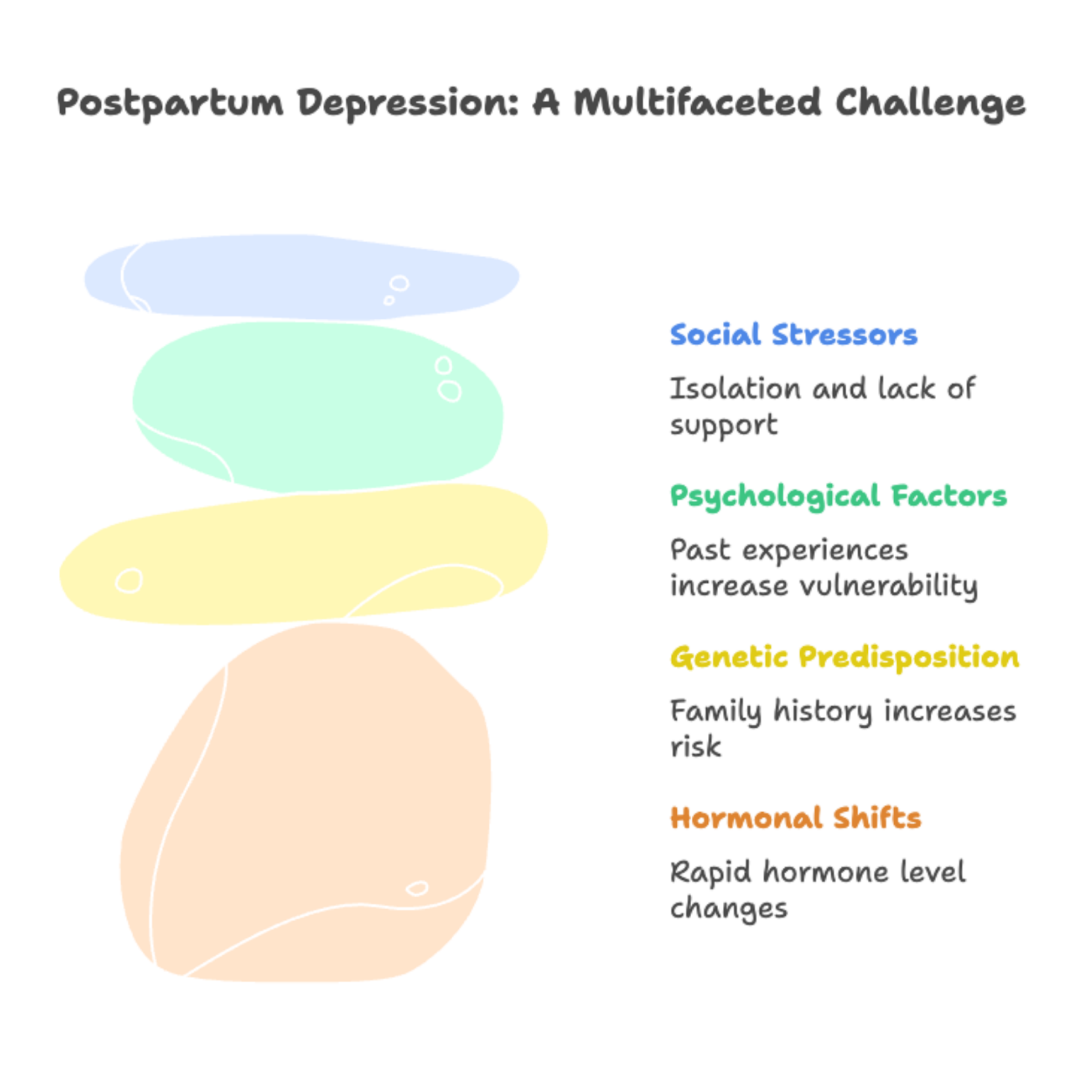
The development of postpartum depression is rarely due to a single, easily identifiable factor. Instead, it is caused by a complex interplay of biological, psychological, and social factors. Understanding these factors can be reassuring, because they help make sense of symptoms as a health condition, not as the mother’s
Hormonal Shifts
One of the most renowned contributors for PDD is the intense and rapid hormonal changes after childbirth. During pregnancy, levels of estrogen and progesterone are high, to support the body. Within 48 hours after delivery, these levels drop significantly. This drastic shift causes mood instability and overwhelming feelings. Thyroid hormone levels can also drop significantly after birth, subtly contributing to symptoms that mimic depressive symptoms.
Biological and Genetic Predisposition
Genetics certainly play a role. Women with a personal or family history of depression, anxiety, or other mood disorders often find themselves at a higher risk for developing postpartum depression. There's also ongoing research into specific genetic markers that might increase susceptibility. Neurotransmitter imbalances, particularly involving serotonin, dopamine, and norepinephrine, the brain's chemical messengers, are also implicated, much like in other forms of depression.
Psychological Factors
Certain psychological traits and past experiences can subtly, or not so subtly, increase vulnerability:
- History of Depression or Anxiety: A prior episode of depression (including a previous bout of PPD) or anxiety increases the risk of recurrence.
- Perfectionism: The intense pressure to be a "perfect" mother can lead to feelings of inadequacy and failure when reality falls short.
- Traumatic Birth Experience: A difficult, frightening, or traumatic delivery can leave deep emotional scars, contributing significantly to emotional distress and PPD.
- Body Image Issues: Postpartum body changes can negatively impact self-esteem.
- Unresolved Trauma: Past trauma, abuse, or loss can resurface with a vengeance during the uniquely vulnerable postpartum period, demanding to be acknowledged.
Social and Environmental Stressors
PDD often manifests as a combination of physical, psychological, and social factors. The environment around new parents can increase the risk of PDD significantly
- Lack of Support: Feeling isolated, having limited help from partners or family, or lacking community spaces can make it very difficult.
- Relationship Problems: Marital conflict or an unsupportive partner can be a major, draining stressor. Very often marriages are also impacted by PDD and the birth of a newborn, due to significant transitions. Communication may break down, feelings of resentment may grow, and partners may feel isolated in their struggles.
At this stage, marraige counseling in San Jose can provide a safe space for both partners to express their feelings, improve communication, and rebuild emotional connection. You can reach out to Coach For Mind, for couples therapy and marraige counseling in San Jose.
Our team consists of trained therapists that work with couples and families. With integrating evidence-based approaches and compassionate care, a CFM therapist can guide couples toward healthy coping strategies and meaningful connection
- Financial Stress: Economic difficulties can add immense pressure to new parents.
- Sleep Deprivation: Chronic, unrelenting lack of sleep is a well-known trigger for mood disturbances and can significantly worsen PPD symptoms, creating a vicious cycle.
- Stressful Life Events: Recent moves, job loss, or the heartbreaking death of a loved one can increase vulnerability further.
- Infant Temperament: A baby with colic, special needs, or with persistent difficulty feeding or sleeping can significantly increase parental stress and, consequently, the risk of PPD.
Who is Most Vulnerable?
While anyone can develop postpartum depression, certain factors subtly or overtly increase the likelihood:
- Previous history of depression or anxiety (especially PPD).
- Family history of mood disorders.
- Lack of social support, feeling adrift.
- Marital or relationship problems, a strained connection.
- Financial difficulties, the weight of worry.
- Stressful life events during pregnancy or postpartum, life's unexpected blows.
- Complications during pregnancy or birth, a difficult start.
- Having a baby with special needs or health problems, an unexpected challenge.
- Breastfeeding difficulties, a source of frustration and guilt.
- Unplanned or unwanted pregnancy, a complex emotional landscape.
- Young maternal age.
Navigating the Path to Recovery: Treatment Options for Postpartum Depression
The good news is that postpartum depression is highly treatable. The key, truly, is to seek help and to find a treatment plan that works best for you, because everyone’s journey is unique. Recovery looks different from everyone, however a multi-faceted approach, combining different therapies, tends to be the most effective.
Therapy and Counseling: A Safe Space to Heal
Psychotherapy is a cornerstone of PPD treatment, offering a safe, non-judgmental space to gently process emotions and unpack difficult feelings. Therapy can help the mother develop practical, empowering coping strategies, and a place to be truly seen and heard.
- Cognitive Behavioral Therapy: CBT helps individuals identify and gently challenge negative thought patterns and behaviors that contribute to depression. It focuses on practical, real-world strategies for managing stress, improving problem-solving skills, and reframing unhelpful beliefs about motherhood, helping you see things in a new light.
- Interpersonal Therapy: IPT focuses on improving interpersonal relationships and social functioning, recognizing that relationship issues often play a significant, sometimes hidden, role in PPD. It helps individuals address role transitions, grief, and conflict that may contribute to their depression, helping to mend broken connections.
- Support Groups: Connecting with other mothers who are walking a similar path, experiencing similar challenges, can dramatically reduce those feelings of isolation and provide invaluable emotional support and practical, lived advice. Knowing you're truly not alone in this struggle is an incredibly powerful, healing force.
At Coach For Mind, we understand that healing from Postpartum Depression requires compassionate, personalized psychological care. We have a team of trained therapists and counselling psychologist in Atlanta equipped to provide a safe, empathetic space where you can share your experience without judgment. This can be done through individual therapy, evidence-based approaches like EMDR, Psychodynamic psychotherapy work or through marraige counseling in San Jose Coach For Mind therapists and counselling psychologist in Atlanta Walk alongside you in this journey and gently help you in rebuilding confidence, managing stress, and reconnecting with yourself and your loved ones.
Medication: When You Need Extra Support
For moderate to severe postpartum depression, antidepressants can be a highly effective, supportive tool. Selective Serotonin Reuptake Inhibitors (SSRIs) are commonly prescribed and are generally considered safe for breastfeeding mothers, though the decision should always be made in a thoughtful, informed consultation with a healthcare provider.
Lifestyle Interventions: Supporting Your Journey
While not a standalone cure, integrating healthy lifestyle practices can significantly support recovery and overall well-being,
- Nutrition: A balanced diet rich in essential vitamins, and minerals can subtly support brain health and mood regulation. Limiting processed foods, excessive sugar, and caffeine can also be beneficial, helping to stabilize your energy.
- Exercise: Regular physical activity, even a gentle daily walk in the fresh air, can boost mood, reduce stress, and improve sleep quality, offering a much-needed release.
- Sleep Hygiene: Prioritizing sleep is critical, almost non-negotiable. While undeniably challenging with a newborn, strategies like truly "sleeping when the baby sleeps" or having a partner take night shifts can make a profound, life-changing difference.
- Mindfulness and Relaxation Techniques: Practices like meditation, deep breathing exercises, and gentle yoga can help manage anxiety and promote well-being.
Building Your Support System: The Role of Partners, Family, and Community
In India, family and community are imperative parts of everyday life. A robust support system is a lifeline for recovery from postpartum depression. No one should have to navigate this deeply challenging journey alone.
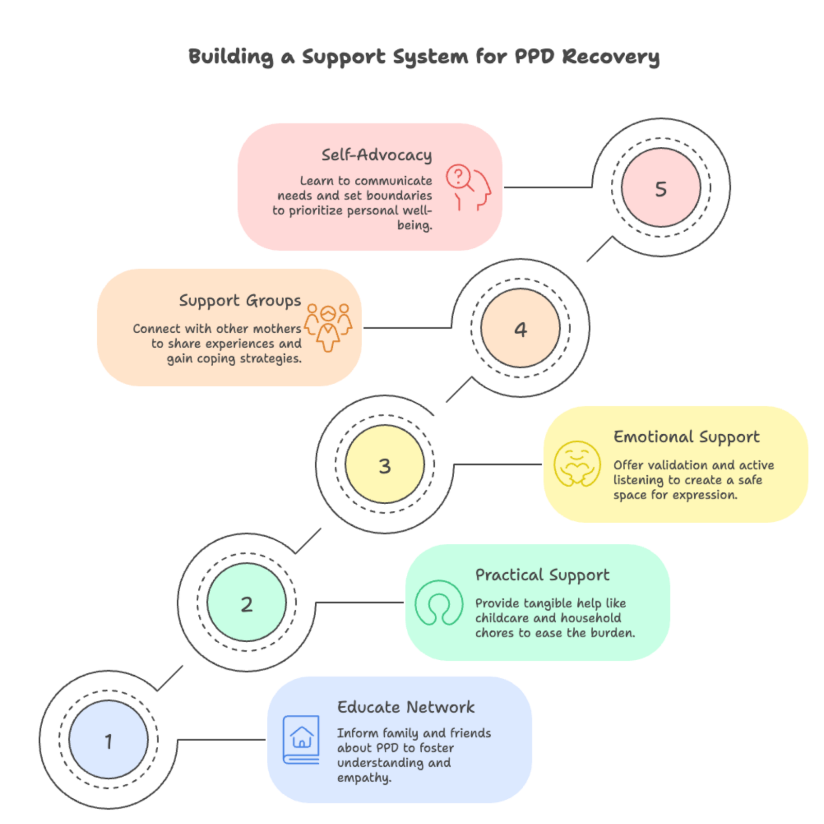
Educating Your Support Network
One of the most powerful, proactive steps you can take is to educate your partner, family, and closest friends about postpartum depression. Help them truly understand that it's a real, legitimate illness, not a choice, not a sign of weakness, and certainly not something you can just "snap out of." Explain the symptoms you're experiencing, how they feel to you, and how they can best, most effectively, support you. This understanding can dramatically reduce frustration and foster a deep, vital empathy.
New mothers, especially those grappling with PPD, desperately need practical, tangible help. This can include:
- Childcare: Allowing the mother to rest, take a much-needed shower, or attend appointments without worry.
- Household Chores: Cooking, cleaning, laundry, and errands, taking these off her plate can feel like a monumental relief.
- Meal Preparation: Ensuring nutritious, easy-to-access meals are available without adding another layer of stress.
- Running Errands: Taking some of the mental load, the endless to-do list, off the mother's shoulders.
Emotional Support: Being Seen and Heard
Beyond practical help, emotional validation and simply being present are vital, like a warm embrace.
- Active Listening: Listen without judgment, truly listen, allowing the mother to express her feelings openly, without fear of being fixed or dismissed.
- Validation: Reassure her, with genuine warmth, that her feelings are valid, that she's not "crazy," and that she's absolutely not alone in them.
- Encouragement: Gently encourage her to seek professional help and to follow through with treatment, reminding her that this is a sign of strength.
- Quality Time: Spend quality time together, even if it's just a quiet moment of connection, a shared cup of tea, or simply being in the same room.
Support Groups and Peer Networks
Connecting with other mothers who have experienced postpartum depression can be incredibly validating, like finding your tribe. Support groups, both in-person and online, provide a safe, understanding space to share experiences, gain coping strategies, and truly realize you are not alone in this journey.
The Importance of Self-Advocacy
Learning to advocate for your own needs, to speak up for yourself, is paramount, a crucial skill. This means:
- Communicating Your Needs: Clearly articulate what kind of support you need to your partner, family, and healthcare providers, even if it feels difficult.
- Setting Boundaries: Learning to say no to visitors or commitments that feel overwhelming, protecting your precious energy and peace.
Prioritizing Your Health: Recognizing, truly understanding, that taking care of yourself is, in fact, taking care of your baby. Your well-being is the foundational bedrock for everything
Reducing Your Risk: Proactive Strategies for New Parents
Becoming a new parent is a beautiful journey, but not always an easy one. While you can't prevent every challenge, you can take steps to reduce the risk and severity of postpartum depression (PPD).
Pre-Conception and Prenatal Planning
- Talk to your Doctor: Discuss family history of mental health concerns with your healthcare provider early in pregnancy.
- Build Your Support Network: Actively sources of support (partner, family, friends, a therapist) during pregnancy. You can also search for counselling psychologist in Atlanta.
- Educate Yourself: Learn about PPD during pregnancy, so you can recognize symptoms early if they arise.
Postpartum Planning and Preparation
- Delegate Tasks: Identify who will genuinely help with cooking, cleaning, and childcare in those precious, often chaotic, weeks following birth.
- Set Realistic Expectations: Understand that the early weeks will be challenging, messy, and beautiful, and prioritize rest over perfection.
- Arrange for Professional Support: Contact counselling psychologist in Atlanta if you start experiencing symptoms.
- Prioritize Sleep: Discuss with your partner how to maximize your sleep, even if it means taking shifts, trading precious hours for vital rest.
Prioritizing Self-Care: It's Not Selfish, It's Essential
Self-care is not selfish; it's a fundamental, essential act for mental well-being and allows you to be a more present, engaged parent.
- Schedule "Me Time": Even short, sacred periods of time for yourself (a warm bath, a quiet walk, reading a few pages of a book) can make a profound, restorative difference.
- Maintain Hobbies: Try to keep up with activities you genuinely enjoy, even in a modified, gentler way.
- Connect with Others: Don't isolate yourself. Make a conscious effort to connect with trusted friends or other new parents who understand.
- Nutrition and Exercise: Continue healthy eating and gentle exercise as your body allows, listening to its cues.
Dispelling Myths and Stigma: Fostering Open Conversations about Postpartum Depression
The pervasive stigma surrounding maternal mental health, often prevents individuals from seeking the help they desperately need. A Reddit user discussing what stops people from reaching out for help said, “I think I had PPD with my first and for me it was just utter exhaustion. I was drowning in absolutely everything and had no hope of actually asking for help”. To truly overcome postpartum depression as a society, as a compassionate community, we must courageously challenge misconceptions and foster an environment of deep empathy and unwavering understanding.
Common Myths Debunked
- Myth: PPD means you don't love your baby.
- Fact: PPD is an illness that affects your mood and ability to cope, not your profound love for your child. In fact, many mothers with PPD feel immense guilt precisely because they do love their baby and are distressed, heartbroken even, by their inability to feel joy or connect in the way they desperately wish.
- Myth: PPD is a choice or a sign of weakness.
- Fact: PPD is a medical condition, a real illness, not a personal failing or a lack of willpower. It's caused by a complex combination of biological, psychological, and environmental factors, and it requires professional treatment, just like any other illness of the body or mind.
- Myth: You just need to "snap out of it" or "get more sleep."
- Fact: While sleep deprivation certainly worsens symptoms of PPD, it's not the sole cause, and simply getting more sleep won't magically cure it. PPD requires targeted therapeutic and sometimes pharmacological interventions to truly heal.
- Myth: PPD only affects mothers who had a difficult pregnancy or birth.
- Fact: PPD can affect any mother, regardless of her pregnancy or birth experience, even those with seemingly "perfect" journeys. It can even affect adoptive mothers or those who have experienced the profound grief of stillbirth or infant loss.
- Myth: If you're breastfeeding, you can't take medication for PPD.
- Fact: Many antidepressants are considered safe for breastfeeding mothers, with minimal amounts passing into breast milk. The decision should always be made in a thoughtful, informed consultation with a doctor, carefully weighing the immense benefits of treatment against any potential, often minimal, risks to the baby.
The Impact of Stigma: Why We Must Speak Up
Stigma surrounding postpartum depression can be devastating, a silent, cruel torment. It leads to:
- Silence and Isolation: Mothers often suffer in agonizing silence, fearing judgment, shame, or even the unthinkable, having their baby taken away.
- Delayed Treatment: The profound fear of admitting to PPD can tragically delay seeking help, allowing the condition to deepen and worsen, making recovery harder.
- Misunderstanding from Loved Ones: Family and friends, often well-meaning but uninformed, may dismiss symptoms, leading to further isolation and deep frustration for the suffering mother.
- Negative Self-Perception: Mothers internalize the harsh stigma, believing they are failures, inadequate, or somehow broken.
Our Collective Responsibility
Breaking the stubborn cycle of stigma requires a collective, compassionate effort from all of us:
- Open Conversations: Talk about PPD openly and honestly, sharing personal stories (if comfortable and safe) to normalize the experience and show others they're not alone.
- Education: Continue to educate the public, healthcare providers, and new parents about the nuanced realities of PPD, shining a light into the shadows.
- Support for Policy Changes: Advocate for better maternal mental health screening, improved access to care, and more supportive family leave policies that truly prioritize well-being.
- Challenging Misinformation: Courageously correct myths and stereotypes whenever they arise, replacing ignorance with understanding.
Conclusion: Your Path from Shadow to Light
Postpartum depression is a significant, deeply challenging experience, but please hear this truth: it is not a life sentence. It is a treatable medical condition that affects countless new parents, and understanding its nuances, its many faces, is the first, incredibly brave step toward healing. By recognizing the symptoms, understanding the underlying causes, and actively, courageously seeking appropriate treatment, recovery is very possible.
Remember, you are not alone in this, and your feelings are valid. Asking for help is not a sign of weakness; it is a profound act of strength, a testament to your resilience. Embrace the gentle support of your loved ones, connect with healthcare professionals who truly see you, and prioritize your mental well-being above all else. The journey through parenthood is complex, messy, and undeniably beautiful, and with the right support and resources, you can absolutely navigate the challenges of postpartum depression and emerge stronger, healthier, and more deeply connected to yourself and your baby.
If any part of this guide resonated with your experience, if a single sentence whispered to your heart, please know this with absolute certainty: you don't have to suffer in silence. Reach out to Coach for Mind and book a free discovery call. You can work with a therapist trained in modalities such as EMDR, Internal Family Systems, Somatic Work, etc to offer you holistic support. Your journey to healing starts with one brave, single step, and a brighter, more connected tomorrow is not just possible, it's waiting for you, just beyond the shadows.
Why CoachForMind?
Experienced Psychologists: We are a team of licensed RCI-registered clinical psychologists. Our team is well-experienced in various forms of therapy such as CBT, DBT, EMDR, IFS, Psychodynamic and Narrative Therapy.
Personalized Approach: We are dedicated to treating our clients in the best-suited way, carefully curated as per the client's needs, and adhering to one-on-one, client-centered therapy.
Scientific Techniques: Our treatment plans and therapeutic methods are based on highly researched scientific findings such as CBT, DBT, EMDR and Narrative Therapy.
Quality service: We at CoachForMind ensure quality services in our treatment regime and therapeutic approaches. Our clients hold the most value to us, so we ground our techniques in empathy while maintaining professionalism.
Begin with a free 15-minute discovery call For more information, please visit our website or contact us directly at [email protected] or at whatsapp
FAQ’s – Postpartum Depression
After giving birth, many new mothers feel emotional ups and downs, along with tearfulness, mood swings, and irritability. This is often called the “baby blues” and usually fades within two weeks. Postpartum depression (PPD), however, is more intense and lasts longer. It may look like persistent sadness, loss of interest in activities, feelings of guilt, difficulty bonding with your baby, or thoughts of hopelessness, this may be PPD rather than baby blues. Coach for Mind therapists can help you sort through these feelings and provide a safe, non-judgmental space to talk, so you don’t have to be alone in this journey. Therapists from the team can help you differentiate between baby blues and PPD, help you make sense of your feelings and develop coping mechanisms tailored to you.
Treatment often involves a mix of therapy, support groups, lifestyle changes, and in some cases, medication. Options include:
- Therapy (such as talk therapy, CBT, or supportive counseling): Therapy often helps you understand your emotions, manage guilt, and rebuild your sense of self. At Coach for Mind, therapists tailor sessions to your needs, helping you feel supported, less alone, and more empowered in your journey.
- Medication: A doctor can prescribe medication if the symptoms are hampering daily functioning of the individual.
- Lifestyle supports (adequate rest, nutrition, gentle movement, social connection)
Yes, there are several antidepressants and medications that are considered safe during breastfeeding. Doctors carefully choose medications with minimal risk to your baby. Research finds that medication such as SSRIs are efficacious in postpartum mothers, including those who are breastfeeding. Medication should only be taken under the guidance of a medical professional and consult your doctor to weigh the risks and benefits. Coach for Mind therapists can help you weigh risks vs benefits, and work in close tandem with your physician, supporting well-being for you. Additionally, psychotherapy supplements treatment by implementing behavioural or psychological strategies such as sleep hygiene, stress reduction, emotional support.
It can be hard to see a loved one suffer. Offering them a space of non-judgmental listening, practical help like cooking meals or volunteering babysitting time can come as great relief. Additionally, encourage professional support such as therapy. You can also connect them to Coach for Mind, where therapists create a nurturing environment for mothers to heal at their own pace. Studies suggest that social/family support is consistently one of the strongest protective factors. Lastly, remember to check in regularly, small consistent gestures can help them feel a lot less isolated.
It varies, while some recover in a few months with treatment, while others may take longer. PPD can continue on for over several years if ignored. The key to well-being is early support and consistent care. Reaching out for help is the best way to begin getting healing (therapy, medication if needed), the better the chance to reduce duration and intensity of PPD. Therapists can help with follow-up and relapse prevention so even when symptoms improve, maintaining support is helpful.
Risk factors for postpartum depression include a history of depression or anxiety, stressful life events, a difficult child birth or pregnancy, lack of support (emotional, financial, practical), sleep deprivation, and hormonal changes. People with a family history of depressive symptoms are also at a higher risk of developing PPD. However, it can happen to anyone, even without risk factors. So educating yourself and your loved ones about it and how it can be managed is critical.Coach for Mind therapists can help you explore these vulnerabilities and strengthen coping strategies, so you feel less overwhelmed and more understood.
Selective serotonin reuptake inhibitors (SSRIs) are the most commonly prescribed and often effective. However, medication is highly individualized. What works for one mother may not work for another, making it imperative to work with a healthcare provider to find the fit. Coach for Mind therapists focus on helping you find the right balance of therapy, support, and if needed medical care, so that treatment fits your unique situation.
Yes, partners can also feel depressed or anxious after a baby is born. Sleep deprivation, new responsibilities, and relationship changes affect both parents. Fathers and partners may feel withdrawn, irritable, or disconnected. Coach for Mind counselling psychologist in Atlanta also support partners, helping them process their emotions and strengthen their bond as a couple during this transition