How to Stop Feeling Like a Fraud?
Ever heard a nagging voice in the back of your head doubting all your hardwork? You put in the work. You achieved milestones, braved challenges, and earned recognition. And somehow that pesky voice still whispers: “Am I really good enough?”. Before you speak up in a room, do you always find yourself wondering if you should probably stay quiet because everyone in the room already knows more than you. This feeling is different from experiencing a fleeting moment of self-doubt. Instead, it is like a suffocating hold of Imposter Syndrome. A struggle that keeps countless people, without realising, staring into the abyss wondering, with a knot in their stomach, 'what if people discover I am not as smart as they think?'
If this sounds familiar, you should know you are not alone. In fact, research shows that feelings of imposter syndrome are extremely common in adults. Even icons like Maya Angelou, Neil Armstrong, and several other celebrities admitted to feeling like frauds.
Imagine those people we look up to, battling the same quiet fears. This guide isn’t about quick fixes or motivational words. It’s about offering you an understanding of what imposter syndrome looks like, and what it really means. As you read on, you will also find real, practical strategies, informed by my therapeutic experience, to help you understand and manage these feelings. Let’s work together to slowly to build a sense of worth that feels truly authentic.
What Is Imposter Syndrome, Really?
Imposter syndrome is not a mental illness or a diagnosis. It is a pervasive psychological pattern, a peculiar trick our minds play. Almost like having an uninvited guest in your mind that never seems to leave. Instead constantly makes nagging comments about everything you do. It can get extremely frustrating and defeating to have someone telling you that you are not truly competent. And if you ever challenge this voice by talking back to it with evidence of your success, it manages to attribute it to pure luck, a fluke, or a masterful deception. Which only further keeps you in the cycle of fear that is a secret that may be revealed with every new challenge.
I worked with a client, a young IT professional who came to me feeling stuck. Despite receiving positive feedback and promotions, she couldn’t shake the fear that any day now, someone would realize she “wasn’t cut out for this.” Every new project triggered anxiety, and instead of celebrating her wins, she dismissed them as flukes. This cycle is common. What happens is that instead of feeling proud of an achievement, imposter syndrome makes you anxious, leading you to over-prepare (or procrastinate). It may temporarily bring a sigh of relief when you succeed, but then you immediately discount the success. And the cycle goes on.
How to Identify if you are Experiencing Imposter Syndrome?
Recognizing the signs is the critical first step toward breaking free from imposter syndrome. If any or all of these signs resonate with your own experience, you might be experiencing Imposter Syndrome. The best way to deal with these feelings is to reach out to a therapist. You can reach out to Coach for Mind for a free discovery call with a therapist who will understand your concerns, and work to challenge this nagging voice. A therapist will help you build a stronger sense of self and community to build trust and promote healing.
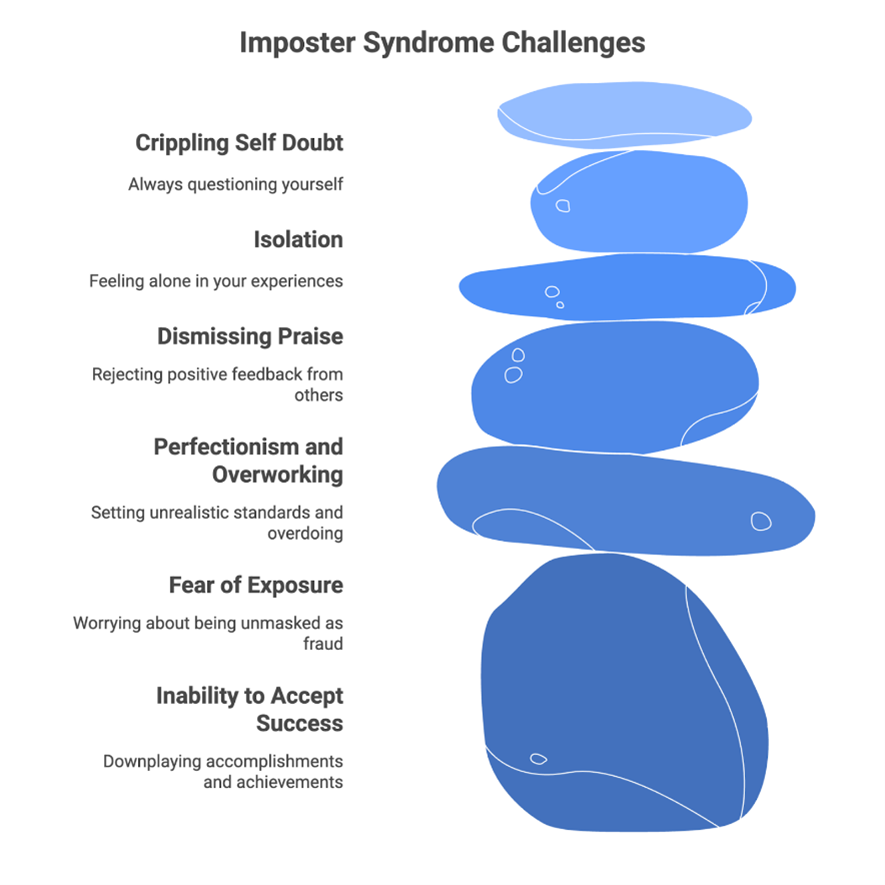
- Constant Self-Doubt: For a lot of us, self-doubt doesn’t come and go. Instead it becomes like constant background noise. Imagine a radio stuck on static, buzzing with thoughts like “I’m not good enough,” “People probably find me boring,” or “I don’t really deserve this.” Even when part of you knows those thoughts aren’t the full truth, they have a way of seeping in and disturbing you. I have had clients describe it as carrying a heavy stone everywhere they go.
- Inability to Accept Success: You discount achievements, almost instinctively, attributing them to luck, timing, or external factors. You might think, "It was just luck,” or “Anyone could have done it.”
- Fear of Exposure: A common thread in sessions is the quiet but powerful fear of being unmasked. That fear of asking “stupid” questions or making a small mistake can feel like walking a tightrope every day, terrified the mask will slip. This fear can lead to you skipping on opportunities at all costs just to keep up the facade.
- Perfectionism and Overworking: You feel compelled to work harder than anyone else, often to an extent of burnout to compensate for perceived inadequacies. Never allowing rest, never forgiving errors. Sometimes, even therapists are not strangers to this feeling. Initially in my career, I felt the pressure to show up as the perfect therapist until that got too overwhelming for me. I was able to explore what it meant to be “perfect” and what needs this was serving for me through regular supervision and therapy.
- Dismissing Praise: Compliments don’t seem to land. In fact, when someone says “That was amazing!” it may feel suspicious, like people are being too nice or maybe even sarcastic. A graduate student once shrugged at a top score, saying, “Well, the exam just wasn’t that hard.” What’s happening is that the brain is wired to dismiss positives like a leaky bucket.
- Isolation: Another painful part of this experience is isolation. People often feel like they’re the only ones doubting themselves this deeply. Looking around at peers, it might seem like everyone else has it “figured out,” which makes speaking openly about your struggles scary. That silence feeds the cycle. But what I’ve seen time and again in therapy rooms is this: when people finally break the silence, they realize so many others quietly feel the same way. So reach out to Coach for Mind a book a free discovery call.
- The Impact on Mental Health: This constant tug-of-war inside: questioning, hiding, striving, dismissing can feel like living in an endless loop. Over time, it often spirals into anxiety or depression. Imposter Syndrome can take a significantly heavy toll on your mental health and overall well-being.
What Else Might Be Going On?
What Else Might Be Going On?: For some people, imposter syndrome is more than just a fear of being “found out.” It can be a surface layer covering much deeper emotional pain, like childhood experiences where love had to be earned, trauma that taught you to hide your real self, or attachment wounds that left you unsure whether you were ever enough to begin with.
In these cases, imposter syndrome isn’t the root problem, it’s a strategy, developed long ago, to survive emotionally. A way to stay safe by staying small, silent, or perfect.
Therapy doesn’t just help you feel more confident at work or school, it helps you restructure your entire sense of self, from one built on fear and performance… to one built on inner worth and trust.
Whether it’s a coping pattern or a deeper identity wound, this cycle takes a real toll, on your energy, your mind, your relationships, and your sense of self. With compassionate therapeutic support, many people learn to:
- Name and interrupt the “imposter voice.”
- Rebuild trust in their own abilities.
- Let praise in, slowly and steadily, without deflecting it.
- Rest without guilt and take failures as part of growth.
At Coach for Mind, we believe that nobody should have to deal with this alone. For those whose imposter feelings overlap with social anxiety treatment needs, we have specialized support available. Our therapists use approaches that are both evidence-based and deeply human, drawing from cognitive-behavioral strategies, self-compassion practices, and an understanding of how culture, family, and life experiences shape self-worth.
Wondering What Causes And Triggers Imposter Syndrome?
Well, imposter syndrome doesn’t just appear out of nowhere. It usually builds slowly and eerily, from a mix of personal traits, external pressures, and as a result of the environment you are in. Understanding what sparks these feelings can help you gently, but firmly, take back control.
- Personality Traits: If you identify as a perfectionist, highly conscientious, or driven by a strong need to achieve, you may ironically be more prone to imposter feelings. In India, where academic and professional success is often seen as the ultimate marker of worth, the pressure to constantly perform perfectly can make these thoughts louder. I’ve worked with clients who described feeling like they had to “never make a mistake, ever,” just to feel worthy.
- New Environments: Starting a new job, entering a competitive program (think of that intense IIT entrance, or the daunting thesis), or stepping into a leadership role can instantly trigger feelings of being “not enough.” These feelings especially pop up in work environments, where hierarchy and status often play a big role, asking “stupid questions” can feel like exposing your incompetence.
- Comparison Culture: We are living in a hyper-connected world that makes comparison easier than ever. Scrolling through LinkedIn , you might see peers announcing promotions, degrees, or certifications while you wonder, “How did they get there? I’ll never be like them.” In our society, achievement is often measured by degrees, job titles, or the kind of company you work for; this comparison trap is a big trigger.
- Systemic and Cultural Factors: This part is tough, but important to acknowledge. Microaggressions, systemic biases, and lack of representation (based on gender, race, neurodiversity, or cultural background) don’t just worsen imposter syndrome, they can create it. For many women, LGBTQ+ individuals, or people from marginalized communities in India, there’s an extra layer of having to prove their worth everywhere they go. A client once told me, “I always feel like I need to over-explain my achievements so no one thinks I don’t belong here.” The feeling of being a 'phony' in a cultural identity context is a deeply painful, isolating burden that no one should have to carry.
Understanding these triggers doesn’t fix everything overnight, but it helps you start peeling back the layers of doubt. Therapists know how cultural factors, family expectations, and systemic pressures can shape these feelings in the Indian context. Through compassionate, evidence-based support, we, at Coach for Mind, help you name these challenges, stop the internal blaming game, and begin building trust in your own abilities.
How To Overcome Imposter Syndrome?
Conquering imposter syndrome isn’t a one-time battle you win and then forget about. It’s more like tending a garden: slow, steady, and full of patience. Some days you will plant seeds of self-belief, others you will patiently pull out the weeds of doubt. It’s a continuous journey of self-discovery, resilience, and learning to treat yourself with kindness. And this journey can look a lot easier if you have someone trusted to walk with you, a close friend, a family member, or a therapist or best psychologist in Edison (New Jersey). Here are real, practical steps you can start applying today!
1. Acknowledge and Reframe Your Self-Talk
The first and most crucial step, and perhaps the hardest: recognize those imposter thoughts the moment they surface. Instead of letting them hijack your mind and drag you down, challenge them head-on, with gentle curiosity.
- Name It to Tame It: When that familiar “I don’t deserve this” feeling creeps in, try saying to yourself, “Ah, this is imposter syndrome talking.” This powerful act externalizes the feeling, separating it from your true identity, putting it in its place.
- Challenge Negative Narratives: If your inner voice says, “I didn’t do anything today,” reframe it kindly: “Today, I helped resolve a tricky work problem and supported my team.” Even if it feels small, consciously acknowledging what you did helps cut through the self-doubt.
- Try Simple CBT Techniques: Learn to spot irrational thinking like “I always mess up” or “Everyone’s better than me.” Replace them with balanced thoughts, such as, “I have strengths that help me do my job well, and like everyone else, I’m still learning.” In sessions with clients, the best psychologist in Edison (New Jersey), often guide them to treat their imposter voice like a nagging neighbor, someone who talks too much, but doesn’t define who they are.
2. Track and Celebrate Your Achievements
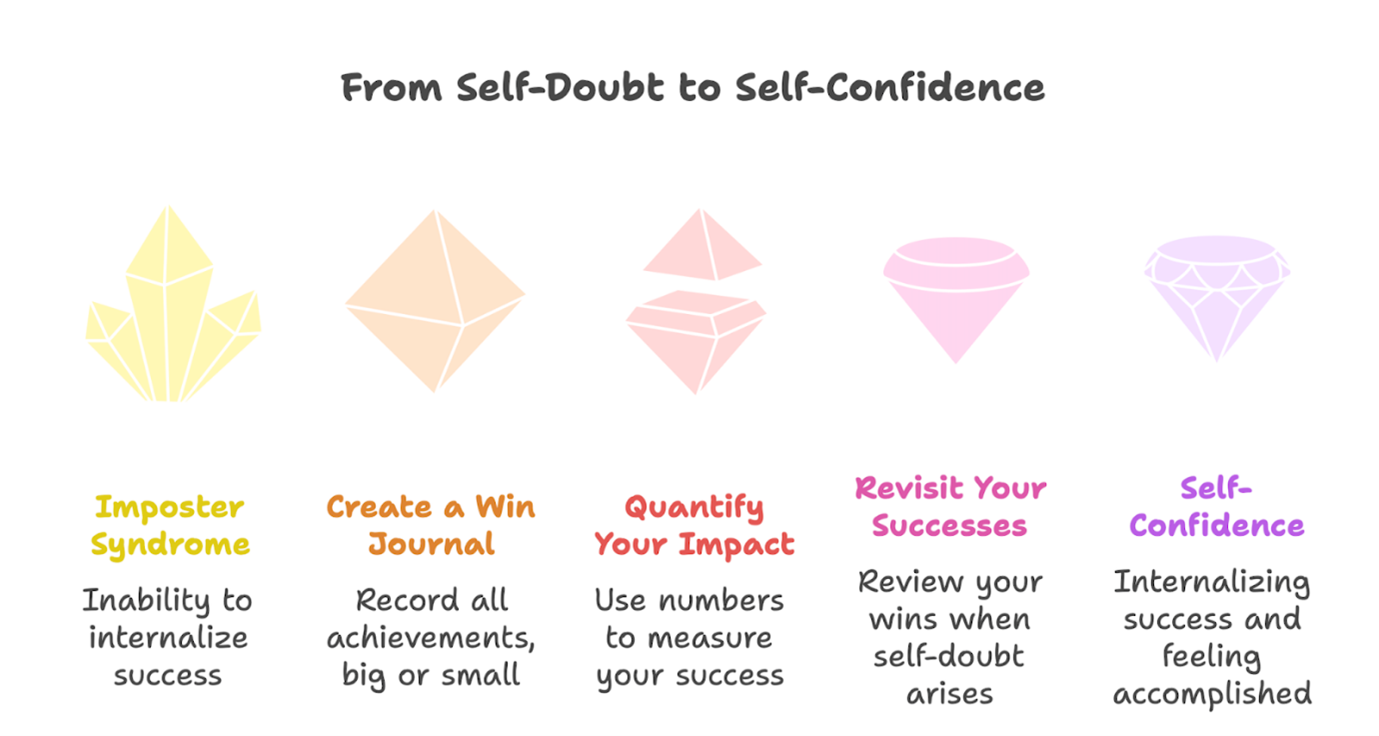
Imposter syndrome thrives on your inability to truly internalize success, to let it sink in. Actively fight back, then, by creating a tangible record of your accomplishments. Like your personal hall of fame. For me, it is a box with positive feedback and messages from my clients that I go back on tough days.
- The "Win" Journal: Dedicate a journal or digital document to every achievement, no matter how small or seemingly insignificant. Whether you got positive feedback at work, solved a complicated issue, or even just showed up and did your best—record it. I’ve seen clients feel amazed at how full their journal becomes over time. Every single win goes in!
- Use Numbers: Did your work reduce process time by 20%? Did your initiative bring in more customers or smoother team communication? Concrete metrics help you see your impact objectively. This provides objective, cold-hard evidence that crushes those feelings of inadequacy.
- Revisit Your Successes: When self-doubt threatens to overwhelm you, when that inner critic starts its relentless chatter, open your "Win" Journal. It's a powerful, personal reminder to the feeling that you "didn't accomplish anything"
3. Seek and Accept Constructive Feedback
It's vital, truly, to distinguish between the whispers of imposter syndrome and genuine, healthy areas for growth. I like to think of feedback as a gift , sometimes wrapped a little awkwardly, but a valuable gift nonetheless.
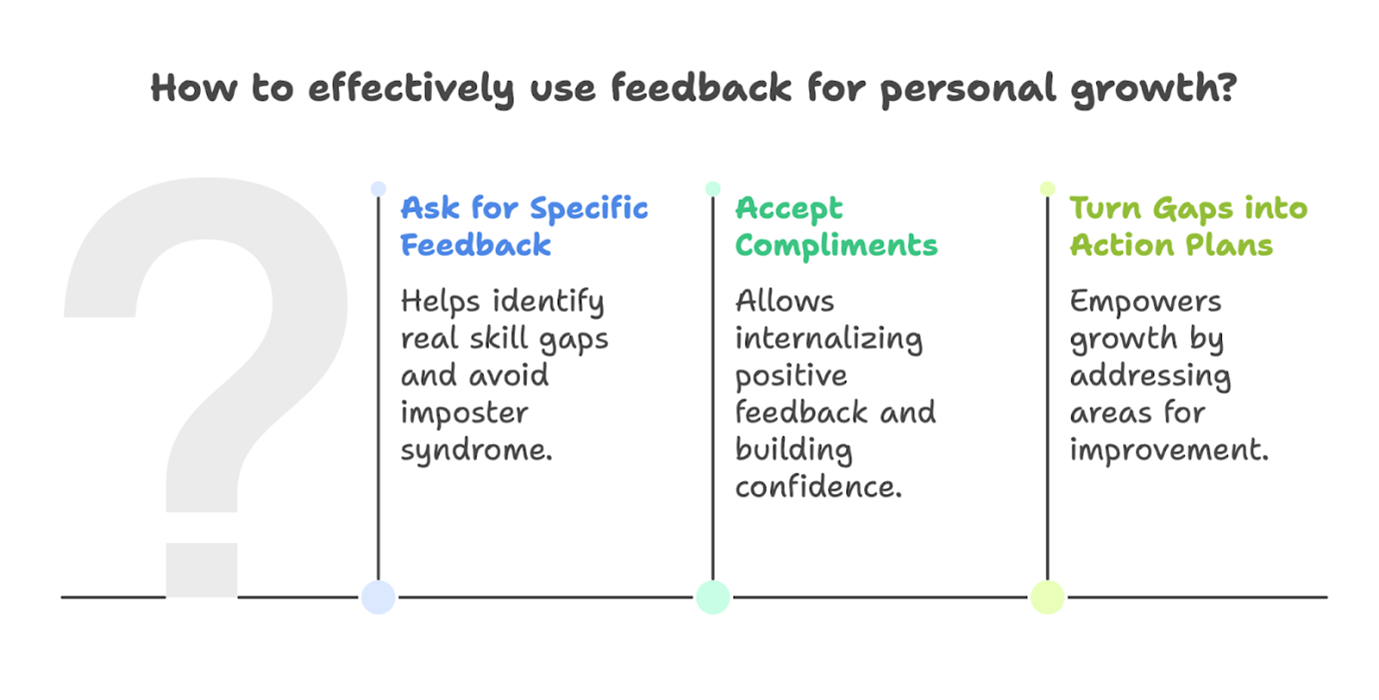
- Ask for Specific Feedback: Instead of fearing general, vague criticism, proactively ask trusted colleagues, mentors, or supervisors for specific, constructive input. This helps you pinpoint actual skill gaps versus those pesky, perceived ones that imposter syndrome loves to invent.
- Learn to Accept Compliments: This one's tough for many of us. When someone offers praise, practice a simple, heartfelt "Thank you", no deflecting, no downplaying. Allow yourself, just for a moment, to internalize that positive feedback.
- Turn Gaps into Action Plans: If feedback does reveal a genuine area for improvement (because, let's face it, we all have them), create a concrete, actionable plan to address it. This empowers you to grow without falling into the trap of self-flagellation. If you're worried about "bad questions," seek out resources or mentorship to build that knowledge, knowing it's a sign of wisdom, not weakness, to ask.
4. Build a Supportive Community and Mentorship Network
Isolation is imposter syndrome’s best friend. It thrives when you feel like you’re the only one struggling. Connecting with others, truly opening up, doesn't just normalize your experience; it weaves a vital safety net of understanding and provides invaluable, human support.
- Break the Silence: Share your feelings with a trusted friend or family member. You’d be surprised how often they reply, “Oh, I feel the same way!” In this society, especially, where mental health conversations are still stigmatized, taking this small brave step is powerful. A reddit user, while sharing their experience with Imposter Syndrome shared that, “The way that I've dealt with Impostor Syndrome on my own is by realizing that just about everyone deals with it.”
- Find Mentors: Seek out individuals whose work you genuinely admire, whose paths you aspire to follow. They can offer not just guidance and perspective, but also validate your experiences, often having navigated similar doubts and choppy waters themselves.
- Be a Mentor: The act of helping others, of sharing your wisdom, powerfully reinforces your own competence and builds confidence. Sharing your journey can be incredibly empowering, especially when you remember the raw feeling of "will anyone show up today?" or streaming with "0 feedback" and feeling utterly invisible. Even small acts of guidance help you internalize your worth.
- Engage in Peer Support: Platforms like online communities or professional groups can provide a safe, judgment-free space to share experiences, swap coping mechanisms, and realize you're part of a much larger tribe. Often a tribe that struggles with similar things.
5. Set Realistic Expectations and Boundaries
Imposter Syndrome is closely followed with burnout, a crushing exhaustion. The key to managing the immense mental toll imposter syndrome takes is establishing healthy, firm boundaries. Making it an act of self-preservation.
- Prioritize Self-Care: Ensure you're getting enough restorative rest, nourishing your body with kindness, and engaging in activities you genuinely, truly enjoy. This is especially crucial for dedicated professionals who might struggle with using "precious free time to continue thinking about work," blurring the lines of their own well-being. In this current high-pressure work culture, rest can feel like guilt. But it’s essential. I often tell clients: “Rest isn’t laziness, it’s recharging.”
- Delegate and Ask for Help: You don't have to "figure things out on my own". That's a myth imposter syndrome loves to perpetuate. Learning to delegate or asking for assistance, is a profound sign of strength, not weakness.
- Define Your Own Success: Instead of letting society’s narrow definitions (high marks, big companies, big titles) shape your worth, decide what success looks like for you. Maybe it’s growing in confidence, creating a better work-life balance, or simply showing up consistently.
6. Therapy Approaches Can Help You Harness Imposter Syndrome
Therapeutic approaches provide structured, evidence-based tools for managing imposter feelings.
- Cognitive Behavioral Therapy (CBT): Helps you identify unhelpful thought patterns (“This is impossible”) and replace them with balanced, motivating thoughts (“This is tough, but I’ve managed before”). You also learn to schedule energizing activities to balance demands.
- Internal Family Systems (IFS): Helps you understand the different “parts” of you that react to feedback , the task-driven part, the avoidant part, the perfectionist part , and get them working together toward your goals.
- Dialectical Behavior Therapy (DBT): Offers concrete skills for emotion regulation, distress tolerance, and mindfulness so you can stay grounded while under pressure.
- Eclectic Approach: Combines movement, cognitive restructuring, somatic techniques, and value-based planning to give you a personalized stress-to-energy toolkit.
Coach For Mind therapists integrate these approaches so you can:
- Spot early signs in both mind and body.
- Develop movement and mindfulness routines that work in real life, not just on paper.
- Reframe challenges as manageable and aligned with your values.
- Build a recovery plan that keeps stress as a source of momentum rather than burnout.
At Coach For Mind, we know that imposter syndrome feels heavy and personal. That’s why our therapists offer a space where you’re not judged, only supported with tools rooted in compassion-focused therapy and a deep understanding of cultural pressures.
When To Seek Professional Help
While these self-help strategies are incredibly powerful and a great place to start off, sometimes imposter syndrome can become truly like a heavy blanket that smothers and suffocates you. It can lead to significant anxiety, depression, or burnout. Our anxiety treatment in India page outlines the options available when this happens. If you find yourself constantly drained, unable to function day-to-day, or if your imposter feelings severely impact your most important relationships or your career, seek help.
Consider it a clear sign to seek professional help and allow yourself the space to heal. Coach for Mind therapists specialize in CBT and evidence-based approaches, that provide tailored strategies and support to all clients. Therapy can be a great tool in helping you navigate the deeper, often tangled roots of these feelings. Remember, seeking help is an investment in your well-being and mental health.
Long-term Management And Prevention
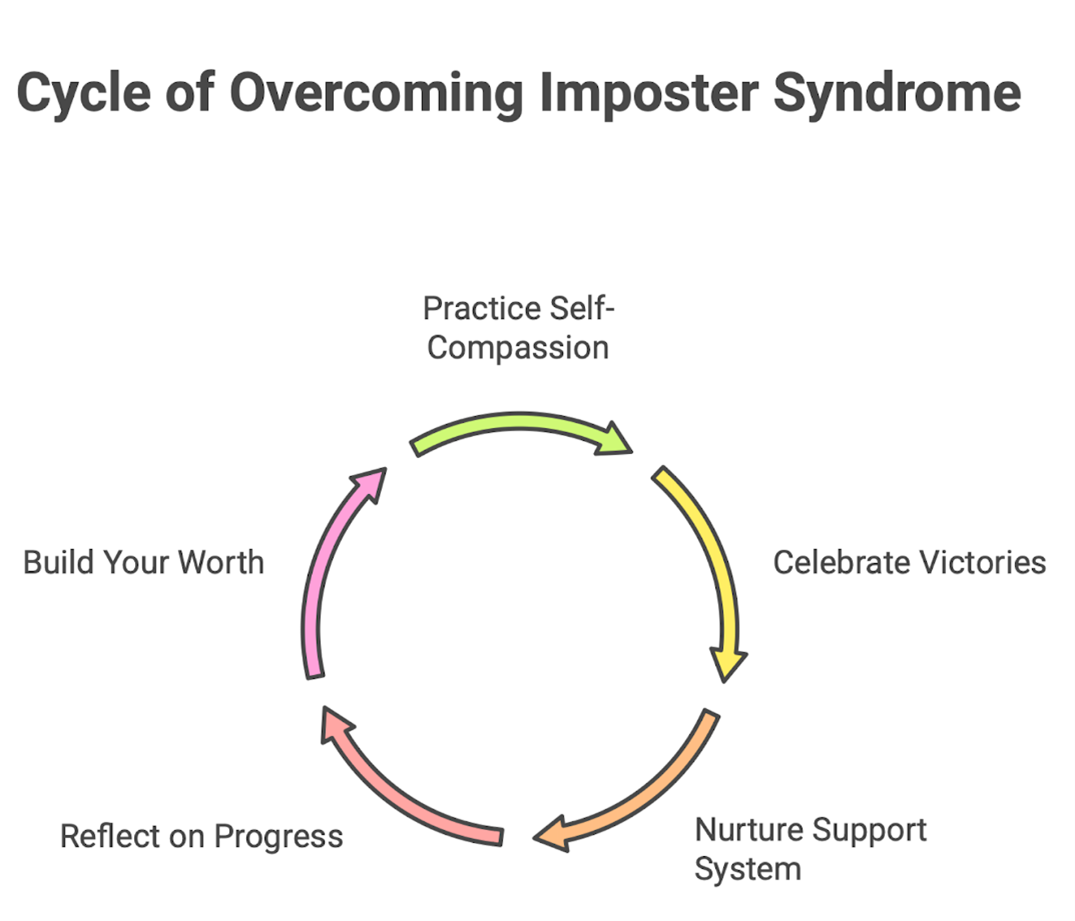
Conquering imposter syndrome is an ongoing, evolving process. It may not look like reaching a finish line you cross and then never looking back. It is about building resilience and acceptance, over chasing perfection. It is very natural and common for imposter feelings to resurface during new challenges or significant life transitions like career shifts, marriage, relationships, etc. Some of the things to keep in mind when you feel like these feelings are cropping up again are mentioned below.
- Practice Self-Compassion: When self-doubt speaks up, remind yourself: “It’s okay to feel this way. I’m learning and growing. Be gentle and kind to yourself!
- Celebrate Victories: No matter how small or big, each win deserves a celebration. Figure out what celebrating your achievements looks like for you and remember to tell yourself, “you did good.”
- Nurture Your Support System: Lean on trusted friends, family, or mentors. Isolating yourself can give imposter syndrome more space to grow and hamper your well-being.
- Reflect on Your Progress: Every once in a while, it is great to take stock of how far you have come. Look back at your journey, all the challenges and achievements, your growth, and the times you showed up despite this nagging voice.
- Build Your Worth: Your value isn’t measured by grades, job titles, or the praise of others. It’s inherent, built into who you are.
How Imposter Syndrome Can Impact Life
When left unaddressed, imposter syndrome can quietly but powerfully cast a shadow over your entire life. It doesn’t just stay in your head, it slowly starts to affect your work, relationships, and well-being
At work, you might find yourself avoiding applying for a promotion or a new role, convinced you’re not “qualified enough”. Many times I see clients that decline opportunities to speak up in meetings or lead projects, afraid of being exposed as a fraud. This can also lead to you feeling stuck in the same position for years, watching others advance while you remain sidelined. In today’s time, with competitive industries and social media making comparison so easy, people hesitate to take on leadership roles. This may not because they lack skills, but because the fear of not being “good enough” and this fear can paralyse your growth.
Imposter feelings show up in relationships too and we are surrounded by people we care about. At times, imposter feelings can look like constantly seeking validation from family or partners, unable to trust your own sense of worth. This makes it hard for you to have fulfilling relationships because you always doubt yourself. Feeling like you’re “faking it” in front of loved ones can push them away unintentionally, further intensifying the loneliness. Imposter Syndrome can also be tied to going beyond your capacity to please people. This often leads to burning out by overworking to prove you’re worthy of love and respect.
One client shared how, after years of overachieving at work, they felt completely hollow and disconnected at home. The belief that “I don’t deserve this life” kept them isolated, making it harder to accept affection or help from others.
This reminds me of a client, who shared how after years of overachieving at work, they began to feel disconnected in their marriage. Despite being praised for their professional success, they constantly feared they were “not good enough” as a husband. This client had intense hidden beliefs of being undeserving of their wife’s love and support.
Within a few months with the best psychologist in Edison (New Jersey), we discovered that this person was convinced that sooner or later, his wife would realize they weren’t “good enough” and leave. This deep sense of unworthiness created a growing distance between them, because he started pushing her away to protect himself. This made it harder for my client to accept simple acts of care, like being asked, “How was your day?” because he assumed it was pity, not genuine concern. With therapy, we focused on recognizing these self-critical beliefs, building self-compassion, and gently challenging the story his mind had convinced him of. As he started to reframe his thoughts and accept small acts of kindness, the walls began to come down. Slowly, he learned to trust that love and care weren’t earned by perfection, but offered because he was enough, just as he was.
So here’s the hopeful truth - When you begin to manage these feelings, you unlock your real potential. You start building a life where achievements aren’t empty checkboxes but meaningful steps of personal growth. You experience greater job satisfaction as you trust your capabilities and healthier, more genuine relationships built on openness and shared understanding. An additional big part of working through these feelings is developing an authentic sense of self-worth that doesn’t depend on external praise.
How a Coach For Mind Therapist Can Help with Imposter Syndrome
A therapist trained in relational and psychodynamic approaches can help you:
- Uncover unconscious patterns behind imposter feelings, such as chronic self-doubt, fear of being “found out,” or dismissing accomplishments as luck or deception.
- Understand the early relational roots of imposter syndrome , often stemming from childhood roles, perfectionism, or environments where love and approval were conditional on achievement.
- Work through internalized critical voices, shame-based self-evaluations, and unconscious beliefs such as “If I’m not exceptional, I’ll be rejected” or “I must earn my worth through performance.”
- Build an authentic sense of self by reconnecting with intrinsic value rather than contingent validation , gradually replacing imposter-driven striving with grounded self-trust.
- Strengthen emotional resilience by tolerating vulnerability, success, and visibility , and by developing a more integrated identity that can hold both confidence and humility.
Therapeutic Approaches Used at Coach For Mind
Relational Psychodynamic Therapy
Helps identify how early relational experiences shaped a fragile or conditional sense of self-worth. Through the therapeutic relationship, clients can begin to internalize a more stable and affirming sense of self. We explore how the fear of exposure or failure may be a reenactment of early dynamics , for example, being idealized or criticized without room for ambivalence or ordinariness.
Imposter syndrome often reflects a split internal world: one part striving for perfection, another terrified of being inadequate. Therapy invites these parts into dialogue.
Control-Mastery Theory
Reveals unconscious “pathogenic beliefs” such as:
- “If I stop performing, I’ll be abandoned.”
- “I must never show weakness or I’ll lose respect.”
Therapy becomes a place to “fail safely,” testing whether you’re still lovable even when imperfect or unsure.
Systems Therapy
Examines how family, workplace, or cultural systems reinforce imposter dynamics. For example, were you the “golden child” who wasn’t allowed to falter? Therapy helps renegotiate those roles and step out of the performance loop while maintaining relationships.
Somatic & Nervous System Regulation
Imposter syndrome isn’t just cognitive , it’s visceral. Panic before presentations, collapse after success, or chronic hypervigilance are all bodily manifestations. We teach grounding, paced breathing, and body-based tracking to help you regulate stress, especially around exposure, praise, or failure
If the body believes you’re under threat, no amount of reassurance will stick. That’s why we work with both mind and nervous system.
At Coach For Mind, we understand imposter syndrome not as a flaw, but as a deeply intelligent adaptation to early experiences where safety and love depended on achievement, invisibility, or perfection. Our therapeutic work helps you loosen the grip of those early survival strategies , and live with greater freedom, presence, and self-worth.
Conclusion
The journey to conquering imposter syndrome is, in its essence, deeply personal, a quiet internal battle, yet it is universally shared. Remember: You are absolutely not alone. Millions, across cultures and professions, feel this way. Even those we admire scientists, writers, actors have shared their imposter struggles. By acknowledging imposter syndrome, challenging its narratives with gentle curiosity, and practicing small, practical strategies regularly, you begin dismantling that painful belief that you’re a fraud, brick by patient brick.
Your worth is not tied to flawless performance, endless achievements, or how loudly others applaud you. It’s already there. So embrace your unique skills and celebrate your genuine achievements. Allow confidence to grow from within. You are capable. You are deserving. And yes, you are absolutely ready to reclaim your power – the power that was always yours to begin with.
Why CoachForMind?
Experienced Psychologists: We are a team of licensed RCI-registered clinical psychologists. Our team is well-experienced in various forms of therapy such as CBT, DBT, EMDR, IFS, Psychodynamic and Narrative Therapy.
Personalized Approach: We are dedicated to treating our clients in the best-suited way, carefully curated as per the client's needs, and adhering to one-on-one, client-centered therapy.
Scientific Techniques: Our treatment plans and therapeutic methods are based on highly researched scientific findings such as CBT, DBT, EMDR and Narrative Therapy.
Quality service: We at CoachForMind ensure quality services in our treatment regime and therapeutic approaches. Our clients hold the most value to us, so we ground our techniques in empathy while maintaining professionalism.
Begin with a free 15-minute discovery call For more information, please visit our website or contact us directly at [email protected] or at whatsapp
FAQs About Imposter Syndrome
Low self-esteem goes deeper. It’s a general feeling that you’re “not good enough” , not just in one area, but across many parts of life. You may feel like you don’t have much worth, even when others encourage or support you but imposter syndrome is something more specific , and often more hidden. It usually shows up after you succeed.
You get the job. You finish the project. Someone compliments you and instead of feeling proud or confident, you think:
“I didn’t really earn this.”
“I just got lucky.”
“If they knew the real me, they wouldn’t trust me again.”
Even when there’s clear proof of your abilities, you feel like a fake , like you’ve somehow fooled everyone and it’s only a matter of time before they find out.
That’s the painful part of imposter syndrome. You’re doing well on the outside, but inside you’re stuck in fear and self-doubt. You might:
Work extra hard to “make up” for not being “good enough.”
Avoid new challenges because you’re scared to fail.
Downplay your strengths, even when others praise you.
It can be exhausting and lonely but it’s also something you can understand, work through, and heal.
A Gentle Self-Check: Is This Imposter Syndrome?
Read each question, and answer honestly , just for yourself
1. When someone praises your work, how do you feel?
A) Grateful and confident
B) Uncomfortable or awkward , I don’t believe them
C) I think they’re being polite or don’t really mean it
2. After achieving something, what’s your first thought?
A) “I worked hard , I earned this.”
B) “That was lucky” or “It wasn’t a big deal.”
C) “I hope no one realizes I don’t really know what I’m doing.”
3. Do you ever worry that people overestimate your abilities?
A) Rarely
B) Sometimes
C) Often , I’m scared they’ll eventually see I’m not as capable
4. Do you take on too much or over-prepare just to feel “good enough”?
A) No, I do what’s needed
B) Sometimes , I don’t want to mess up
C) Yes , I feel I have to prove myself every time
5. Do you avoid opportunities (like speaking, applying, sharing your work) out of fear you’ll be “exposed” as not good enough?
A) No
B) Occasionally
C) Often , I hold myself back even when I want to say yes
Reflection:
If you answered mostly B or C, especially to Questions 2, 3, 4, or 5, you might be dealing with imposter feelings , even if others see you as successful or capable.
This isn’t a diagnosis. It’s a mirror and if you see yourself in these patterns, that’s a sign you’re ready to explore this more deeply with care, curiosity, and support.
- Students may feel like they don’t belong, especially in competitive or high-pressure environments
- Young professionals might worry they were only hired by mistake.
- Managers and team leads often fear being “exposed” as not knowing enough.
- Creatives question whether their work is truly original or worthy.
- Doctors, academics, entrepreneurs — even CEOs — quietly struggle with the feeling that they’re faking it, no matter how much they’ve achieved.
That said, many people who struggle with imposter feelings also experience things like:
- chronic anxiety
- low mood
- exhaustion from overworking, or
- a sense of being emotionally “numb” or constantly on edge.
At Coach for Mind, we always support a personalized approach. You’ll never be pushed into medication. Instead, we help you understand your experience fully, and if needed, we’ll collaborate with your doctor or psychiatrist to make sure your emotional and physical wellbeing are both cared for.
Healing isn’t one-size-fits-all. For some, therapy alone brings relief. For others, combining therapy with medication offers extra support. There’s no shame in either path.
- Limiting social media scrolling.
- Practicing gratitude for your own journey
- Tracking your own growth rather than others’
- Using “self-compassion” instead of criticism.