
-
WHAT IS INSOMNIA? HOW CBT- I CAN HELP INSOMNIA?
If you’ve been stuck in the cycle of sleepless nights, you know it’s more than just ‘being tired.’ It’s exhausting, frustrating, and lonely.
For those trapped in the relentless cycle of sleepless nights, "insomnia" isn't just a word, t's a living nightmare. It's the gnawing anxiety at dusk, the endless tossing and turning, the crushing fatigue that steals your joy and sharpens your edges.
You've tried everything: counting sheep, warm milk, maybe even those fleeting, pharmaceutical promises that leave you feeling groggy and dependent. If you're desperately searching for a real, lasting solution, one that empowers you to reclaim your nights and your life, then understanding Cognitive Behavioral Therapy for Insomnia (CBT-I) isn't just important, t's your lifeline.
At Coach for Mind, we don’t just give sleep tips, we help people understand what’s really keeping them up, This can be your guide to the gold standard in insomnia treatment, a practical toolkit designed to help you break free from the chains of sleeplessness and discover the profound, restorative power of consistent, high-quality sleep.
1. What Exactly Is Insomnia? Unpacking the Sleepless Struggle
Insomnia is far more than just an occasional bad night. It's a persistent, unwelcome guest in your life, characterized by difficulty falling asleep, staying asleep, or waking too early, despite having ample opportunity for rest.
The consequence? Significant daytime impairment: brain fog, irritability, mood swings, and a constant drag on your energy and performance.
It typically shows up in two main forms:
- Acute Insomnia: A short-term visitor, lasting days or weeks, often triggered by stress, illness, or major life changes. It usually resolves on its own.
- Chronic Insomnia: The relentless adversary, persisting for at least three nights a week for three months or longer. This is where the real frustration and desperation set in.
Are you experiencing these common symptoms?
- Struggle to fall asleep at night.
- Waking up frequently, staring at the clock.
- Waking up hours before your alarm, unable to drift back off.
- Feeling utterly unrefreshed, even after a full night in bed.
- Daytime fatigue, sleepiness, or a constant lack of energy.
- A short fuse, feelings of depression, or heightened anxiety.
- Difficulty focusing, remembering, or making decisions.
- An increase in errors or minor accidents.
What's keeping you awake? The complex web of insomnia's causes:
- The Overactive Mind: Stress, anxiety, depression, and that relentless "overthinking" can send your brain into hyperarousal, making sleep an impossible feat.
- Lifestyle Habits: Irregular sleep schedules, too much caffeine or alcohol, nicotine, a sedentary lifestyle, and screen time before bed all disrupt your natural sleep rhythms.
- Underlying Health Issues: Chronic pain, sleep apnea, restless legs syndrome, thyroid problems, and GERD can all sabotage your sleep.
- Medications: Certain antidepressants, blood pressure drugs, and cold remedies can have stimulating effects that interfere with sleep.
- Your Environment: Noise, light, and an uncomfortable bedroom temperature can be silent sleep stealers.

Globally, chronic insomnia affects a staggering 10-30% of adults, with some demographics reporting even higher rates. Its profound impact on quality of life and public health is undeniable.
2. Why Quick Fixes and Sleeping Pills Are Often Dead Ends
When sleep becomes an enemy, the temptation for a quick fix is immense. Many of us reach for over-the-counter sleep aids, herbal remedies, or even prescription sleeping pills. While these might offer a temporary reprieve, they rarely address the root causes of your sleeplessness.
Medications, in particular, come with a host of concerns: side effects, the risk of dependency, and a diminishing effectiveness over time. They can leave you feeling trapped, reliant on a pill that only masks the problem, never truly solving it. This is precisely where CBT-I steps in, offering a long-term, skill-building pathway to genuine sleep freedom.
3. Understanding CBT-I:
What exactly is CBT-I? Cognitive Behavioral Therapy for Insomnia is an evidence-based, structured program designed to help you identify and dismantle the thoughts and behaviors that are fueling your sleep problems. Then, it equips you with powerful, science-backed habits that promote sound, restorative sleep. It's not just effective; it's widely recognized as the most durable and effective treatment for chronic insomnia, often recommended as the first-line approach by leading organizations like the American Academy of Sleep Medicine.
How does CBT for Insomnia work? Unlike medications that simply quiet symptoms, CBT-I dives deep, addressing the psychological and behavioral factors that keep you awake. It's a comprehensive therapy, typically involving 4-8 sessions with a trained therapist at Coach For Mind.
The core mission? To break the vicious cycle of sleeplessness, the anxiety about sleep, and the unhelpful coping mechanisms you've developed.
If your sleeplessness comes with sudden jolts of panic in the middle of the night rather than just difficulty drifting off, that's a distinct pattern worth understanding on its own — see waking up with anxiety in the middle of the night.
Our psychologists at Coach for Mind are trained in CBT-I and also integrate somatic therapy, IFS, and trauma-informed care to address both surface-level habits and deeper emotional roots of insomnia
4. The Core Pillars of CBT for Insomnia: Your Practical Toolkit for Lasting Sleep
CBT-I isn't a magic wand; it's a structured journey that demands commitment. While some initial phases might feel challenging, even like "grim tedium," the lasting rewards, consistent, refreshing sleep, are profoundly worth the effort. Here are its key components:
4.1. Sleep Restriction Therapy: Rebuilding Your Sleep Drive
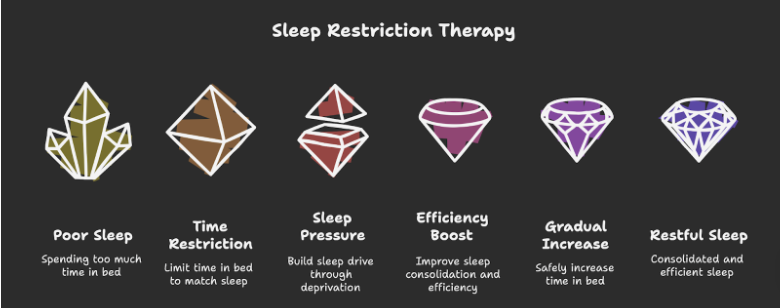
This is often the most challenging, yet most impactful, component. It involves strategically limiting the time you spend in bed to match your actual sleep time. The goal? To create a mild, controlled state of sleep deprivation, which dramatically increases your "sleep drive" and makes your sleep more consolidated and efficient.
- How it Works: If you typically only sleep 5 hours but spend 8 hours in bed, you might initially be restricted to 5.5 hours in bed. You stick to this strict schedule, regardless of how tired you feel during the day.
- The Powerful Payoff: This builds intense sleep pressure, leading to more solid, uninterrupted sleep. As your sleep efficiency improves (meaning you're actually sleeping for most of the time you're in bed), your time in bed is gradually and safely increased.
- Coping with the Initial Discomfort: Be prepared for initial daytime sleepiness. Plan for reduced activities, prioritize self-care, and remind yourself: this is a temporary, strategic phase designed for profound, long-term relief. You are actively retraining your body to love sleep again.
This part of the work can feel tough in the beginning. That’s why at Coach for Mind, we guide you step-by-step, adjusting things gently, supporting you through the dips, and helping you feel safe as your sleep resets.
4.2. Stimulus Control Therapy: Reclaiming Your Bedroom
This technique aims to re-associate your bed and bedroom solely with sleep and sex, breaking the negative associations that build up when you spend hours awake and frustrated in bed.
- Your New Rules for the Bedroom:
- Go to bed only when you are sleepy. Not just tired, but genuinely sleepy.
- If you can't fall asleep within 20 minutes, get out of bed. Don't lie there stewing. Go to another room and engage in a quiet, non-stimulating activity (e.g., read a truly boring book, listen to calm music) until you feel sleepy again.
- Return to bed only when sleepy. Repeat this process as often as necessary.
- Wake up at the same time every morning, regardless of how much you slept. This anchors your circadian rhythm.
- Avoid napping during the day. This preserves your sleep drive for the night.
4.3. Cognitive Restructuring: Taming the Anxious Mind
This component directly addresses the unhelpful thoughts and beliefs about sleep that fuel anxiety and keep you awake. These might include catastrophic thinking ("I'll never sleep again!"), performance anxiety ("I have to sleep tonight!"), or misinterpretations of sleep loss.
- How it Works: A therapist helps you identify these negative thought patterns and challenge their validity. You learn to replace them with more realistic, balanced, and helpful perspectives.
- An Example in Action: Instead of the paralyzing thought, "If I don't sleep tonight, tomorrow will be completely ruined," you might reframe it to: "I've managed on less sleep before, and even a little rest will help. I'll focus on what I can control right now."
- The Worry Journal: Many find it helpful to keep a worry journal, writing down anxieties and to-do lists earlier in the evening to clear their mind before bed.
4.4. When Sleep Tips Aren’t Enough
Maybe you’ve already tried all the usual advice , less screen time, no caffeine, a fixed bedtime routine. These can help, yes, but for many of our clients at Coach for Mind, they’re just not enough.
You might be doing everything “right” and still not sleeping. That doesn’t mean you’re failing , it just means something deeper is going on.
This is where we begin.
At Coach for Mind, we help you look at what’s happening underneath the sleep struggles:
- Maybe your body still feels stuck in stress mode.
- Maybe your mind has learned that night time isn’t safe or peaceful.
- Maybe there are emotions, thoughts, or memories that only show up when things finally get quiet.
We use gentle, effective methods like CBT-I, IFS, and trauma-informed therapy to help your whole system feel safe enough to rest again , not just your mind, but your body too.
4.5. Relaxation Training: Calming Body and Mind
Techniques like progressive muscle relaxation, diaphragmatic breathing, mindfulness, and guided imagery are powerful tools to help reduce physiological arousal and prepare your body and mind for sleep. These are often integrated into CBT-I to complement the behavioral and cognitive shifts, helping you transition from a state of alertness to one of calm readiness for sleep.
CBT-I vs. Sleep Medication: A Long-Term Perspective
The distinction between CBT-I and sleep medication is fundamental. While medications can offer rapid, short-term relief, their benefits often wane over time. Crucially, they don't teach you the vital skills to manage your sleep independently.
CBT-I, on the other hand, provides you with a robust "insomniac's toolkit" – a set of strategies that empower you to overcome sleep difficulties for good. Studies consistently demonstrate that the benefits of CBT-I are more durable and long-lasting than those of sleep medication, often persisting for years after treatment. It's about empowerment, not dependence.
6. Finding Your Path to Restful Sleep: Navigating Professional Support
If you're grappling with chronic insomnia, seeking professional help is the most powerful step you can take. Finding a qualified CBT-I therapist can be truly transformative.
- Look for Certified Professionals: Seek out psychologists or sleep specialists specifically trained and certified in CBT-I. Coach For Mind has multiple therapist who are trained in CBT-I
- Explore Delivery Formats: CBT-I is increasingly accessible in various forms:
- Individual Therapy: One-on-one sessions offer personalized guidance.Here therapist will dedicate entire 1 hour to you.
- Group Therapy: Can be a cost-effective option and provides valuable peer support. Here you learn from other people experience as well and therapist facilitate the group therapy.
The journey to overcoming insomnia can feel long and challenging, but Cognitive Behavioral Therapy for Insomnia a commitment to learning, adapting, and ultimately, reclaiming the consistent, restorative sleep you deserve.
Why CoachForMind?
Experienced Psychologists: We are a team of licensed RCI-registered clinical psychologists. Our team is well-experienced in various forms of therapy such as CBT, DBT, EMDR, and Narrative Therapy.
Personalized Approach: We are dedicated to treating our clients in the best-suited way, carefully curated as per the client's needs, and adhering to one-on-one, client-centered therapy.
Scientific Techniques: Our treatment plans and therapeutic methods are based on highly researched scientific findings such as CBT, DBT, EMDR and Narrative Therapy.
Quality service: We at CoachForMind ensure quality services in our treatment regime and therapeutic approaches. Our clients hold the most value to us, so we ground our techniques in empathy while maintaining professionalism.
Begin with a free 15-minute discovery call For more information, please visit our website or contact us directly at [email protected]
If you are based in Gurgaon and looking for in-person support, our dedicated CBT therapy in Gurgaon page covers session formats, fees, and our therapist team at Sector 70.
Written by Ms Akshita- Psychotherapist at Coach For Mind
FAQ's
This is something we hear a lot. You feel completely worn out, but the moment you try to fall asleep, nothing happens. Your body is tired, but your system just won't let go.
At Coach for Mind, we understand that this isn't about willpower — and it's not just about sleep hygiene. Sometimes, a part of you is staying alert for a reason. Maybe there's stress, anxiety, or old emotional patterns running quietly in the background, making it hard to truly switch off.
We work with you to gently explore what's underneath. Using a mix of CBT-I, IFS, and trauma-informed approaches, we help you understand what your system is holding onto — and why. When your nervous system starts to feel safe, supported, and no longer on guard, sleep begins to come more naturally.
You don't need to try harder. You need support that gets to the root of it — and we're here for that.
This is something many people with sleep struggles deal with. All day, you're busy — working, thinking, coping. But the moment you lie down and everything gets quiet, your mind suddenly starts racing. It's like all the thoughts and feelings you've been pushing aside finally show up at once.
At Coach for Mind, we see this as a sign that something deeper needs attention — not something to fight or shut down.
We use tools like CBT (Cognitive Behavioural Therapy) for Insomnia to help calm your sleep routine, but we also go deeper using IFS (Internal Family Systems) and trauma-informed therapy. These help us gently explore the parts of you that might be carrying stress, fear, or unfinished emotions — the parts that get loud at night because they haven't had space during the day.
Instead of pushing those thoughts away, we help you understand where they're coming from, what they might need, and how to bring your system into balance. When those parts feel seen and supported, the mental noise at night often begins to quiet down — and real rest becomes possible.
This happens to a lot of people. You feel exhausted, but when you finally try to relax, your body stays tense and your mind keeps spinning. It's like your system doesn't know how to power down — even when you're desperate to rest.
At Coach for Mind, we help you understand why that's happening. Sometimes, your body is stuck in a stress response — holding onto old patterns from times when resting didn't feel safe or possible. Your mind might be ready for sleep, but your body hasn't gotten the message yet.
That's why we don't just look at your thoughts with CBT (Cognitive Behavioural Therapy) for Insomnia, we also work with your body and nervous system using somatic tools and EMDR. These methods help release stored stress and teach your system how to feel safe again — not just think safe.
Together, we explore:
- What your body is holding onto and why
- Old stress patterns that may be running in the background
- How to slowly teach your system it's okay to relax now
You don't have to force sleep. With the right support, your body can relearn how to rest — naturally, gently, and on its own time.
That's a fair question. If you've been dealing with poor sleep for a long time, it can start to feel normal — even if it's draining you.
You might be getting through the day, holding it all together but that doesn't mean you're feeling your best. Lack of sleep builds up over time — it can quietly affect your mood, energy, focus, and even your relationships.
At Coach for Mind, we help people who've gotten used to pushing through. You don't have to be in crisis to get support. Therapy can help you understand what's keeping your sleep stuck — and give you the tools to finally rest in a way that feels natural, not forced.
At Coach for Mind, we believe therapy should be like a launchpad, not a walking aid. CBT-I (Cognitive Behavioral Therapy for Insomnia) is one of the most effective, research-backed tools for improving sleep — and it often works faster than people expect.
We focus on small, realistic shifts in your thoughts, habits, and sleep routine that start making a difference early on. We don't stop at symptom relief. If you're open to it, we also explore what's been keeping your nervous system in "alert mode" — the deeper emotional or psychological patterns that often drive chronic sleep issues.
You won't be stuck in therapy. You'll be supported in finding real, lasting change — so you can sleep better, feel clearer, and finally get the rest your mind and body have been craving.


