TL;DR
- Stress headaches are tension-type headaches: a dull, pressing band on both sides of the head, often with a tight neck and shoulders.
- Stress is the most common trigger: alongside poor sleep, screen strain, skipped meals and jaw clenching.
- Know the red flags: a sudden severe headache, or headache with fever, weakness, confusion or vision loss, needs urgent medical care.
- Go easy on painkillers: using them more than two or three days a week can cause more headaches.
- Frequent headaches are treatable: relaxation training and stress-focused therapy are recommended, alongside your doctor's care.
Written by Anasuya Dasgupta, RCI-registered Clinical Psychologist (CRR-A94499). Clinically reviewed by Lekh Bajaj, RCI-registered Clinical Psychologist (CRR-A79125).
Introduction: The Headache That Arrives at 4 p.m.
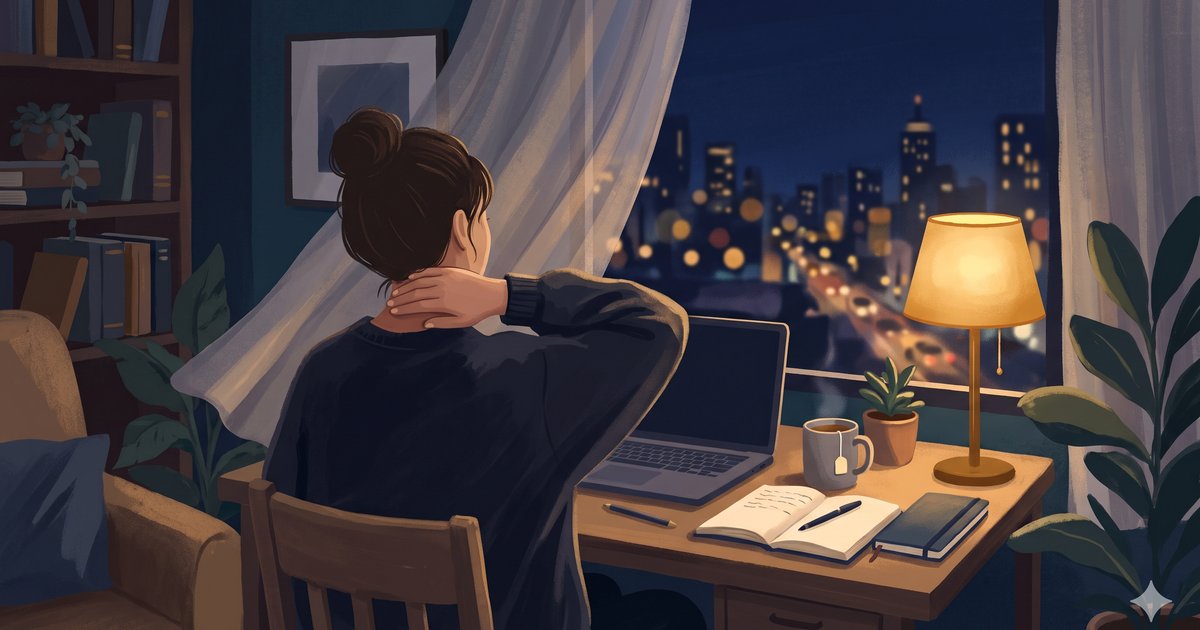
It starts as a tightness behind the eyes somewhere in the afternoon. By evening it is a band around your head and a neck that will not turn properly. You take a tablet, it eases, and the next day it is back. On holiday, it disappears.
This is the most common headache in the world, and stress is its most common trigger. This article explains what a stress headache is, how to tell it from migraine and from something more serious, and what helps when it becomes a regular visitor.
1. What Is a Stress Headache?
A stress headache is the everyday name for a tension-type headache: a dull, pressing pain on both sides of the head, usually mild to moderate, that is triggered or worsened by stress and muscle tension. It is the most common type of headache. Most people have one occasionally. It becomes a problem when it happens most days.
2. Where You Feel It and What It Feels Like
- a tight band or pressure across the forehead
- aching at the temples or behind the eyes
- heaviness or pain at the back of the head and upper neck
- tender scalp, neck and shoulder muscles
- a steady, pressing quality, not a throb
It does not usually cause nausea or vomiting, and you can generally carry on with your day, though with less patience and concentration.
3. Why Stress Causes Headaches
- Muscle tension. Under stress, the muscles of the scalp, jaw, neck and shoulders tighten and stay tight.
- Jaw clenching and teeth grinding. Common during the day under pressure and at night during stressful periods.
- A more sensitive pain system. With frequent headaches, the nervous system becomes quicker to register pain from muscles around the head.
- Stress habits. Long screen hours, poor posture, skipped meals, too little water, too much caffeine and short sleep each add to the load.
Many people notice a "let-down" headache as well, which arrives after the pressure ends, on a Saturday morning or the first day of leave.
4. Tension Headache or Migraine?
Tension-type headache is usually two-sided, pressing and mild to moderate. Migraine is more often one-sided and throbbing, moderate to severe, worse with movement, and comes with nausea or sensitivity to light and sound. Some people see flashing lights or zigzag lines beforehand.
The two can occur in the same person, and stress can trigger both. If you are not sure which you have, a doctor can help, and the distinction matters because the medical treatments differ.
5. When a Headache Needs a Doctor Urgently
Seek urgent medical care for:
- a sudden, severe headache that peaks within a minute, or the worst headache of your life
- headache with fever and a stiff neck, or a rash
- headache with weakness, numbness, confusion, difficulty speaking or loss of vision
- headache after a head injury
- a new headache after the age of 50, or during pregnancy
- headaches that are steadily getting worse, or that wake you from sleep
See a doctor in the ordinary way if you have headaches on more than 15 days a month, or if you need painkillers more than two or three days a week.
6. What Helps
- Break the posture. Stand, roll the shoulders and stretch the neck gently every hour at a desk.
- Rest your eyes. Look into the distance for 20 seconds every 20 minutes of screen time.
- Warmth or cool. A warm compress on the neck or a cool cloth on the forehead.
- Water and regular meals. Dehydration and long gaps between meals are common triggers.
- Slow breathing. A few minutes with a longer out-breath lowers muscle tension.
- Unclench the jaw. Lips together, teeth apart, tongue resting on the roof of the mouth.
- Protect sleep. Both too little and irregular sleep bring on headaches.
A note on painkillers. Occasional use is common and reasonable. Using them on more than two or three days a week over months can lead to medication-overuse headache, where the tablets themselves keep the headaches going. If that sounds like you, speak to a doctor before stopping or changing anything.
7. When Headaches Become Frequent
If tension headaches are arriving most days, the tablets are treating the result and not the cause. Guidelines for tension-type headache recommend non-drug treatments, including relaxation training, biofeedback and cognitive behavioural stress management, especially when headaches are frequent.
In therapy you learn to notice where and when you brace, to release it, and to change the pressures and habits that keep your system switched on. Read more about chronic pain therapy and stress-linked physical symptoms.
Support at Coach For Mind
At Coach For Mind, work on stress-linked physical symptoms is led by Anasuya Dasgupta, an RCI-registered Clinical Psychologist who combines CBT with body-based approaches. We work alongside your doctor's care and do not advise on medication.
Sessions are available online across India and in person at our Sector 70 clinic in Gurgaon. Book a free 15-minute call on WhatsApp.
Conclusion
A stress headache is your body's way of showing how much tension it is carrying. An occasional one needs only rest and water. A headache most days is a signal worth listening to: see a doctor to rule out other causes and check your painkiller use, and then look at what is keeping your muscles and your nervous system braced.
References
Headache Classification Committee of the International Headache Society. The International Classification of Headache Disorders, 3rd edition (ICHD-3). Cephalalgia, 2018.
Ashina S, et al. Tension-type headache. Nature Reviews Disease Primers, 2021.
Bendtsen L, et al. EFNS guideline on the treatment of tension-type headache. European Journal of Neurology, 2010.
Holroyd KA, et al. Management of chronic tension-type headache with tricyclic antidepressant medication, stress management therapy, and their combination. JAMA, 2001.
For informational purposes only. Not clinical advice. iCall (India): 9152987821.
Frequently Asked Questions
A stress or tension-type headache usually feels like a dull, steady pressure or tightness on both sides of the head, often described as a tight band around the forehead or a weight at the back of the head and neck. It is mild to moderate, does not throb, and is not usually made worse by ordinary activity such as walking.
Tension headaches are typically felt on both sides: across the forehead, at the temples, around the head like a band, or at the back of the head and upper neck. The scalp, neck and shoulder muscles are often tender to touch.
A single tension-type headache can last from 30 minutes to several days, though most ease within a few hours. Headaches on 15 or more days a month for over three months are classed as chronic tension-type headache and should be discussed with a doctor.
Tension headaches are usually two-sided, pressing and mild to moderate, without nausea. Migraine is more often one-sided and throbbing, moderate to severe, worse with movement, and comes with nausea or sensitivity to light and sound. People can have both, and stress can trigger either.
Rest your eyes, drink water, stretch the neck and shoulders gently, apply warmth to the neck or a cool cloth to the forehead, and slow your breathing. Occasional use of a simple painkiller is common, but taking painkillers on more than two or three days a week can itself cause headaches, so speak to a doctor if you need them that often.
Yes. Relaxation training, biofeedback and cognitive behavioural stress management are recommended non-drug treatments for frequent tension-type headache. They reduce muscle tension and the stress that drives it, and work alongside medical care.
Useful Resources
- Chronic pain therapy in India — psychological therapy for long-term pain, including headaches
- Psychosomatic disorder treatment in India — our guide to stress-linked physical symptoms
- Work stress and burnout counselling — when work pressure is the source