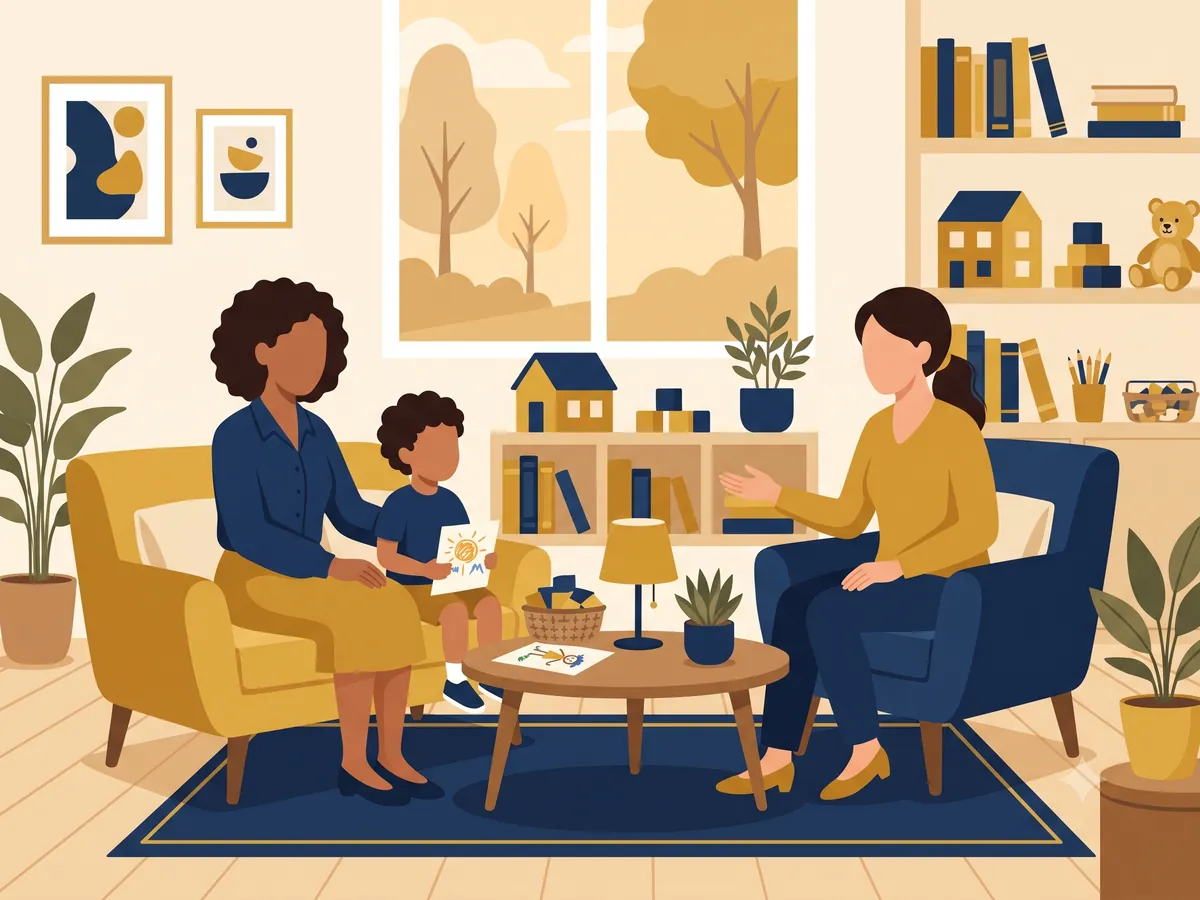
TL;DR
- Speech delay has many possible causes, and autism is only one of them: hearing issues, bilingual homes, developmental variation, and temperament are all common, non-autism explanations.
- The difference isn't something you can work out from a checklist at 11pm: it needs a proper evaluation that looks at the whole developmental picture, not speech alone.
- It's the pattern that matters, not any single sign: eye contact, response to name, pointing, and play style, considered together over time, tell you far more than a delay by itself.
- Around 1 in 100 Indian children aged 2 to 9 may have autism: a landmark nationwide study by the INCLEN Trust, published in PLOS Medicine, found this rate, alongside nearly 1 in 8 children showing at least one neurodevelopmental condition, so a concern like this is more common than it might feel in the moment.
- An evaluation gives you a plan, not just a diagnosis: whatever it finds, you leave with more clarity than you had going in, and a concrete next step.
Introduction: The Question Most Parents Ask at 11pm
A landmark nationwide study by the INCLEN Trust, published in PLOS Medicine, found that roughly 1 in 100 children in India aged 2 to 9 may have autism, and nearly 1 in 8 has at least one neurodevelopmental condition. If you're lying awake tonight wondering whether your toddler's quiet vocabulary means something more, you are far from the only parent turning that question over in the dark.
Here's the honest answer: speech delay has many possible causes, and autism is only one of them. It's not something you can figure out from a checklist or a late-night search; the difference comes down to a proper evaluation by a professional who can look at the whole picture. Most speech delays are not autism, and even when a delay does turn out to be connected to autism, an evaluation gives you clarity and a plan, not just a worry with nowhere to go.
This is not about dismissing your concern. And it's not about assuming the worst, either. What we see again and again is that parents arrive carrying far more fear than the situation usually warrants, simply because nobody has walked them through what actually distinguishes a normal variation in development from something worth a closer look.
This article covers typical speech milestones, the common causes of delay that have nothing to do with autism, the signs that genuinely warrant a screening, and what you can do while you figure it out.
Speech Milestones: Ranges, Not Deadlines
Children develop language at different paces, and the “typical” ranges you'll find are wide for good reason. As a loose guide:
- By around 12 months, many children say a first word or two and respond to their name
- By around 18 months, many have a small but growing vocabulary of single words
- By around 2 years, many are starting to combine two words together (“more milk,” “mama go”)
- By around 3 years, many are forming short sentences and can be understood by people outside the family most of the time
These are broad patterns, not deadlines. A child who's a few months behind on any one of these is not automatically a cause for alarm; plenty of children catch up on their own, especially with some encouragement at home. The point of milestones is to give you a general sense of direction, not something to measure your child against week by week. If you want a more detailed, doctor-reviewed checklist, the resources section below links to two you can use for free.
Take Riya, just over 2: she was saying maybe six words at a family gathering where her cousin the same age was already forming short sentences. Riya's parents spent the drive home in silence, quietly panicking. Her paediatrician's actual assessment: Riya understood everything said to her, pointed to ask for things, and used gestures constantly, all signs of solid underlying communication, just with expressive language lagging a little. Six months of more deliberate talking and reading at home, and a follow-up check, was the entire plan. No referral, no diagnosis, just a bit of patience and more conversation.
Common Causes of Speech Delay That Aren't Autism
Before autism enters the conversation at all, it's worth knowing how many other things can cause a speech delay, because in most cases, one of these is what's actually going on.
Hearing difficulties
Even mild or intermittent hearing loss, including from frequent ear infections, can meaningfully slow down speech development, since a child needs to hear sounds clearly and consistently to reproduce them. This is one of the first things worth ruling out, and a hearing test is simple and non-invasive.
Growing up bilingual or multilingual
Children in homes where two or more languages are spoken (extremely common across urban India, where a child might hear Hindi, English, and a regional language in the same week) sometimes talk a little later, or mix languages for a while, as they work out multiple systems at once. This is a well-documented, normal pattern, not a disorder, and most bilingual children catch up to their peers in each language over time.
General developmental variation
Some children are simply later talkers by temperament, the same way some children walk a little later. Often there's a family history of this, and the child is otherwise developing typically in every other way.
Limited opportunities for verbal interaction
Children learn language largely through back-and-forth interaction with the people around them. A child who has fewer opportunities for this, for whatever reason, including busy households or heavy screen use in place of conversation, may show a delay that responds well to more verbal engagement.
Temperament
Some children are naturally quieter or more cautious, and take longer to feel comfortable talking, especially outside the home or with unfamiliar people. This isn't the same as a language delay, though the two can look similar from the outside.
Regional autism prevalence studies in India have found notable variation, from under 0.5 percent in some urban areas to close to 2 percent in some rural regions, which researchers attribute partly to differences in awareness, screening access, and reporting rather than a true difference in underlying rates. What this means practically: a low reported number in your area doesn't rule anything in or out for your child, it simply reflects how differently autism gets identified across the country.
When Speech Delay Might Warrant an Autism Screening
Autism isn't identified by speech delay alone; it's identified by a broader pattern that includes speech as one piece among several. If you're wondering whether to raise autism specifically with a professional, these are the kinds of things that, together, might prompt that conversation:
- Limited eye contact, or eye contact that seems different from what you see in other children
- Not consistently responding when their name is called, even when hearing seems fine
- Not pointing at things to share interest, or not following where someone else is pointing or looking
- Play that looks quite repetitive or narrowly focused, more than a typical strong interest
- Strong reactions to certain sounds, textures, lights, or other sensory input
- Limited use of gestures overall, not just words, but also nodding, waving, or reaching to be picked up
None of these signs on their own means anything definitive. What matters is the overall pattern, observed over time, by someone trained to make sense of it. If several of these genuinely resonate with what you're seeing, it's reasonable to bring it up with your paediatrician or a child psychologist, not because it confirms anything, but because it's worth a proper look.
Here's what that can look like in practice. Arjun's parents noticed he was 22 months old and not yet saying single words, and on its own that might have simply been a later talker. But alongside it, he rarely looked up when his name was called, lined his toy cars up in the same order every time and became distressed if the order changed, and hadn't started pointing at things he wanted. It was that combination, not the speech delay by itself, that led their paediatrician to suggest a developmental evaluation. The evaluation gave the family a clear picture and a concrete early-intervention plan within a few weeks, which felt far more manageable than the uncertainty they'd been sitting with.
One parent described the period before the evaluation this way: “The waiting was worse than any answer could have been. Once we actually knew what we were dealing with, we could finally do something instead of just watching and worrying.” That's a common experience: the uncertainty itself is often more distressing than whatever the evaluation eventually finds.
What an Autism Evaluation Actually Involves
An evaluation is a structured, collaborative process, not a single test with a yes-or-no result. It typically includes:
- A detailed conversation with parents about developmental history and current behaviour across different settings
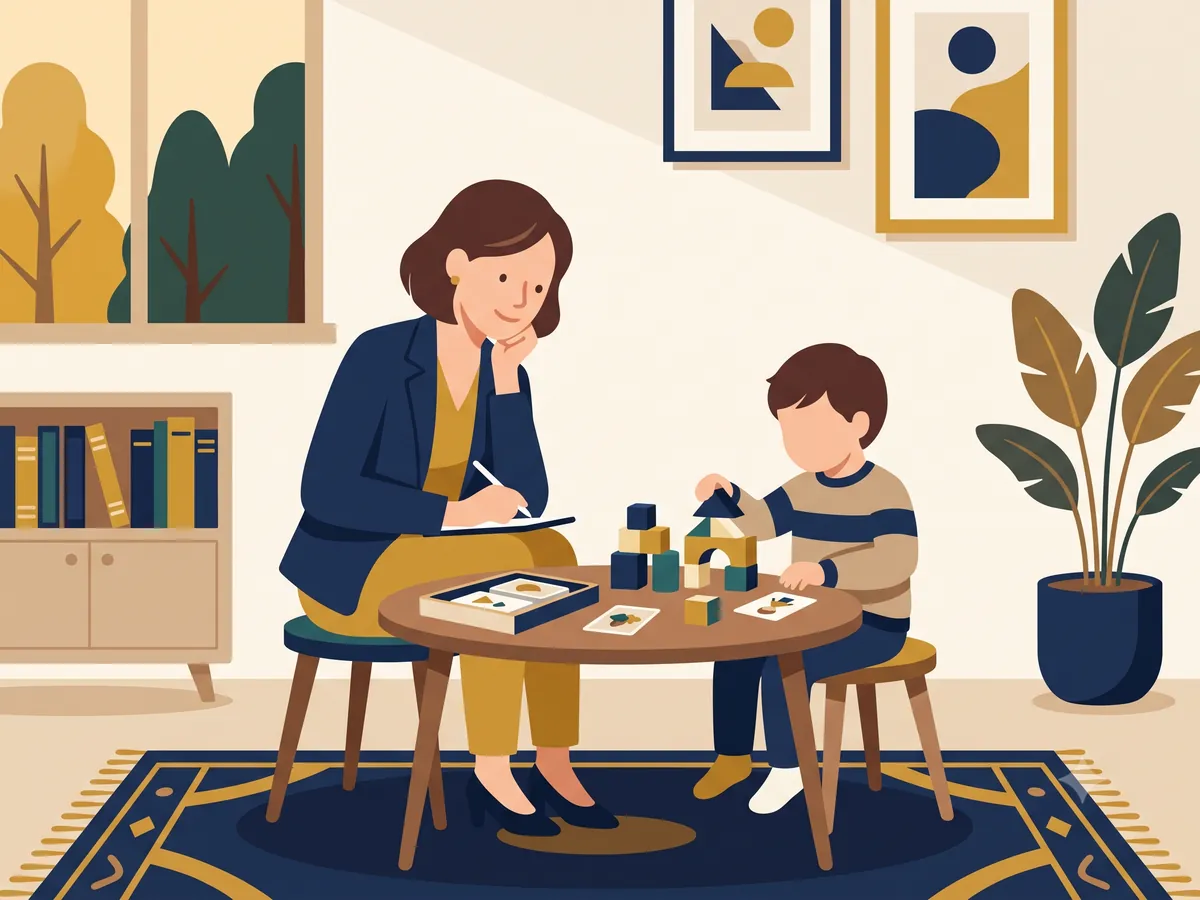
- Direct, structured observation of the child: how they play, communicate, and interact
- Standardised assessment tools designed specifically for early childhood development
- Often, input from a speech-language pathologist to assess communication specifically, alongside the broader developmental picture
At the end, you receive a clear written report explaining what was found and what it means in practical terms, along with a discussion of what support, if any, would help your child, and what that could look like. Whatever the outcome, you leave with more clarity than you had going in, and a concrete next step.
How Does an Evaluation Actually Help?
The value of an evaluation isn't only in the answer it gives you, it's in what that answer lets you do next.
If the picture points toward a non-autism explanation, like a hearing issue or a typical developmental variation, you get to stop carrying a worry that wasn't warranted, and instead focus on the specific, manageable thing that's actually going on: a hearing test, more verbal engagement at home, or simply time.
If the picture does point toward autism, early identification is one of the most consistently supported findings in developmental research: the earlier a child starts appropriate support, the more responsive their development tends to be to that support. An evaluation replaces an open-ended worry with a concrete plan, therapy options, school considerations, home strategies, tailored to your specific child rather than to autism in general.
And regardless of the outcome, an evaluation changes the emotional experience for parents. Uncertainty is exhausting in a way that even difficult clarity usually isn't. Most parents describe the relief of finally understanding what they're working with as significant, even when the news itself isn't simple.
You know your child better than any checklist ever will. Trusting that instinct, and following through with an evaluation, isn't overreacting. It's showing up for your child exactly when it matters.
What You Can Do in the Meantime
While you're deciding whether to seek an evaluation, or waiting for an appointment, there's a lot you can do that helps regardless of the underlying cause:
- Talk to your child often, even about ordinary things: narrate what you're doing while you cook, dress them, or walk around the house
- Get down to their level and respond to whatever they're trying to communicate, even if it's not with words yet
- Read together regularly, pointing at pictures and naming things, rather than just reading the text straight through
- Reduce screen time that substitutes for interaction, and look for more back-and-forth moments in the day
- Give your child time to respond before jumping in to answer or finish sentences for them
None of this is about “fixing” anything urgently; it's just good, low-pressure practice that supports language development however things turn out.
Support at Coach For Mind
At Coach For Mind, our team can carry out a full developmental and autism evaluation for young children, combining structured observation and standardised tools with a genuinely collaborative process — we take the time to understand what you're seeing at home and at school before we ever sit down with your child.
We also recognise that many parents aren't ready to commit to a full evaluation right away, and that's completely reasonable. Before that, we offer a shorter conversation to help you figure out whether a full evaluation is the right next step at all, so it feels like a normal appointment rather than a big, frightening decision.
If you're noticing some of the patterns described in this article and aren't sure what to do next, you're welcome to explore it with us. We offer a free 15-minute discovery call to help you understand what might be going on. Sessions are available online across India and internationally for NRI families, and in person in Gurgaon.
Conclusion
If you've been sitting with this worry quietly, that alone says something about how much you care about getting this right for your child. Speech delay has many possible explanations, and autism is only one of them. Either way, the path forward isn't guessing at 11pm; it's a proper evaluation that looks at your child's whole picture, and a plan built around what that picture actually shows.
That clarity, more than any single milestone or checklist, is usually what parents are really looking for.
References
Arora, N.K., et al. (2018). Neurodevelopmental disorders in children aged 2-9 years: Population based burden estimates across five regions in India. PLOS Medicine, 15(7), e1002615.
American Psychiatric Association. (2013). Diagnostic and Statistical Manual of Mental Disorders (5th ed.).
Zubler, J.M., et al. (2022). Evidence-informed milestones for developmental surveillance tools. Pediatrics, 149(3).
Raj, D., Chakrabarti, B., et al. (2017). Prevalence of autism spectrum disorder and autistic symptoms in a school-based cohort of children in Kolkata, India. Autism Research, 10(10), 1597-1605.
American Speech-Language-Hearing Association. Typical speech and language development.
For informational purposes only. Not clinical advice. iCall (India): 9152987821.
Frequently Asked Questions
Not immediately. Two-year-olds vary widely in how much they're saying. If your child is combining even a couple of words, responding to you, and communicating in other ways (pointing, gestures, expressions), that's a reasonable sign of things moving in the right direction. If you're still unsure after a few months, or if several other signs feel off, it's worth a conversation with your paediatrician.
No. In fact, most speech delays are not related to autism at all. Hearing issues, bilingual environments, developmental variation, and temperament are all common, non-autism explanations. Autism involves a broader pattern beyond speech alone, and can only be properly identified through a full evaluation.
Bilingual and multilingual children sometimes talk a little later or mix languages for a period, but this is a normal, well-documented pattern rather than a disorder. Most bilingual children catch up in each language over time, and being raised bilingual has real long-term benefits.
If you've noticed a delay that's persisted for a few months, if it's paired with other signs like limited eye contact or reduced response to their name, or if you simply can't shake the worry, that's a reasonable point to speak with a paediatrician or child psychologist. An evaluation doesn't commit you to anything; it just gives you clearer information to work with.
This is a genuinely useful distinction. Receptive language (what a child understands) often develops ahead of expressive language (what a child can say), and that gap is normal to a point. A child who follows instructions, responds to their name, and engages with what's said to them is showing strong underlying communication, even if their spoken vocabulary is still catching up. This gap is one of the things a professional evaluation specifically looks at, since how it behaves over time is more informative than the vocabulary count alone.
Useful Resources
- CDC's Developmental Milestones, “Learn the Signs. Act Early.” — free, doctor-reviewed milestone checklists by age, with printable versions
- NIDCD Speech and Language Developmental Milestones — a milestone checklist from birth to age 5, maintained by the U.S. National Institutes of Health