TL;DR Key Takeaways
- Anger is an outer emotion, a secondary response protecting more vulnerable primary emotions: fear, shame, grief, helplessness, and hurt. Each of these has its own clinical profile and its own treatment pathway.
- Unprocessed trauma is one of the most common and least-identified roots of chronic anger in India, rewiring the nervous system's threat threshold, narrowing the window of tolerance, and producing reactions that look disproportionate because they are responding to an older wound, not the present trigger.
- In adults with ADHD, emotional dysregulation and Rejection Sensitive Dysphoria create anger patterns that look like aggression but are driven by a neurologically under-regulated system requiring ADHD-specific assessment and treatment.
- Effective anger therapy goes beyond techniques. It uses CBT to rewire interpretive belief systems, DBT to build emotional regulation capacity, EMDR to process traumatic memory, Somatic Therapy to complete stored threat responses in the body, and Narrative Therapy to separate the person from the anger identity.
- Anger in the MNC workplace in Gurgaon is one of the most shame-laden and least-addressed mental health concerns in Indian professional culture, and it is entirely treatable.
Coach For Mind's RCI-registered clinical psychologists offer trauma-informed, modality-specific anger therapy in Gurgaon and online across India.
The Anger Nobody Talks About in the Office
It does not announce itself dramatically. It does not always look like the scene in a film where someone overturns a table or storms out of a boardroom. Sometimes it is the email you drafted and deleted three times because you knew what you actually wanted to write was not appropriate. Sometimes it is the way you spoke to someone you love that evening after a day you cannot fully explain. Sometimes it is a jaw that has been clenched for so long you have forgotten it is happening.
In Gurgaon's dense MNC ecosystem, where performance pressure is constant, hierarchies are complex, and the informal rules about emotional expression are strict, anger does not disappear. It goes underground. And what goes underground does not resolve. It finds other exits.
This is the anger that most people who come to therapy for 'anger management' are actually carrying. Not a temper problem. Not a personality defect. A system under chronic pressure that has run out of better options.
If you recognise yourself in that description, this article is for you. Not because it will tell you to breathe deeply and count to ten, but because it will explain what is actually happening when you are angry in ways that go unseen, and what it genuinely takes to change it.
Anger is an Outer Emotion
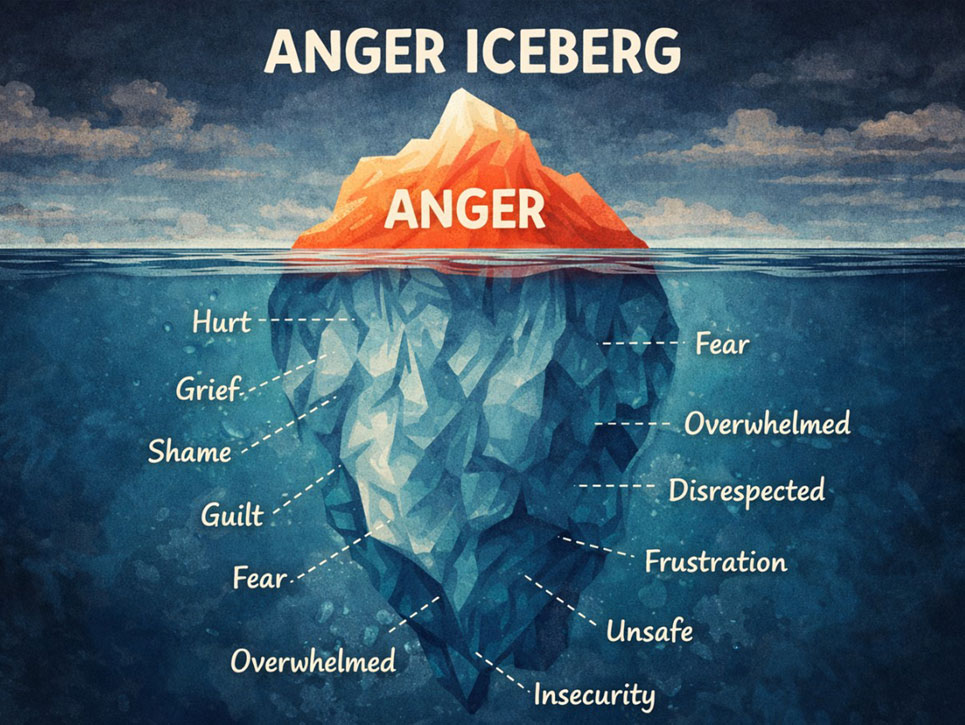
The most important thing to understand about anger and the thing most 'anger management' content does not adequately address is this: anger is rarely the primary emotion. It is a secondary one.
Psychologists describe anger as a surface emotion, one that arises quickly, is socially visible, and tends to create a sense of power and forward motion in a person who, moments before, felt something far more uncomfortable. Anger is fast. It has momentum. It tells you to act. The emotions beneath it are slower, more exposed, and much harder to sit with.
|
"Anger is what we feel when we cannot afford to feel what we actually feel." |
Beneath most anger episodes, particularly the disproportionate ones, the ones that surprise even the person experiencing them, you will find one or more of the following primary emotions. Each one deserves more than a passing mention, because recognising your own in this list is often the first genuine moment of insight a person has about their anger.
Fear: The Emotion That Moves Fastest to Anger
Fear and anger share the same neurological starting point: the amygdala's threat-detection system. When the brain perceives danger, whether that danger is physical, relational, or reputational, it activates the fight-or-flight response. For many people, 'fight' is the default output. Anger is what fear looks like when it has decided to go on the offensive.
In professional settings, fear rarely announces itself as fear. It arrives dressed as irritability when a project is behind schedule, as aggression in a meeting where you feel exposed, as snapping at a team member who has raised a question that highlights a gap you have not yet solved. Underneath each of these is a nervous system that has categorised something as threatening and has chosen aggression as its best available protection.
The fears that most commonly generate chronic workplace anger are not about physical safety. They are about status, belonging, and adequacy: the fear of being seen as incompetent, the fear of losing control of an outcome that carries enormous personal weight, the fear of being exposed as less capable than others believe, the fear of being rejected or abandoned by people whose approval feels essential. These fears are not irrational; they are learned. They were taught by environments in which those outcomes were real and consequential. The nervous system simply never received the signal that the old environment had passed.
|
Fear into anger: a clinical example A senior manager consistently erupts when their team raises concerns about timelines in front of leadership. Their colleagues experience this as aggression. What is actually happening: the manager grew up in a household where failing to meet expectations had severe consequences, and their nervous system has coded 'exposed inadequacy in front of authority' as a mortal threat. Anger is the threat response. Fear is the driver. Therapy does not work on anger. It works on the fear and on updating the nervous system's threat assessment to match the present, not the past. |
Shame: The Emotion Anger Is Most Desperate to Conceal
If fear is the emotion that moves fastest to anger, shame is the one that anger is most fiercely defending against. Shame is not guilt. Guilt says, 'I did something wrong.' Shame says, 'I am wrong.' It is the belief, often unconscious and installed in childhood, that one is fundamentally inadequate, unlovable, defective, or unworthy.
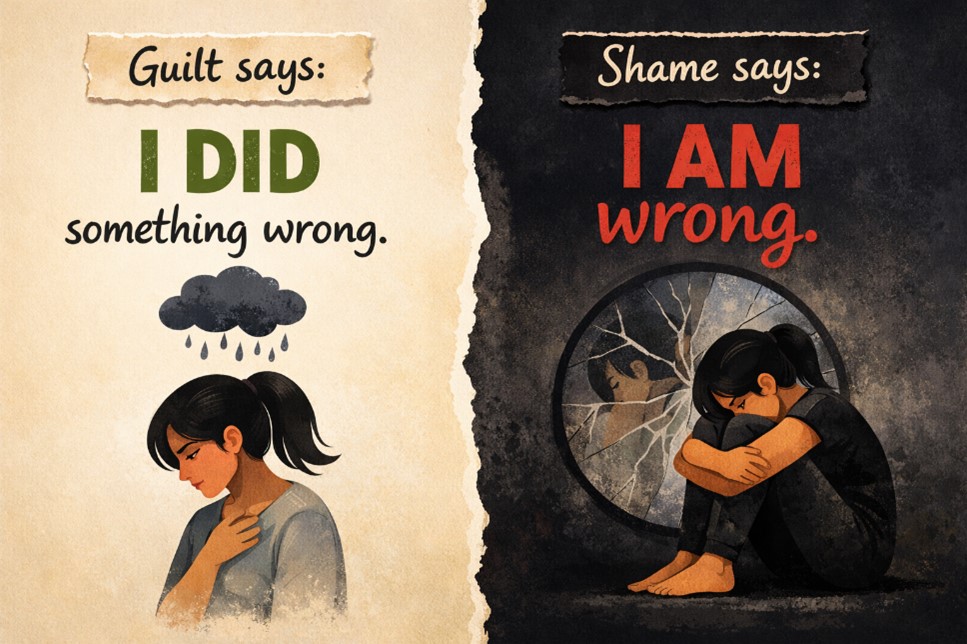
Shame is intolerable. It is the most destabilising emotional experience the human system can undergo. And anger is one of the fastest available exits from it. When someone feels exposed, criticised, ridiculed, or dismissed, the internal experience is briefly a freefall, a moment of profound vulnerability. For people with significant shame histories, that freefall is not tolerated. Anger arrives as a rescue: loud, forceful, outward-moving, and very effective at relocating the threat from inside the self to somewhere external.
This is why the most shame-driven anger often follows a very particular pattern: a moment of perceived exposure or inadequacy, immediately followed by a disproportionate counter-attack. The person watching it from outside sees aggression. The person experiencing it often cannot even identify what triggered it, because the shame move was so fast and so intolerable that it was bypassed entirely on its way to anger.
|
"Shame is the wound anger is guarding. The louder the anger, the deeper the wound is usually buried." |
In Indian professional culture, shame is a particularly potent driver of anger because the stakes of perceived inadequacy are high. Education, career, family reputation, and social standing are deeply intertwined. The person who erupts when their work is questioned in a meeting is very often the person who grew up in an environment where falling short had social consequences, where performance was connected to worth, and worth was always conditional.
Grief: The Loss That Has Never Had Room to Be Felt
Grief as a driver of anger is one of the least recognised connections in clinical practice and one of the most important. Grief does not only follow death. It follows any significant loss: the end of a relationship, an abandoned career dream, the childhood that was never available, the parent who was physically present and emotionally absent, the version of yourself you once believed you would become.
Grief that has not been processed, that has not had adequate space, witness, or permission to be felt in its own right, does not disappear. It transforms. Over time, unacknowledged grief often becomes chronic irritability, low-grade bitterness, or explosive anger that arrives in situations of apparent injustice. The person who erupts at 'unfairness' at the colleague who received credit they felt was earned, at the system that disregarded their contribution, is very often a person carrying accumulated grief about earlier losses where the injustice was real, and the loss was substantial.
People are rarely conscious that grief is part of their anger. In therapy, this connection is one of the more surprising and quietly profound discoveries: the recognition that what has been showing up as rage at external circumstances is, in part, mourning: for time lost, for recognition never given, for a self that was diminished somewhere along the way and never fully rebuilt.
|
💡 Grieving what you never had For many clients at Coach For Mind, a significant portion of unexplained anger traces back to what psychologists call ‘ambiguous loss’ or ‘disenfranchised grief’, the grief of growing up with parents who were present in body but emotionally unavailable, the loss of a childhood that was characterised by pressure rather than safety, the mourning of an authentic self that was suppressed early in favour of performance and compliance. This grief was never named because there was no obvious death, no single catastrophic event. It accumulated quietly. Therapy gives it a name, and naming it simply and honestly is often the beginning of its release. |
Helplessness: The Root of the Most Explosive Anger
Of all the emotions that generate anger, helplessness is often the most explosive. Helplessness is the experience of having no effective agency in a situation that matters enormously. It is the feeling of being trapped in a role, a relationship, an organisation, or a circumstance with no clear exit and no power to change what is causing harm.
For high-achieving professionals, helplessness is particularly destabilising because the entire identity structure has been built on competence, agency, and the ability to solve problems. When a situation arises that genuinely cannot be controlled or resolved a toxic manager who cannot be challenged without career risk, an organisational culture that rewards compliance and punishes authenticity, a relationship that seems to require the suppression of one's own needs to survive the gap between who the person believes they are (capable, effective) and what they can actually do (very little) is intolerable.
Anger in the face of helplessness is the nervous system refusing to accept powerlessness. It is a bid for an agency, however ineffective. The person who explodes at a situation they cannot change is not simply reacting. They are fighting against the unbearable recognition that they cannot fix this. And often, that inability to fix it echoes an earlier experience of helplessness that was never resolved in childhood, when something important was beyond the child's control, and the rage of that powerlessness has never fully discharged.
Hurt: The Relational Wound at the Centre of Most Interpersonal Anger
Hurt is the emotional experience of having been wounded by someone who mattered through dismissal, disregard, betrayal, criticism, or the chronic failure to be seen or valued. It is inherently relational, which is why it is most powerfully activated in relationships: with managers, partners, parents, colleagues, and anyone else whose opinion carries weight.
Hurt is difficult to express directly, particularly for people who grew up in environments where vulnerability was unsafe or where emotional expression was dismissed or ridiculed. The more direct expression of hurt, 'what you said affected me', 'I felt dismissed by that', 'I need to feel valued in this relationship' requires a degree of vulnerability and trust in the other person's response that many people have learned, from experience, is too risky.
Anger is the safer option. It creates distance. It reasserts a kind of power. It avoids the exposure of saying 'you hurt me', which requires admitting that the other person's behaviour had that impact, that you cared enough to be affected. For many people, particularly those raised in cultures or families where emotional exposure was dangerous, anger has been the only way they have known how to show that something mattered. Therapy teaches them that there are other languages for the same message and that those languages are ultimately far more effective.
|
💡 Why this matters clinically When therapy focuses only on managing the expression of anger by slowing the reaction, choosing better words, and walking away, it is working on the surface. This is useful in the short term. But it leaves the underlying emotional driver intact. Fear keeps generating threat responses. Shame keeps collapsing into counter-attacks. Grief keeps accumulating. Helplessness keeps exploding. Hurt keeps arriving with no language to name it. Lasting change requires working with what anger is protecting. That is the heart of what therapy at Coach For Mind addresses and why the work is deeper and more durable than anger management techniques alone. You may book a free discovery call by clicking here! |
This is why someone can complete an 'anger management course', practise all the right techniques, and still find themselves, months later, in the same eruption they were trying to prevent. The techniques were real but the preparation underneath them was incomplete.
The Trauma Underneath the Anger
There is a version of anger that does not respond to insight, techniques, or even sustained effort, not because the person is unwilling to change, but because the anger is not primarily a psychological pattern. It is a physiological one. It is the nervous system running a programme installed by experience, often early experience, that has never been updated. This is trauma-driven anger, and it is one of the most common and most under-identified presentations in clinical practice in India.
Trauma is not only the dramatic events, the accidents, the assaults, the bereavements. Psychological trauma, in the clinical sense, is any experience that overwhelmed the person's capacity to process it at the time: a childhood of chronic emotional unpredictability, growing up with a parent whose mood determined whether you were safe, years of being shamed for emotional expression, or the lack of it, a relationship where your sense of reality was systematically undermined, a workplace that was abusive in ways that were never acknowledged as such. These experiences do not resolve when the situation ends. They are stored in the nervous system as incomplete threat responses, and they continue to drive behaviour long after the threat has passed.
|
"Trauma is not what happened to you. It is what happened inside you as a result of what happened to you, and it is still happening, in the ways you react, until it is addressed." |
How Trauma Specifically Produces Anger
Trauma rewires the nervous system's threat-detection system in several ways that directly generate angry responses:
First, it lowers the threat threshold. A nervous system trained by years of unpredictable or unsafe experience becomes sensitised, meaning it detects threats faster, interprets ambiguous situations as dangerous, and activates the fight response with less provocation than a nervous system that developed in a safer environment. This is why trauma survivors are often described by others as 'overreacting'; their system is calibrated to an older and more dangerous reality.
Second, trauma disrupts the capacity for emotional regulation. The prefrontal cortex, the part of the brain responsible for pausing, reflecting, and choosing a response, is weakened in its functional connection to the amygdala in chronically traumatised individuals. This means that when the threat response fires, there is less internal capacity to slow it down. The window between stimulus and reaction is narrower. The eruption arrives before the considered response has had time to form.
Third, trauma creates trauma-linked triggers, which sensory, relational, or contextual cues that, because they are associated with past threatening experiences, activate a full threat response even when the present situation is objectively safe. A particular tone of voice that echoes a parent's contempt. A closed-door meeting that evokes childhood experiences of exclusion and punishment. A manager's silence after a presentation is read by the nervous system as the prelude to rejection. These triggers produce anger that looks disproportionate to the present because it is not entirely about the present.
Complex Trauma and Chronic Anger in Indian Adults
Complex PTSD (C-PTSD), which develops from prolonged, repeated traumatic experiences rather than single events, is particularly relevant in the Indian context. Many adults carry histories of emotional invalidation in family systems where feelings were not acknowledged or welcomed, chronic pressure in academic environments where conditional performance determined worth, experiences of harassment, bullying, or power abuse that were never named or addressed, and the particular kind of relational trauma that comes from growing up in households where love and control were deeply intertwined.
C-PTSD does not always look like what people expect trauma to look like. It does not always involve flashbacks or obvious avoidance. In many adults, it presents primarily as emotional dysregulation, including anger that is intense, rapid, and disproportionate, along with a pervasive negative self-concept, chronic shame, and deep difficulties with trust and intimacy. It is frequently misidentified as a personality problem, a temperament issue, or simply 'iska toh gussa naak par chada rehta hai'.
It is not who the person is. It is what the person learned in environments that were not safe enough to teach them anything else. And it is treatable.
|
🩺 CFM Clinical Note At Coach For Mind, when a client presents with anger that is disproportionate, rapid, and accompanied by significant shame, relational difficulties, or a history of adverse childhood experiences, our assessment always includes a careful evaluation for Complex PTSD. This is not an additional burden on the client; it is a clinical necessity that ensures the treatment plan actually addresses what is driving the anger. Treating trauma-driven anger as a skills deficit produces poor outcomes. Treating it as a nervous system response to unprocessed experience through EMDR, Somatic Experiencing, Trauma-Focused CBT, and the relational safety of the therapeutic relationship itself produces genuine and lasting change. |
Anger as Protection: What the Trauma Self Is Defending
One of the most important reframes that trauma-informed anger therapy offers is this: the anger was not a mistake. In the environment where it developed, it was adaptive. It may have been the only thing available that created a sense of power in a situation of powerlessness, that protected a person from being destroyed by shame in a system that was consistently shaming, that kept people at a safe distance in a context where closeness had reliably meant harm.
Trauma-informed work at Coach For Mind does not try to eliminate this protection. It works to understand it to offer genuine gratitude to the part of the person that developed anger as a survival strategy, and then, carefully and collaboratively, to explore whether that strategy is still needed in the present, or whether there are new options available that were not available then.
This is fundamentally different from an approach that treats anger as a problem to be eradicated. It is an approach that treats anger as a communication from a part of the person that has been doing its best with limited resources, and that creates the conditions for that part to no longer need to fight so hard.
Anger Lives in the Body Before It Arrives in the Mind
One of the most illuminating shifts in contemporary clinical psychology has been the understanding that emotions, including anger included are not thoughts. They are physiological events. They occur in the body before they are consciously registered, and they are driven by the nervous system's threat-detection machinery, not by rational evaluation.
When you encounter something your nervous system categorises as a threat, whether that threat is physical danger, a perceived slight from a manager, a feeling of being controlled, or a situation that unconsciously echoes an older wound, the amygdala fires. Cortisol and adrenaline are released. Heart rate increases. Muscles tighten. The prefrontal cortex, the part of the brain responsible for perspective-taking, impulse control, and nuanced judgment, is partially taken offline.
By the time you are consciously aware of what is happening, the body has already made its decision. The explosion, or the suppression, or the displacement, these are what the body chose before the thinking mind had much say.
|
🩺 CFM Clinical Note This is not an excuse for harmful behaviour. It is an explanation of the mechanism, and crucially, it is what makes the conventional approach of 'just controlling yourself' insufficient on its own. The nervous system that generates disproportionate anger is often one that has been trained by experience to categorise certain stimuli as threatening. Changing that training requires work at the neurological level, not simply the application of willpower. This is precisely what trauma-informed anger therapy, somatic approaches, and the insight-building work at Coach For Mind address directly. You may want to reach out to Nitika, our clinical coordinator. |
The Window of Tolerance and What Happens When You Are Outside It
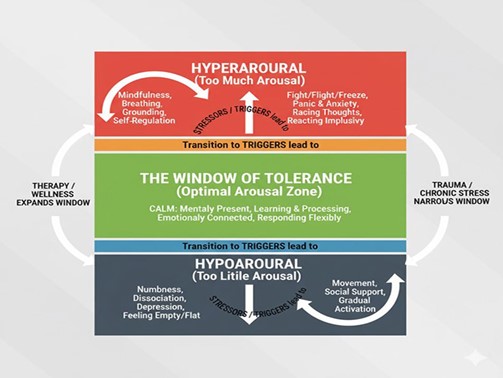
Developed by trauma psychologist Dr Daniel Siegel, the window of tolerance describes the zone of nervous system arousal in which a person can function adaptively, feeling their emotions without being overwhelmed by them, thinking clearly, accessing empathy, and making considered choices.
When a person is pushed outside that window, either into hyperarousal (the escalated, reactive state associated with anger, panic, and aggression) or hypoarousal (the collapsed, shut-down state associated with numbness and withdrawal), their emotional and cognitive functioning is significantly compromised. They are not 'choosing' to be irrational. Their system is outside the zone in which rational choice is meaningfully available.
People who carry chronic stress, unprocessed trauma, or ADHD-related emotional dysregulation have a narrower window of tolerance, meaning they reach that state of hyperarousal more quickly and with less provocation than someone with a well-regulated nervous system. Understanding this does not reduce personal accountability. It explains what genuine therapeutic work needs to address.
When Anger Is a Trauma Response: The Connection Most People Never Make
One of the most clinically significant and most commonly missed roots of chronic anger is unprocessed trauma. And in India, where the space for naming and processing trauma has historically been almost non-existent, a very large number of people are walking around with active trauma responses that they and everyone around them experience simply as 'a bad temper' or 'emotional volatility'.
Trauma, whether it is childhood emotional neglect, growing up in an unpredictable or unsafe environment, experiencing abuse, loss, humiliation, or a single overwhelming event, does not resolve on its own. It is stored in the nervous system as unfinished threat-response cycles. And one of the primary ways that stored threat manifests is as hair-trigger anger: a nervous system that, having learned that environments are unsafe and people are unreliable, now perceives threats everywhere and responds accordingly.
|
"He doesn't have an anger problem. He has a safety problem. His anger is just the loudest way his nervous system knows how to ask for it." |
This is why trauma survivors often describe their anger as disproportionate, as eruptions that arrive at a force level that doesn't match the size of the trigger. The trigger was small. But the wound it activated was large. And the nervous system responded to the wound, not the trigger.
Common presentations at Coach For Mind where anger is driven by unprocessed trauma include:
- Adults who grew up in emotionally invalidating families where feelings were dismissed, punished, or ignored and who developed anger as the only emotion that reliably produced a response
- Individuals who experienced workplace harassment, bullying, or power abuse and are now hypervigilant to any perceived criticism or disrespect from authority figures
- People who have experienced intimate partner violence or controlling relationships, whose nervous systems remain primed for threat long after the situation has ended
- Individuals carrying grief or loss that was never allowed to be processed, whose sadness has calcified over time into chronic irritability and low-grade rage
- People who experienced childhood emotional neglect and developed a profound, largely unconscious sensitivity to feeling unseen, unimportant, or dismissed, which is precisely what professional environments repeatedly trigger
|
🩺 CFM Clinical Note Trauma-informed anger therapy at Coach For Mind does not simply address the anger. It maps the territory beneath the anger, identifying the specific wounds, relational patterns, and nervous system responses that are generating it. Treatment may involve EMDR for processing specific traumatic memories, Somatic Therapy for completing interrupted threat-response cycles stored in the body, Narrative Therapy for restructuring the story the person has built around their anger identity, and CBT for building the cognitive skills to interrupt the pattern once it becomes conscious. This is a different clinical undertaking from a six-session anger management course. |
ADHD and Anger: The Link That Changes the Entire Picture
In any honest conversation about anger in high-performing professional environments, and particularly in the MNC culture of Gurgaon, ADHD has to be part of that conversation. Because ADHD is almost certainly more prevalent in that population than is currently recognised, and because its most under-discussed feature is not inattention or disorganisation. It is emotional dysregulation.
Adults with ADHD, diagnosed or not, experience emotions with greater intensity and less buffering than neurotypical adults. This is not a metaphor. It is a neurobiological reality. The ADHD brain has significantly reduced capacity for the kind of emotional braking that most people take for granted, the internal pause between feeling and reacting, between provocation and response, between impulse and action.
|
"With ADHD, emotions don't arrive; they flood. And the exit is usually the first door available." |
In a professional environment, this shows up in ways that are often misread entirely:
- Explosive reactions to criticism that seem wildly disproportionate to colleagues who did not feel the emotional intensity of what the person with ADHD experienced
- Low frustration tolerance that erupts when systems, people, or processes don't work the way they are supposed to, particularly in bureaucratic MNC environments
- Rejection Sensitive Dysphoria (RSD) is an intense, near-instantaneous emotional response to perceived rejection, failure, or criticism, which in professional settings can look like aggression but is driven by profound internal pain
- Impulsive verbal or written responses, emails sent in the heat of the moment, things said in meetings that are regretted immediately, followed by genuine remorse and confusion about why self-control seems so much harder for them than for others
|
💡 What is Rejection Sensitive Dysphoria (RSD)? RSD is one of the most impairing and least-known features of ADHD. It describes an intense emotional response characterised by disproportionate shame, anger, or despair triggered by perceived rejection, criticism, or failure. In the workplace, it can mean that performance feedback, a manager's tone, or even being left off an email thread activates a level of emotional distress that the individual struggles to regulate. It is not a personality trait of oversensitivity. It is the ADHD nervous system doing what it does under social threat. RSD responds to ADHD-specific treatment, including CBT for ADHD, emotional regulation training, and, in many cases, evaluation for medication. |
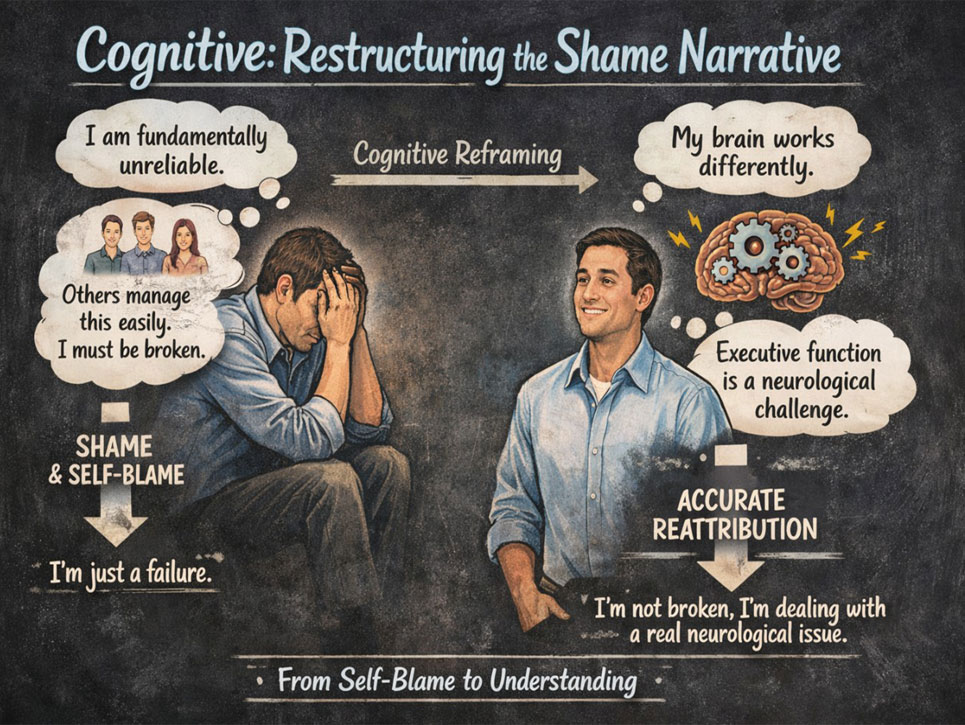
The tragedy of undiagnosed ADHD and anger is that the person carrying it often has a narrative about themselves that they are 'too intense', 'difficult', 'emotional', 'unreliable', 'unprofessional', that has been built across years of watching themselves fail to do something that appears effortless for others: simply not react. That narrative is not only inaccurate. It is one of the primary drivers of the shame beneath the anger.
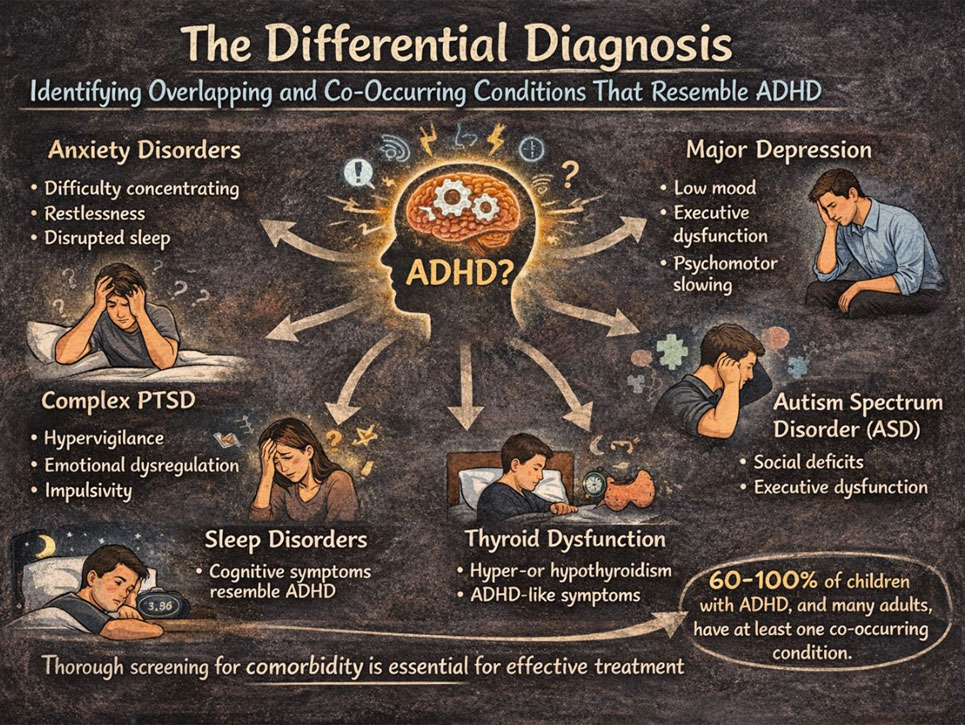
If you recognise the pattern described above in yourself or in someone you know, an ADHD assessment with an RCI-registered clinical psychologist is not a last resort. It is a starting point. Because treating anger as an anger problem when it is an ADHD problem produces a fundamentally different and far less effective outcome.
Why MNC Professionals in Gurgaon Are Privately Seeking Anger Management Therapy
Gurgaon (or any Tier 1 city) is not an ordinary city. It is one of the densest concentrations of multinational corporate employment in India, and the psychological conditions it generates are specific and intense. Long commutes. Compressed timelines. Matrix reporting structures, where authority and accountability are often misaligned. A culture of performance visibility where how you are seen is as important as what you deliver. Expatriate management cultures do not always translate cleanly onto Indian professional norms. And underneath it all, a shared, largely unspoken understanding that emotional distress is not something that gets discussed at work.
In this environment, anger is common and hidden in equal measure. The professional who snaps at their team in a review meeting and spends the rest of the day trying to recover the relationship. The manager who sends an email at midnight and regrets it by morning. The high performer who is watched and feared by their reports, when what they actually feel at home is exhausted, trapped, and ashamed. The individual who grew up being told that strength means not showing weakness, and who has been carrying that instruction and the anger it generates for thirty years.
They are not seeking anger management because they are aggressive. They are looking for it because they are intelligent, self-aware people who can see the gap between who they want to be and how they keep showing up and who have tried fixing it on their own long enough to know they need proper help.
|
⚠️ When Anger Signals Something More Some anger presentations require urgent clinical attention: anger accompanied by thoughts of harming others, anger that escalates to physical aggression or creates danger for you or people around you, anger co-occurring with severe depression, substance use, or suicidal thinking, and anger in the context of active domestic violence. If any of these are present, please contact a clinical psychologist or psychiatrist directly. Coach For Mind's team will always refer appropriately and urgently where the clinical picture calls for it. |
What Therapy for Anger Actually Looks Like: Insight, Triggers, and the Work Beneath the Surface
If you have been to anger management workshop before and it did not hold, or if you have read about breathing techniques and found yourself nodding in recognition without any lasting change, this section is for you. Because what genuine therapy for anger involves is substantially different from the content of most anger management programmes.
Building Insight: The Foundation of Everything Else
The first and most important phase of anger therapy is not learning how to respond differently. It is understanding why you are responding the way you are. This is what your therapist at Coach For Mind will focus on in the early sessions, not to delay the practical work, but because insight is the practical work. Without a clear map of what is actually driving your anger, every technique is being applied blindly.
Insight-building in therapy involves a careful, collaborative exploration of your anger pattern, its history, its triggers, the physical sensations that precede it, the emotions that live beneath it, the beliefs and narratives that sustain it, and the functions it serves for you. This exploration is not an intellectual exercise. It often involves encountering feelings of sadness, fear, and shame that the anger has been protecting you from for years.
Some questions that therapy helps you develop genuine answers to:
- What is the earliest version of this anger that you can remember? What was happening in your life then?
- When you feel this anger, what do you most fundamentally believe about yourself, about the other person, about what is happening?
- What does anger do for you? What would you feel if the anger were not available?
- Whose voice does the inner critic sound like, the one that comes before the eruption? And where did you learn that voice?
- What is the thing that, beneath everything, you most need to feel seen for? And how often does your environment actually provide that?
|
💡 The trigger is not the cause One of the most consistent insights that clients develop in therapy is that the trigger and the cause are different things. The trigger is the comment a colleague made, the tone of voice, and the overlooked email. The cause is older, a nervous system trained by experience to interpret certain situations as threatening, certain tones as contemptuous, certain silences as abandonment. Therapy maps the distance between trigger and cause. That distance is where lasting change becomes possible. |
Understanding Your Triggers With Precision, Not Generalisation
Most people who seek anger therapy can tell you they 'get angry when people are disrespectful' or 'when things are unfair'. This is a starting point, not a map. Effective anger therapy develops a much more precise trigger inventory because precision is what makes the difference between recognising the pattern early enough to change it and recognising it only after the damage is done.
Your triggers are not random. They cluster around your most significant unmet needs and unhealed wounds. The person who grew up in a household where their contributions were consistently minimised will have a specific sensitivity to being overlooked in professional settings. The person who experienced chronic unpredictability in childhood will have a specific sensitivity to environments that shift without warning. The person who was raised with high conditional standards will have a specific sensitivity to perceived failure or inadequacy in themselves and in others.
Trigger mapping in therapy is not about cataloguing situations to avoid. It is about understanding the emotional logic of why specific situations activate the threat response they do and building the capacity to stay regulated through them rather than being swept by them.
Cognitive Behavioural Therapy (CBT) for Anger: Rewiring the Interpretive System
CBT for anger operates on a foundational principle: it is not events themselves that generate anger, but the meaning we assign to them. Between the trigger and the reaction sits an interpretation of a belief about what the event means, what it says about us or others, and what it requires of us. That interpretation is where CBT works.
In anger therapy, the CBT component involves identifying the automatic thoughts and core beliefs that fuel the angry response. 'They did that to undermine me.' 'I am being disrespected.' 'If I don't push back hard, I will be seen as weak.' 'Showing emotion means losing.' Each of these is a belief, not a fact, and each was learned somewhere. CBT helps examine the evidence for and against these beliefs, trace their origins, and replace them with more accurate and adaptive interpretations that allow a considered response rather than an automatic one.
For anger that has an ADHD component, CBT for ADHD adds specific work on executive function, impulsivity, and emotional regulation strategies, including pause techniques that compensate for the neurological deficit in the braking system, and self-compassion work that addresses the accumulated shame of years of reactive behaviour.
|
🩺 CFM Clinical Note CBT for anger is not about thinking positive thoughts. It is a structured, evidence-based process of examining the belief systems underlying angry reactions, testing them against reality, and building new interpretive habits. At Coach For Mind, CBT is never applied in isolation it is integrated with somatic work, insight-building, and, where relevant, trauma processing, because anger driven by trauma or nervous system dysregulation does not respond adequately to cognitive approaches alone. |
Dialectical Behaviour Therapy (DBT) for Emotional Dysregulation
For people whose anger is part of a broader pattern of emotional intensity, rapid escalation, difficulty returning to baseline, feelings that arrive at full volume and are difficult to modulate, DBT offers one of the most clinically robust toolkits available. Developed by Dr Marsha Linehan, DBT teaches four core skill sets that directly address the dysregulation underlying intense anger:
- Distress Tolerance: skills for surviving acute emotional crises without making them worse, not solving the situation, but getting through the peak intensity without acting in ways that cause additional damage
- Emotion Regulation: understanding the function of emotions, reducing vulnerability to emotional flooding, and changing unwanted emotional states through specific, evidence-based techniques
- Interpersonal Effectiveness: skills for asking for what you need, saying no, and maintaining self-respect in relationships, assertiveness without aggression, boundaries without attack
- Mindfulness: the foundation of all four skill sets, the capacity to observe your internal experience without immediately reacting to it, which is precisely the skill that most anger is missing
DBT is particularly valuable where anger is accompanied by shame spirals, self-critical internal dialogue, and intense swings between explosive episodes and collapse or withdrawal. It builds the emotional regulation capacity that was either never adequately developed or was overwhelmed by experience, and it does so through concrete, practised skills rather than insight alone.
EMDR Processing the Traumatic Roots of Anger
Where anger has its roots in specific traumatic experiences, memories that are still stored as active threat rather than integrated past, Eye Movement Desensitisation and Reprocessing (EMDR) is one of the most powerful and efficient available interventions.
EMDR works by activating the brain's natural information-processing system through bilateral stimulation, typically guided eye movements, while holding a traumatic memory in mind. Over multiple processing cycles, the memory's emotional charge is progressively reduced. What was stored as a raw, present-tense threat activating the nervous system as if the event is still happening becomes integrated as a completed past event. The memory remains, but it no longer drives the threat response.
In anger therapy, EMDR is used for the specific memories or relational experiences that are being activated by current triggers. The colleague whose tone of voice echoes a parent's contempt. The performance review that reactivates the shame of a childhood where being enough was never quite achievable. The experience of harassment or workplace abuse that left a nervous system primed for perpetual defence.
Clients frequently describe EMDR as surprising both in how it works and in how quickly it produces change that years of talking about the same material did not. This is because EMDR accesses and processes the stored memory at the neurological level at which it is held, rather than working primarily through narrative or cognitive understanding.
Somatic Therapy Meeting the Anger in the Body
Because anger is a physiological event before it is a psychological one, the most effective anger therapy always includes a somatic dimension. The body holds what the mind has not yet processed: the clenched jaw, the raised shoulders, the constricted chest, the flushed face and these are not simply symptoms of anger. They are the anger itself, stored in the musculature and the nervous system.
Somatic work in anger therapy at Coach For Mind draws on Somatic Experiencing (SE), developed by Peter Levine, and Sensorimotor Psychotherapy. The core premise is that traumatic and high-stress experiences that were not fully processed leave incomplete survival responses stored in the body, the fight response that was activated but could not complete, and the energy of helplessness that had nowhere to go. Until these stored responses are completed and discharged at the physiological level, the nervous system continues to generate them.
In practice, somatic work involves developing a detailed body vocabulary, learning to track the physical sensations that arise in the pre-anger state, before the eruption reaches conscious awareness. Most people who present with anger problems have very limited awareness of their body's early warning signals. By the time they notice something is happening, the escalation is already advanced. Somatic work expands this awareness dramatically, creating an early-warning system that gives the person genuine choice about their response before the window has closed.
Somatic work also builds what is called pendulation, the capacity to move consciously between activated and settled states, expanding the window of tolerance over time so that situations which previously produced immediate escalation can be experienced with greater equanimity. This is not suppression. It is genuine nervous system capacity, built through repeated practice in the safety of the therapeutic relationship.
Narrative Therapy Rewriting the Story of Who You Are
One of the most quietly powerful approaches in anger therapy is Narrative Therapy because it addresses something that every other modality tends to leave partially untouched: the story the person has built about themselves in relation to their anger.
Many people who seek anger therapy carry a deeply established self-narrative: 'I am someone who loses control.' 'I am too intense.' 'I am difficult.' 'I have my father's temper and I always will.' These stories are not simply descriptions. They are identities, and they have an organising function. Once a person believes they are 'an angry person', every incident of anger becomes confirmation, and every period of calm becomes the exception waiting to be disproven.
Narrative Therapy, developed by Michael White and David Epston, works through a process called externalisation, which separates the person from the problem. The anger is not you. It is something that has been happening to you and through you, with a history, a set of conditions under which it flourishes, and a set of conditions under which it does not. This distinction is not semantic; it creates genuine psychological space for the person to observe the anger pattern with curiosity rather than identifying with it.
The re-authoring process that follows helps the person identify counter-stories moments, often overlooked, where they responded differently, where their values drove their behaviour rather than their reactive pattern, where they were precisely the person they want to be. These counter-stories are not minimised or dismissed as flukes. They are treated as evidence: evidence that the dominant story is not the only story, and that the person already contains the alternative they are reaching toward.
The Therapeutic Relationship Itself: The Most Overlooked Agent of Change
Across every modality used in anger therapy at Coach For Mind, there is one constant that research consistently identifies as the most significant predictor of therapeutic outcome: the quality of the relationship between the therapist and the client.
For many people seeking anger therapy, particularly those whose anger has roots in early relational experiences of being dismissed, shamed, or misunderstood, the therapeutic relationship is not merely the vehicle for the work. It is part of the work itself. The experience of being genuinely seen without judgment. Of expressing something difficult and having it met with steadiness rather than reaction. Of disagreeing with your therapist and discovering that the relationship survives. Of being challenged with care, and receiving that challenge without it collapsing into a power struggle.
These are corrective relational experiences, and they gradually update the nervous system's model of what relationships are and what they can safely hold. This is not something that can be rushed, engineered, or replaced by techniques. It is what therapy at its best does, over time, through consistent, attuned, and genuinely skilful human contact.
Why Coach For Mind for Anger Therapy in Gurgaon
- We treat the anger and what is underneath it: Our psychologists work with the full picture trauma history, ADHD, relational patterns, nervous system dysregulation, not just the surface behaviour. You will not leave with techniques alone.
- Qualified Psychologists: Every therapist holds RCI registration or postgraduate clinical training. This is not a formality, it is the difference between clinical treatment and supportive conversation.
- Trauma-Informed Across All Work: Whether or not trauma is your presenting concern, our approach is always safety-first, paced to your nervous system, and grounded in relational care.
- ADHD Assessment and Treatment: If ADHD may be part of your anger picture, we can assess and treat it, including CBT for ADHD, emotional regulation work, and psychiatry coordination where medication evaluation is appropriate.
- Confidential and Professional: Many of our clients are senior professionals who need absolute discretion. Online sessions, flexible scheduling, and a genuinely non-judgmental clinical relationship are standard.
- In-Person in Gurgaon and Online Across India: For clients who prefer in-person sessions, our Gurgaon clinic is available. For everyone else, online sessions across all Indian cities and internationally for NRI clients.
- Personalised Matching: You are matched to the psychologist whose clinical training and approach is best suited to your specific presentation, not assigned based on calendar availability.
References
[1] Gross JJ. (1998). The emerging field of emotion regulation: an integrative review. Review of General Psychology, 2(3), 271–299.
[2] Siegel DJ. (1999). The Developing Mind: How Relationships and the Brain Interact to Shape Who We Are. Guilford Press.
[3] van der Kolk BA. (2014). The Body Keeps the Score: Brain, Mind, and Body in the Healing of Trauma. Viking Press.
[4] Barkley RA & Fischer M. (2010). The unique contribution of emotional impulsiveness to impairment in major life activities in hyperactive children as adults. Journal of the American Academy of Child & Adolescent Psychiatry, 49(5), 503–513.
[5] Shaw P, et al. (2014). Emotion dysregulation in ADHD. American Journal of Psychiatry, 171(3), 276–293. PMC4282137.
[6] Porges SW. (2011). The Polyvagal Theory: Neurophysiological Foundations of Emotions, Attachment, Communication, and Self-Regulation. Norton.
[7] Foa EB, et al. (2007). Prolonged Exposure Therapy for PTSD. Oxford University Press.
[8] Novaco RW. (2011). Anger dysregulation: driver of violent offending. Journal of Forensic Psychiatry and Psychology, 22(5), 650–668.
[9] Linehan MM. (2014). DBT Skills Training Manual (2nd ed). Guilford Press.
[10] Mehta M & Sagar R. (2015). A Practical Approach to Cognitive Behaviour Therapy for Adolescents. Springer India. [Indian clinical context]
Frequently Asked Questions
It is important to know that feeling angry does not mean something is wrong with you. Anger is a normal human emotion and everyone experiences it at times. It becomes a concern when it is frequent, intense, or starts affecting your relationships, work, or overall wellbeing. In many cases, anger is not the primary issue but a signal of something underneath such as stress, trauma, ADHD, or depression. What looks like an anger problem is often the surface expression of deeper emotional or neurological patterns. Understanding this difference is what allows therapy to move beyond just controlling reactions and toward meaningful change.
At Coach for Mind, we do not treat anger in isolation but work to understand what is driving it in your specific case. Our therapists help you identify the underlying patterns and build ways to respond that feel more in your control and aligned with how you want to live.It is i
It is completely understandable to assume that anger management course and therapy for anger are the same thing. Anger management usually focuses on practical skills like breathing techniques, pausing, and reframing thoughts to control reactions in the moment. These tools can be helpful, especially in the short term. Anger therapy goes deeper and looks at why the anger is happening in the first place. It explores emotional history, belief systems, trauma, and patterns that are shaping your responses. This approach tends to create more lasting change because it addresses the root rather than just the expression.
At Coach for Mind, we combine skill-building with deeper therapeutic work so that you are not just managing anger but actually understanding and changing it. Our focus is on helping you develop responses that feel stable and sustainable over time.
It is more common than people realise for anger to be linked to ADHD. Many adults with ADHD experience emotional dysregulation, which can show up as sudden anger, low frustration tolerance, or intense emotional reactions. This often feels like the reaction comes too quickly and is difficult to control in the moment. There is also usually a pattern of feeling remorse afterwards, along with other lifelong difficulties related to attention, organisation, or impulsivity. Because ADHD is often under-recognised in adults, this connection can be missed for years. Identifying it can change the direction of treatment significantly.
At Coach for Mind, we conduct structured ADHD assessments that look at both current symptoms and long-term patterns. If ADHD is present, we create a plan that helps you manage emotional intensity as well as improve day-to-day functioning.
It can feel confusing when anger seems much stronger than the situation calls for. Trauma is one of the most common underlying drivers of this kind of response. When trauma is not processed, the nervous system stays in a state of heightened alertness, which makes it easier for anger to get triggered. The reaction often feels immediate and intense because it is connected to past experiences, not just the present moment. This is why the size of the response may not match the current situation. Understanding this helps reduce self-blame and shifts the focus toward healing.
At Coach for Mind, trauma-informed therapy is used to address these patterns at their root rather than just managing the reactions. Our therapists work carefully with pacing and safety so that the process feels contained while still leading to real change.
It is a valid concern to wonder whether therapy will truly understand the pressures of your work environment. High-performance corporate settings come with unique demands such as long hours, constant evaluation, and limited space to express emotional difficulty. These factors can directly affect stress levels, relationships, and emotional regulation. Therapy that does not account for this context can feel disconnected or impractical. When your professional environment is understood properly, the work becomes more relevant and applicable. This allows strategies and insights to fit into your actual day-to-day life.
At Coach for Mind, we regularly work with professionals in high-pressure corporate roles and understand these dynamics in depth. Our sessions are designed to integrate your work context into the therapeutic process so that the support feels realistic and useful.
It is completely reasonable to question whether online therapy can provide the same level of support. Anger therapy can be delivered effectively online because the core work involves understanding patterns, building regulation skills, and processing underlying emotions. Video sessions allow for the same structured and consistent therapeutic process as in-person work. For many people, being in their own space can actually make it easier to engage honestly. Online access also removes barriers like travel and scheduling, which often makes it easier to stay consistent. Consistency is a key factor in seeing real progress.
At Coach for Mind, all anger therapy is available online with the same clinical depth as in-person sessions. We ensure that the process remains structured, confidential, and tailored to your needs regardless of where you are located.
It is natural to want a sense of how long therapy might take before starting. The timeline depends on what is driving the anger and how long these patterns have been present. For more situational concerns or skill-building, noticeable changes can often happen within a few months of consistent sessions. When anger is linked to deeper factors like trauma or ADHD, the process usually takes longer because it involves more comprehensive work. Progress is not always linear, but it tends to build steadily over time. Regular review of goals helps keep the work focused and relevant.
At Coach for Mind, we discuss expected timelines early in the process and revisit them as therapy progresses. Our approach is to balance realistic expectations with steady, meaningful progress so that change feels both achievable and lasting.