TL;DR
- ADHD Diagnosis Is Strictly Clinical, No Brain Scan or Blood Test: Diagnosis is based on a comprehensive clinical interview, validated rating scales, collateral information across settings, and rigorous differential diagnosis. Any provider offering a diagnosis without these components is not meeting the clinical standard.
- It is a Multi-Step Process, Not a Single Appointment: A rigorous ADHD assessment involves multiple components, history-taking, standardised rating scales, collateral input, functional impairment mapping, and screening for comorbid conditions. That time is the quality control.
- The Age-12 Requirement Is Nuanced, Not Absolute: DSM-5 requires that symptoms were present before age 12, not that you have documented proof. Skilled clinicians use multiple strategies to reconstruct childhood history when memory gaps exist.
- 60–100% of People with ADHD have at Least One Comorbid Condition: Anxiety, depression, sleep disorders, learning disabilities, and trauma-related conditions frequently co-occur. Screening for these directly determines the treatment plan.
- Masking Is Real and Clinically Documented: High-achieving adults, particularly women and girls, frequently conceal ADHD symptoms through perfectionism, over-preparation, and hyper-scheduling. External success does not rule out internal chaos.
- The Diagnostic Pathway You Choose Affects Cost, Wait Time, and Access to Medication: In India, the pathway through a psychiatrist, clinical psychologist, or both has distinct implications. Understanding these reduces frustration before you start.
- Diagnosis Is the Beginning, Not the End: What follows, psychoeducation, therapy, medication if appropriate, executive function coaching, and family support, is where the real work of building a functioning life begins.
- Coach For Mind Uses the DIVA-5 with Emotional Amendment: Our ADHD assessments are built around the gold-standard structured diagnostic interview for adults, with specific attention to the emotional and relational dimensions that standard tools frequently underweight.
Introduction: The Diagnostic Process Nobody Fully Explains
For most adults who eventually receive an ADHD diagnosis, the journey to that diagnosis is longer, more confusing, and more emotionally costly than it needed to be, not because the diagnosis is difficult to make, but because the process itself is poorly understood.
You may have spent years being told you were lazy, undisciplined, or simply needed to try harder. You may have received other diagnoses, such as anxiety, depression, and burnout, that were partially correct but did not address the underlying pattern. You may have discovered ADHD through a partner's diagnosis, a child's assessment, or a moment of recognition, reading something that described your internal experience with an accuracy that felt almost unsettling.
And now you are trying to navigate a diagnostic process that varies enormously depending on who you see, how thoroughly they assess, and what framework they apply.
This article explains the ADHD diagnostic process in full, what happens at each stage, what the clinical standards require, what a good assessment looks like and how to recognise it, how the process differs for adults and for Indian adults specifically, and what comes after. It is written not as a clinical manual but as a practical, honest guide for someone who has already suffered enough in the dark and deserves a clear account of what seeking assessment actually entails.
Part One: What ADHD Actually Is, and Why the Diagnosis Requires Clinical Rigour
ADHD Is an Executive Function Disorder, Not Just an Attention Problem
The name Attention Deficit Hyperactivity Disorder has created a persistent misconception about what the condition actually is. People assume it means an inability to pay attention to anything, which immediately confuses those who can spend six unbroken hours in hyperfocus on a topic they care about, or who function brilliantly in high-pressure, high-novelty environments.
ADHD is more accurately understood as a chronic dysregulation of executive function, the neurological system responsible for planning, task initiation, working memory, emotional regulation, impulse control, time perception, and the capacity to prioritise long-term goals over immediate impulses. The attention system is affected, but in a specific way: attention is not globally absent, but ungoverned, pulled entirely by novelty, urgency, and emotional salience rather than by the person's own intentions.
This has two important implications for the diagnostic process. First, impressive performance in high-interest domains does not rule out ADHD. Second, the diagnostic picture needs to capture the full executive function profile, not just the most visible behavioural symptoms.
Why the Diagnosis Matters Beyond the Label
Research is unambiguous that untreated ADHD carries serious long-term consequences, not because the condition is inherently catastrophic, but because a brain operating without appropriate support in an environment not designed for it accumulates costs over time: in academic and career underperformance relative to actual capacity, in financial instability, in the relationship damage caused by symptoms that were never understood as neurological, and in the secondary mental health conditions, depression, anxiety, substance use, that develop in the wake of years of unexplained struggle.
Research from the American Academy of Pediatrics specifically notes that untreated ADHD is associated with elevated risk for early death, suicide, and substance use disorders when viewed across the lifespan. This is the clinical basis for taking the diagnostic process seriously and completing it rigorously, rather than settling for a partial assessment.
For the adult who has spent decades attributing the pattern to personal failure, the diagnosis also carries a specific psychological significance that goes beyond the clinical label: it marks the beginning of a different, more accurate account of one's own history.
Part Two: The DSM-5 Criteria, What the Diagnosis Actually Requires
The Clinical Standard
ADHD diagnosis in India, as in most countries with established clinical frameworks, is based on the DSM-5 criteria, the diagnostic standard published by the American Psychiatric Association. The DSM-5 requires the following:
Symptom presence: A persistent pattern of inattention and/or hyperactivity-impulsivity that interferes with functioning or development. For the inattentive presentation, at least six of the nine listed inattentive symptoms must be present (five for adults over 17). For the hyperactive-impulsive presentation, at least six of the nine listed hyperactive-impulsive symptoms. For the combined presentation, the criteria are met for both.
Duration: Symptoms must have been present for at least six months.
Developmental inappropriateness: Symptoms must be inconsistent with the person's developmental level, representing a genuine impairment relative to what would be expected at the person's age and intellectual level.
Age of onset: Several symptoms were present before age 12. Note: this does not require that the diagnosis was made before age 12, or that there is documented proof of symptoms before that age. It requires that the clinical history establishes that symptoms were present.
Multiple settings: Symptoms are present in two or more settings, typically at home, at school or work, and in social contexts.
Functional impairment: The symptoms directly and significantly impair social, academic, or occupational functioning.
Not better explained by another condition: The symptoms are not exclusively a manifestation of another psychiatric disorder.
The Three Presentations, and Why They Change Over Time
DSM-5 deliberately shifted from 'subtypes' to 'presentations', a linguistically small but clinically meaningful change. ADHD presentations can shift across the lifespan, reflecting developmental changes in how symptoms manifest.
The predominantly inattentive presentation is the most commonly missed in clinical practice, particularly in women, girls, and high-achieving individuals, because its symptoms are internal and quiet: the chronic difficulty with sustained attention on non-preferred tasks, the working memory failures, the time blindness, the organisation struggles, the perpetual sense of being behind and never catching up.
The predominantly hyperactive-impulsive presentation is what most people picture when they think of ADHD: the external restlessness, the interrupting, the impulsive decisions. In adults, the motoric hyperactivity often internalises; the person is not running around the room, but their mind is running at ten thousand revolutions per minute.
The combined presentation involves both symptom clusters and is the most common overall presentation in clinical populations.
Part Three: The Diagnostic Process Step by Step
Step One: The Initial Referral and Screening
In India, the most common entry points into ADHD assessment are: self-referral, often triggered by reading about ADHD and experiencing a moment of recognition; referral following a family member's diagnosis; referral from a psychiatrist or general physician who suspects ADHD may be driving treatment-resistant depression or anxiety; and referral from a school counsellor or educational institution for children and adolescents.
The initial contact typically involves a brief screening, often using a validated tool such as the Adult ADHD Self-Report Scale (ASRS) for adults or the Vanderbilt or Conners scales for children. These screens are useful for identifying who warrants fuller assessment, but they are not diagnostic in themselves. A screen is a flag, not a finding.
Research reviewing 292 randomised controlled trials of adult ADHD found that nearly half (49.7%) did not include an assessment of general psychopathology, the essential component that rules out other conditions. A quick screen and a prescription without a differential diagnosis are not a rigorous assessment.
Step Two: The Comprehensive Clinical Interview
The clinical interview is the core of the diagnostic process. For adults, the gold-standard structured diagnostic interview is the DIVA-5 (Diagnostic Interview for ADHD in Adults, 5th Edition), the tool used at Coach For Mind. The DIVA-5 systematically covers:
- Current symptom presentation across all 18 DSM-5 symptom criteria, with specific examples for adult life contexts
- Childhood symptom history, the same 18 criteria reviewed for behaviour before age 12, using specific life-domain examples that help reconstruct the developmental picture, even when explicit memory is limited
- Age of onset and chronicity
- Functional impairment across key life domains: work and education, relationships, self-care and daily management, social functioning, leisure and hobbies
- Cross-setting impairment, confirming that symptoms are present across contexts, not specific to one environment
The DIVA-5 has demonstrated high diagnostic accuracy in adults, with sensitivities and specificities above 90% in validation studies, making it one of the most reliable tools currently available for diagnosing adult ADHD.
Step Three: Collateral Information, The Evidence from Others
ADHD diagnosis cannot rely on self-report alone. The diagnostic criteria require evidence of symptoms across multiple settings, and the person's own report is necessarily partial. Collateral information is gathered from:
- Partners or spouses: who observe the daily functional impact, the missed commitments, the time management failures, the emotional dysregulation, from close proximity and often over years
- Parents or siblings: who can speak to the childhood presentation, specific patterns of behaviour, and comparisons with siblings
- School records: report card comments are frequently an inadvertent ADHD symptom inventory. 'Could do better if she applied herself.' 'Bright but easily distracted.' 'Inconsistent effort.' These are not character assessments. They are behavioural observations mapping directly onto the inattentive symptom cluster
- Teachers (for children): direct teacher input through validated rating scales or interview is a clinical requirement for childhood ADHD assessment
Where collateral informants are not available, skilled clinicians use structured interviews to reconstruct the developmental history through specific behavioural incidents, using the DIVA-5's childhood examples to prompt more targeted recollection.
Step Four: Validated Rating Scales
Alongside the clinical interview, standardised rating scales provide quantifiable data on symptom severity and frequency. For adults, these commonly include:
- ASRS (Adult ADHD Self-Report Scale): An 18-item scale mapping directly onto the DSM-5 symptom criteria
- Conners' Adult ADHD Rating Scales (CAARS): Available in self-report and observer-report versions, allowing direct comparison between the person's own perception and that of someone close to them
- Brown Executive Function/Attention Scales: Capturing the broader executive function profile beyond the core symptom criteria
- Emotional Dysregulation Scales: Assessing the affective features of ADHD that standard tools frequently underweight
At Coach For Mind, we include a dedicated emotional amendment, a structured assessment of emotional dysregulation, mood shifts, rejection sensitivity, and the affective features of ADHD that are both commonly present and commonly missed by standard tools. Click here to book a free discovery call.
Step Five: The Differential Diagnosis
This is the step that separates a rigorous assessment from a cursory one, and the step most commonly skipped in inadequate evaluations.
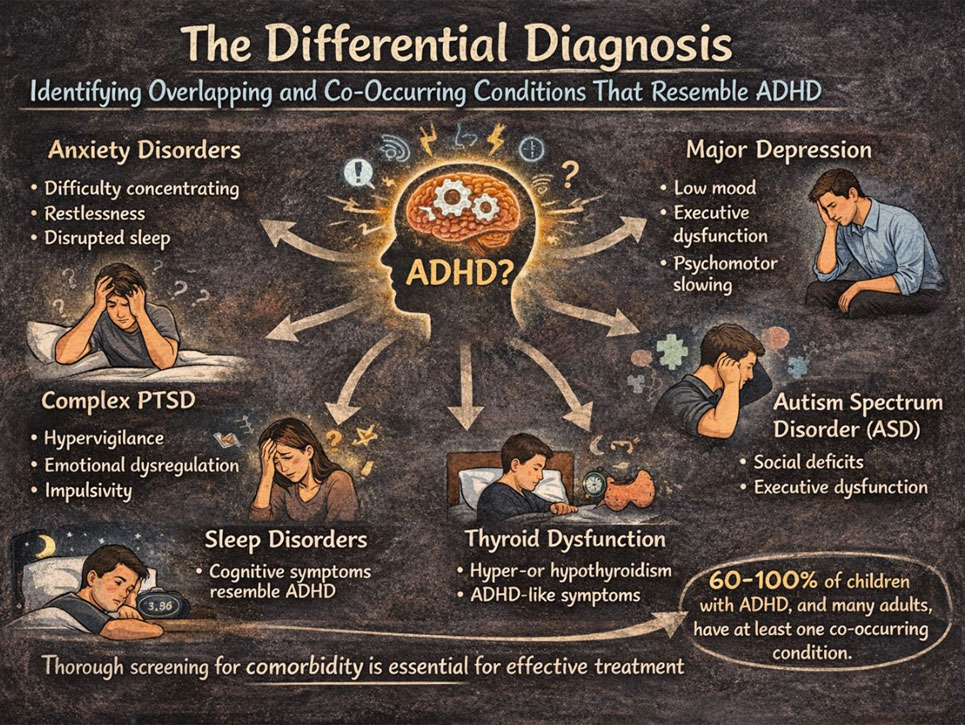
Differential diagnosis means systematically ruling out, or ruling in alongside, the conditions that can produce ADHD-like symptoms. The conditions most commonly confused with, or co-occurring alongside, ADHD include:
- Anxiety disorders: Chronic anxiety produces difficulty concentrating, restlessness, and disrupted sleep. The critical distinction is one of mechanism; in anxiety, concentration difficulty is driven by intrusive worry; in ADHD, by attentional dysregulation. Both can be present simultaneously, in approximately 50% of adults with ADHD.
- Major Depression: Low mood, psychomotor slowing, executive dysfunction, and concentration difficulties can closely resemble ADHD. The temporal relationship matters: ADHD symptoms are chronic and developmental; depressive symptoms have an onset.
- Complex PTSD and trauma-related conditions: Hypervigilance, difficulty concentrating, emotional dysregulation, impulsivity, and dissociation overlap significantly with ADHD. Many adults with both trauma histories and ADHD receive only one diagnosis when both are present.
- Autism Spectrum Condition (ASD): DSM-5 now allows co-diagnosis of ADHD and ASD, reflecting the clinical reality that both conditions frequently co-occur.
- Sleep disorders: Chronic sleep deprivation produces cognitive symptoms indistinguishable from ADHD in the short term. Sleep history is a standard component of assessment.
- Thyroid dysfunction: Both hyperthyroidism and hypothyroidism produce ADHD-like symptoms. Physical health factors are screened for as part of a thorough assessment.
Research on ADHD comorbidity is unequivocal: between 60% and 100% of children with ADHD have at least one comorbid condition, and adult rates are comparably high. Screening for comorbidity is a clinical requirement because co-existing conditions directly determine the optimal treatment plan and treatment response.
Part Four: The Adult Diagnosis Challenge, Memory, Masking, and the Age-12 Requirement
The Childhood Onset Question
The requirement that symptoms were present before age 12 is the most commonly cited barrier to adult ADHD diagnosis, and the most commonly misunderstood. The DSM-5 criterion does not require documented proof of pre-age-12 symptoms. It requires that the clinical history establish, through any available evidence, that symptoms were present.
Skilled clinicians use the DIVA-5's specific childhood examples for this purpose: asking not 'were you hyperactive as a child?' but 'before you were 12, did you frequently have trouble staying in your seat at school, or leave your seat when you were supposed to stay in it?’, and then exploring the answers with specific follow-up questions that prompt more granular, accurate recall.
The age-12 requirement was changed from age 7 in DSM-IV precisely because the prior criterion was too restrictive and was excluding adults with significant impairment from an appropriate diagnosis. The spirit of the criterion is establishing that ADHD is developmental, that it did not suddenly appear in adulthood in response to stress.
The Masking Paradox: When External Success Hides Internal Chaos
One of the most significant barriers to adult ADHD diagnosis is the persistent belief, held by clinicians and patients alike, that a successful academic or professional history rules out ADHD. The evidence, however, does not support this assumption. High intelligence does not prevent ADHD; rather, it provides more sophisticated tools for concealing it through a process known as masking.
A study of undergraduate medical students found that 34.8% screened positive for undiagnosed ADHD. This is a population selected specifically for high academic achievement, illustrating that external markers of success often coexist with significant internal executive dysfunction.
The masking paradox: the very strategies that concealed ADHD through adolescence and early adulthood,over-preparation, perfectionism, and rigid routines,are the exact strategies that eventually produce the chronic burnout that drives an individual to seek assessment.
The diagnostic implication for high-achieving adults is significant. Assessments for this population must focus less on observable behavioural symptoms and more on the internal experience. This includes exploring the executive function impairments that compensatory strategies have been "papering over," the presence of emotional dysregulation, the chronic fatigue resulting from the constant masking performance, and the widening gap between the person's subjective experience of struggle and their polished external presentation.
What Masking Is, and Why Standard Assessment Misses It, and How the Emotional Addendum Captures What Others Don't?
The standard ADHD assessment was not designed with masking in mind. It was built around a behavioural presentation: observable symptoms, reported frequency, and cross-setting confirmation. For the child who cannot sit still in class, or the adult whose disorganisation is visible to everyone around them, this framework is adequate. For the adult who has spent two decades building an elaborate internal architecture to ensure their disorganisation is never visible to anyone, it is not.
Masking is the set of compensatory strategies, conscious and unconscious, that individuals with ADHD develop to manage, conceal, or work around their executive function impairments in the environments that matter most to them. It is not deception. It is adaptation, the result of learning, usually through repeated painful experience, that visible ADHD symptoms carry real social and professional costs, and that concealing them is the more functional choice.
The strategies are often sophisticated: meticulous over-preparation to cover working memory failures; rigid self-imposed routines that create external structure where internal structure is absent; perfectionism deployed to ensure the output never reveals the chaos of its production; social mirroring and over-attentiveness to compensate for the attentional lapses that make conversation effortful; and the deliberate scheduling of high-stakes activities for the specific windows in the week when executive function is most reliable, so the failures remain invisible to anyone observing only the results.
The clinical consequence is direct: the person presenting for assessment may carry an academic record, a professional history, and a social presentation that appears inconsistent with ADHD. A checklist-based assessment that treats these external markers as evidence will miss the diagnosis. This is not a theoretical risk. It is the mechanism behind most late diagnoses.
What standard tools cannot see
Validated rating scales, the ASRS, the Conners, and the Brown, measure symptom frequency. They ask how often the person loses things, misses appointments, and has difficulty sustaining attention. For a high-masking individual, the honest answer to many of these items is: rarely, because I have built a system specifically so that I do not. The symptom does not disappear when it is successfully compensated for. The executive impairment is still there. It is simply hidden behind the compensatory effort, and the effort itself is not measured.
This is the core diagnostic gap. Standard tools capture what happens when executive function fails visibly. They do not capture the cost of preventing it from failing visibly. They do not ask how much energy the system consumes, what it takes away from everything else, or what happens to the person when the scaffolding is removed.
Where the emotional addendum changes the picture
At Coach For Mind, the standard DIVA-5 assessment is accompanied by a dedicated emotional addendum, a structured component added specifically to capture the affective and experiential dimensions of ADHD that the core diagnostic tools were not built to assess. For high-masking individuals, this addendum is often the point at which the clinical picture becomes legible for the first time.
The emotional addendum specifically assesses:
The effort-to-output ratio
Not whether the deadline was met, but what it took to meet it, whether meeting it required the entire preceding night, a cortisol-driven crisis, and three days of depletion that followed. The report may have been submitted on time. The question is what the submission cost is.
The private-public gap
The polished professional presentation against the reality of the unobserved environment: the unopened correspondence, the missed appointments, the relationships quietly absorbing the executive failures that the workplace never sees. For many high-masking individuals, the gap between their professional functioning and their private life is the clearest evidence of the underlying impairment, and the clearest indicator of how much the masking is costing.
Rejection sensitivity and its management
Many high-masking individuals have developed extensive social strategies specifically to manage or pre-empt rejection: over-explaining, over-apologising, avoiding situations where failure might be observed, and reading every interaction for signs of disapproval. These strategies are not neurotic habits. They are the adaptive response to an affective experience, Rejection Sensitive Dysphoria, that is among the most functionally impairing features of ADHD and among the most reliably missed by standard symptom inventories.
Emotional dysregulation as a diagnostic signal
The rapid, intense emotional responses, disproportionate frustration, the affective crash that follows perceived criticism, and the inability to let go of an interpersonal conflict long after others have moved on are not comorbid with mood instability in most cases. They are the direct expression of PFC dysregulation in the emotional domain. The emotional addendum specifically maps these experiences, establishing whether they are consistent with the ADHD emotional profile rather than prematurely attributing them to a separate condition.
The somatic record of sustained masking
The body accumulates the cost of long-term compensatory effort in ways that are clinically legible once specifically asked about: the chronic fatigue that sleep does not resolve, the exhaustion that follows high-performance periods, the physical tension that builds across high-demand weeks and the collapse that follows them. These are not incidental complaints. They are the physiological signature of a nervous system that has been running on adrenaline and cortisol in place of the tonic dopamine it cannot reliably generate.
The trajectory of the compensatory system
When did the rigid routines begin? What happens when they are disrupted? Has the effort required to maintain stable functioning been increasing steadily, even as the outputs have remained constant? This pattern, rising invisible effort producing stable visible results, is one of the most consistent clinical signatures of high-masking ADHD, and it is invisible to any assessment that looks only at the outputs.
The Gender Gap in Diagnosis
The diagnostic gap for women and girls with ADHD remains one of the most significant clinical failures in contemporary mental health. Traditional diagnostic criteria were developed predominantly based on male, hyperactive-impulsive presentations. Girls and women often present differently: they are frequently predominantly inattentive, internally rather than externally dysregulated, and more likely to deploy social masking strategies that make their difficulties invisible to observers.
In the Indian cultural context, these disparities are often amplified. Socialisation patterns that encourage girls to internalise distress, prioritise the needs of others, and manage difficulties quietly make ADHD symptoms even less visible. This underscores the need for a culturally informed, trauma-aware approach, such as that provided by Ms Vidhi Sharma, to uncover the attachment wounds and emotional overwhelm often hidden behind a mask of competence.
For women seeking assessment, it is vital to probe the history of compensatory strategies. Without clinical skill and sensitivity to these "quiet" symptoms, standard behavioural checklists may fail to identify the condition, leading to years of misdiagnosis as simple anxiety or depression.
The Gender Gap in Diagnosis
The diagnostic gap for women and girls with ADHD is among the most significant clinical failures in contemporary mental health practice. Traditional ADHD diagnostic criteria and assessment tools were developed predominantly on male, hyperactive-impulsive presentations. Girls and women with ADHD tend to present differently: predominantly inattentive, internally rather than externally dysregulated, and more likely to deploy social masking strategies that make their difficulties invisible.
In the Indian cultural context, these disparities are amplified. Girls are socialised to internalise distress rather than externalise it, to prioritise others' needs over their own, and to manage their difficulties quietly, all patterns that make the ADHD presentation even less visible and the diagnostic journey even longer.
For women seeking assessment, the clinical implications are practical: the assessment needs to specifically probe the internal experience, the emotional features, and the history of compensatory strategies, because the standard behavioural symptom checklist was not designed for this presentation and will miss it if applied without clinical skill and cultural sensitivity.
Part Five: How Comorbidity Shapes the Diagnostic and Treatment Picture
The Clinical Reality of Co-occurring Conditions
ADHD comorbidity is not an edge case. It is the norm. Research estimates that between 60% and 100% of children with ADHD have at least one comorbid condition, with comparable rates in adults. The most common co-occurring conditions include:
- Mood disorders: Major depressive disorder and dysthymia are common secondary consequences of unrecognised ADHD, the accumulated impact of years of unexplained failure, social misattunement, and self-blame producing genuine secondary depression.
- Anxiety disorders: The anxiety of adults with unrecognised ADHD has a specific character: the anticipatory fear of the next forgotten commitment, the next embarrassing lapse, the next inexplicable failure. This anxiety does not resolve with anxiety-specific treatment if the underlying ADHD is not addressed.
- Learning disabilities: Dyslexia, dyscalculia, and other learning disabilities co-occur with ADHD at significantly elevated rates, with direct implications for academic support, workplace accommodations, and understanding of educational history.
- Sleep disorders: Delayed Sleep Phase Syndrome is particularly common in ADHD, reflecting the circadian rhythm dysregulation associated with the condition. Treating the sleep disorder is frequently a prerequisite for effective ADHD management.
- Trauma and CPTSD: The relationship between ADHD and trauma is bidirectional and complex. ADHD increases vulnerability to traumatic experiences through impulsivity. Trauma produces neurobiological changes that impair the same executive function systems affected by ADHD.
What Comorbidity Means for the Treatment Plan
The clinical importance of identifying comorbidities is practical: the presence of specific co-occurring conditions can change the treatment plan in ways that determine whether an intervention succeeds or fails.
ADHD with comorbid anxiety typically requires treatment sequencing that does not exacerbate the anxiety, with implications for medication choice and therapeutic pacing. ADHD with a trauma history requires a trauma-informed approach that recognises how trauma has shaped the nervous system's response to challenge and failure. ADHD with depression may require addressing the depression first, creating enough neurochemical stability for the person to engage effectively with the executive function work.
A rigorous assessment that identifies the full comorbidity picture is no longer than necessary. It is exactly as long as is needed to produce a treatment plan that will actually work.
Part Six: The Diagnostic Process at Coach For Mind
What Our Assessment Covers
Every ADHD assessment at Coach For Mind is built around a core principle: the diagnosis must be rigorous enough to be trusted, and the assessment comprehensive enough to produce a treatment plan that addresses the full clinical picture, not just the headline diagnosis.
Initial Consultation and Case History
A structured intake covering presenting concerns, psychiatric history, medical history, family history of ADHD and related conditions, educational and occupational history, and the relational and social context that shapes the current presentation.
DIVA-5 Structured Diagnostic Interview
The gold-standard diagnostic interview for adult ADHD, covering all 18 DSM-5 symptom criteria across both current adult presentation and childhood history, with specific life-domain examples and structured functional impairment mapping. Sensitivities and specificities above 90% in validation research.
Emotional Amendment
A dedicated assessment component covering emotional dysregulation, rapid mood shifts, rejection sensitivity, chronic shame, and the affective features of ADHD that standard tools consistently underweight. For many adults, the emotional features of ADHD are the most functionally impairing, and a treatment plan that does not address them is incomplete.
Validated Rating Scales
Standardised self-report and, where available, collateral-report scales providing quantifiable symptom data and allowing direct comparison with normative samples.
Collateral Information
Where available, structured input from a partner, parent, sibling, or other person with sustained observational knowledge of the person's functioning across settings. When collateral informants are unavailable, alternative strategies for reconstructing the developmental picture are employed.
Differential Diagnosis
Systematic screening for the conditions most commonly confused with or co-occurring alongside ADHD, anxiety disorders, mood disorders, trauma-related conditions, ASD features, sleep disorders, and other relevant presentations. This is the component that makes the diagnosis valid.
Feedback Session
A dedicated session reviewing findings, explaining the diagnostic formulation in accessible language, discussing what the results mean for understanding the person's history, and collaboratively outlining treatment recommendations. The feedback session is not a report delivery. It is a clinical conversation.
Written Clinical Summary
A comprehensive report documenting the assessment methodology, findings, diagnostic conclusions, and recommendations, suitable for sharing with other treating clinicians, educational institutions, or employers where disclosure is appropriate.
Part Seven: After the Diagnosis, What Treatment Actually Looks Like
Psychoeducation, The First and Most Undervalued Intervention
The single most important thing that follows an ADHD diagnosis is psychoeducation, a comprehensive, accurate, and personalised account of what ADHD is, how it has been operating in this specific person's life, and what that means for their understanding of their own history.
For most adults who receive a late diagnosis, psychoeducation produces a profound cognitive shift: the recontextualisation of decades of experiences previously understood as personal failings into experiences that now make neurological sense. The missed deadlines were not due to laziness. The emotional overwhelm was not immaturity. The inability to initiate tasks was not a lack of discipline. These were the predictable functional consequences of a neurological profile operating without recognition or support.
Psychological Therapy, CBT Adapted for ADHD
Cognitive Behavioural Therapy, adapted specifically for ADHD, addresses the cognitive and behavioural dimensions that medication cannot reach. Standard CBT is not sufficient; the executive function impairments of ADHD require adaptations in how the therapy is structured and in what it targets.
ADHD-adapted CBT, offered at Coach For Mind, specifically addresses:
- The cognitive distortions that have developed over years of unrecognised ADHD: the 'I am fundamentally broken,' 'I will never be reliable,' and 'I don't deserve to succeed' schemas that accumulate in the wake of repeated unexplained failure
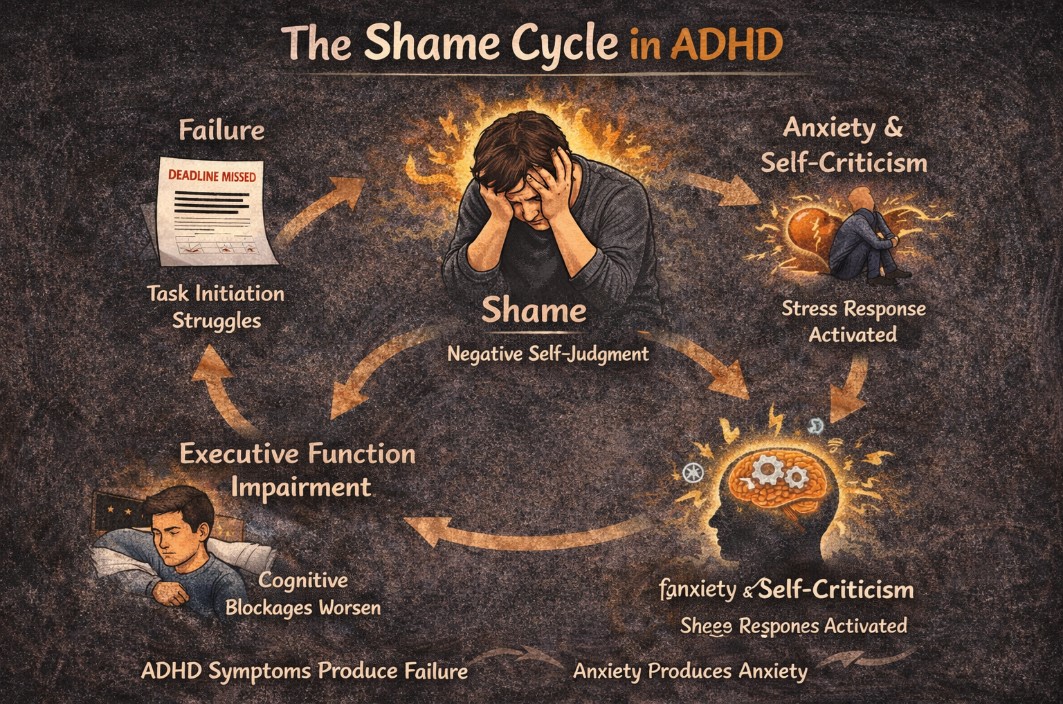
- The shame cycle: the pattern by which ADHD symptoms produce failure, failure produces shame, shame produces anxiety and self-criticism, and anxiety and self-criticism worsen the very executive function impairments that produced the failure in the first place.
- Behavioural strategies for executive function challenges: task initiation techniques, working memory compensation, time management adapted to the specific profile of time blindness, and organisational systems designed around how the ADHD brain actually works
- Emotional regulation skills: for the rapid, intense emotional responses, including Rejection Sensitive Dysphoria, that are core features of ADHD and sources of significant relational and occupational impairment
Somatic and Trauma-Informed Approaches
For adults with ADHD who carry the accumulated psychological weight of decades of misattunement, misdiagnosis, and the specific injuries produced by years of being told they were not trying hard enough, trauma-informed and somatic approaches form an essential clinical layer.
The body carries the record of chronic shame and repeated overwhelm. The flinch before opening an email. The tightening in the chest when discussing unfinished tasks. The physiological collapse that follows perceived criticism. These are not simply unhelpful thought patterns. They are stored nervous-system responses to repeated experiences of failure and shame, and they require approaches that work at the level of the nervous system, not only at the level of cognition.
Executive Function Coaching
Executive function coaching at its best is not the application of generic productivity systems to an ADHD brain. It is the construction of bespoke external scaffolding, personalised to this individual's specific profile of impairments, that compensates for genuine deficits in internal executive architecture.
Effective executive function support includes breaking goal-directed tasks into the smallest possible initiated steps; externalising memory through visible, accessible systems; using implementation intentions (the 'when-then' format) to bridge the gap between intention and action; and building routines that reduce the daily decision load on an already overtaxed executive system.
Medication: The Role of Pharmacotherapy
Appropriately prescribed medication for ADHD is not a personality change or a cognitive enhancement. For individuals with genuine dopaminergic deficits, stimulant medication produces what patients consistently describe as a qualitatively different experience: a quieter internal environment, the capacity to begin tasks without monumental internal effort, and a reduction in the emotional volume that has characterised their entire experience.
Stimulant medications available in India, primarily methylphenidate (brand names include Ritalin and Concerta), act by increasing the availability of dopamine and norepinephrine in the prefrontal cortex, the region most central to executive function and attentional regulation. Evidence for their efficacy in ADHD is among the strongest in pharmacotherapy, with response rates of 70% to 90% in properly diagnosed populations.
Medication is not appropriate for everyone, and careful assessment of health history, comorbid conditions, and the specific clinical picture is essential before any pharmacological recommendation. In India, ADHD medication requires a psychiatric prescription, and the prescribing decision should be embedded in a comprehensive treatment plan, not treated as a standalone intervention.
Family and Relationship Psychoeducation
ADHD does not exist only within the individual who carries the diagnosis. It exists in the relationships, family systems, and professional contexts within which that person functions. When ADHD has been unrecognised for years within a relationship, a specific and damaging dynamic develops: the partner without ADHD absorbs more and more organisational and emotional labour, developing resentment that neither partner fully understands.
Naming the underlying ADHD and providing psychoeducation to both partners replaces the most destructive relational dynamic of all, mutual incomprehension, with a framework that both partners can understand and work within. At Coach For Mind, partner and family psychoeducation is a standard component of our ADHD support work, not an optional add-on.
Part Eight: Navigating the Process in India
The Indian ADHD Assessment Landscape
ADHD assessment in India presents specific practical and cultural challenges that generic guidance written for US, UK, or Australian healthcare contexts does not address.
The psychiatrist-psychologist pathway: In India, ADHD medication can only be prescribed by a psychiatrist. A clinical psychologist can conduct the diagnostic assessment, provide the written report, and deliver therapeutic interventions, but the prescribing decision rests with a psychiatrist. For adults seeking both assessment and medication, the most efficient pathway is either a team that includes both (as at Coach For Mind, where we coordinate with prescribing psychiatrists where needed) or a sequential referral from assessment to prescriber.
The awareness gap: ADHD awareness among Indian healthcare providers, particularly outside major metro areas, remains uneven. Many GPs and general psychiatrists are not yet familiar with adult ADHD presentations, the specific diagnostic standards for adult assessment, or the range of available treatment options. Knowing what a rigorous assessment should include and recognising when it does not are practically important.
The cultural overlay: The academic achievement pressure of the board exam system, the joint family structure, the gender socialisation that makes women's ADHD symptoms invisible, and the stigma around mental health that delays help-seeking, all shape both how ADHD presents and how it is assessed. A culturally informed assessment takes these factors into account.
Online assessment: For adults outside major metros, or for those whose schedules make regular in-person attendance challenging, an online ADHD assessment is a clinically equivalent and practically accessible alternative. Coach For Mind conducts assessments both in person in Gurgaon and online across India, using the same rigorous DIVA-5-based process regardless of modality. Click here to book your free discovery call with Coach For Mind!
How to Prepare for Your Assessment
Preparation for an ADHD assessment significantly improves both its efficiency and its quality. Specific preparation that helps:
- Symptom documentation: Before the assessment, document specific examples of the experiences that prompted you to seek assessment. Not general impressions ('I'm always disorganised') but specific incidents with context ('In the last month, I've missed three deadlines, left two meetings halfway through, and forgotten to pay two bills despite having the money').
- School records and historical documents: Any school reports, particularly from primary school, are valuable historical evidence. The comment section of school reports is frequently a detailed account of ADHD-consistent behaviour.
- Partner or family input: If a partner, parent, or sibling is willing to provide collateral information, letting them know in advance that they may be asked to complete a rating scale, and asking them to think about specific observations of your functioning, significantly improves the collateral component of the assessment.
- Medication and health history: A complete list of current medications, any known medical conditions (particularly thyroid disorders, sleep disorders, or cardiovascular conditions), and any previous psychiatric diagnoses or treatments.
- Questions you want answered: Writing down the specific questions you want answered before the feedback session ensures you leave with the clarity the process is designed to provide.
Conclusion: The Diagnosis You Deserve
For most adults who eventually receive an ADHD diagnosis, the question they ask themselves most often is not 'why now?' It is 'why not sooner?'
Why was this not identified during the years of school reports that said 'bright but inconsistent'? Why did the anxiety treatment and the depression treatment help, but never quite resolve the underlying pattern? Why did every system, every planner, every productivity framework work for three weeks and then collapse? Why was there always this gap between what you were capable of and what you were actually producing, and why did you spend so long believing that gap was a moral failing rather than a neurological one?
The answer, for many adults, is a combination of inadequate clinical awareness, the specific invisibility of the inattentive presentation, the extraordinary effectiveness of compensatory masking strategies, and the cultural narratives, particularly around discipline, effort, and character, that made 'try harder' the default response to symptoms that could not be resolved by trying harder.
The diagnostic process that Coach For Mind conducts is designed to do what those earlier systems failed to do: look past the external presentation, ask the right questions about the internal experience, map the full developmental and comorbidity picture, and produce not just a label but a genuine understanding of what has been happening, and a clear, practical plan for what happens next.
If you have been carrying the weight of unexplained struggle, and if what you have read in this article has produced that particular quality of uncomfortable recognition, that is not nothing. It is the beginning of finding out.
What makes Coach For Mind different is the depth and continuity of the process. Assessment is not treated as a one-time event but as the foundation for ongoing work. The insights gathered are translated into a structured, practical plan that includes skill-building, behavioural systems, emotional work, and, where needed, referrals for medical support. There is also a strong focus on helping individuals understand their patterns in everyday contexts, so the work remains relevant and actionable.
The goal is not just awareness but sustained change. This includes reducing shame, improving day-to-day functioning, and creating systems that make life feel more manageable. Instead of leaving with only a diagnosis, individuals leave with clarity, direction, and a plan for what comes next.
Take the Next Step: ADHD Assessment at Coach For Mind
Comprehensive ADHD Assessment using the DIVA-5 with Emotional Amendment.
Our assessments are conducted by RCI-registered clinical psychologists with specific training in adult ADHD presentations, including high-masking individuals, women with the inattentive profile, adults with complex trauma histories, and those with significant comorbidities.
The assessment includes:
- Structured DIVA-5 diagnostic interview covering full DSM-5 criteria
- Emotional amendment for dysregulation and rejection sensitivity
- Validated self-report and collateral rating scales
- Comprehensive differential diagnosis
- Detailed feedback session with collaborative treatment planning
- Written clinical report
Importantly, our assessment is also designed to rule out other conditions. Many things can mimic ADHD, trauma, anxiety, sleep disorders, thyroid dysfunction, and mood disorders. A responsible evaluation actively considers and excludes these before arriving at a diagnosis.
Sessions are available online across India and internationally for NRI clients, as well as in person in Gurgaon.
Begin with a free 15-minute discovery call.
www.coachformind.com | [email protected]
RCI-registered clinical psychologists. Evidence-based. Culturally informed. Online and in-person.
References
Leffa et al. (2022). ADHD in children and adults: Diagnosis and prognosis.
Studart et al. (2025). Diagnosing ADHD in adults in randomized controlled studies: A scoping review.
Wolraich et al. (2019). Clinical practice guideline for the diagnosis, evaluation, and treatment of ADHD in children and adolescents. American Academy of Pediatrics.
Jerome & Jerome (2020). Approach to diagnosis and management of childhood ADHD.
Cabral et al. (2020). ADHD: Diagnostic criteria, epidemiology, risk factors and evaluation in youth.
Gnanavel et al. (2019). ADHD and comorbidity: A review of literature.
This article is for informational purposes only and does not constitute medical advice. If you believe you may have ADHD, please seek assessment from a qualified clinical professional.
By Ms Bhavya Sekhri | Psychotherapist at Coach For Mind
Frequently Asked Questions
The ADHD diagnostic process is a multi-step clinical assessment that involves a comprehensive clinical interview (using the DIVA-5 for adults), validated rating scales, collateral information from people who know the person across different settings, and a thorough differential diagnosis to rule out or identify co-occurring conditions. A rigorous adult assessment typically spans two to three sessions, with additional time for collateral input and report preparation. The length is the quality control that makes the diagnosis trustworthy.
At Coach for Mind, the process is designed to be comprehensive and paced, so patterns are understood clearly before conclusions are drawn. The focus is not just on diagnosing but on building a clear roadmap for what comes next.
No. The DSM-5 requires that symptoms be present before age 12, not that you have documented proof. Where childhood records exist (school reports are often particularly useful), they can strengthen the developmental picture. Where they do not exist, skilled clinicians use structured interviews to reconstruct the childhood pattern using specific behavioural examples.
The DIVA-5, used at Coach For Mind, is specifically designed to establish childhood symptom history in adult assessments. The process here includes detailed, guided questioning that helps piece together childhood experiences even when memory feels unclear. This allows for a reliable developmental understanding without relying only on documentation.
Many people dismiss the possibility of ADHD because they have performed well on paper. High intelligence and high-achieving compensatory strategies can conceal ADHD from the outside, and from the person themselves, for decades. A study of undergraduate medical students found that nearly 35% screened positive for undiagnosed ADHD despite having achieved the academic performance required for medical school. The experience of ADHD in high-achieving individuals is often one of extraordinary effort to produce results that appear, from the outside, to come easily.
At Coach for Mind, the focus is on understanding the effort behind the outcomes, not just the outcomes themselves. This helps uncover patterns that may have been overlooked for years.
It is common for these conditions to feel similar, which can make things confusing. In anxiety, concentration difficulties are driven by intrusive worry; in ADHD, by attentional dysregulation. In depression, executive dysfunction typically has a clear onset; in ADHD, it has been present since childhood and is pervasive across emotional states. Between 60% and 100% of people with ADHD have at least one comorbid condition, so the presence of anxiety or depression does not rule out ADHD. A comprehensive differential diagnosis establishes the relationship between them.
At Coach for Mind, careful differential diagnosis is used to map how these experiences interact. This ensures that the treatment approach addresses the full picture rather than just one part.
The DIVA-5 (Diagnostic Interview for ADHD in Adults, 5th Edition) is the gold-standard structured clinical interview specifically designed for diagnosing adult ADHD. It systematically covers all 18 DSM-5 symptom criteria across both current adult presentation and childhood history, with specific life-domain examples that help reconstruct the developmental picture even when explicit memory is limited. Validation research shows sensitivities and specificities above 90%, making it one of the most reliable tools available for the diagnosis of adult ADHD.
At Coach for Mind, tools like the DIVA-5 are used as part of a broader assessment process. They provide structure, while clinical judgement and lived experience add depth to the understanding.
Yes. DSM-5 explicitly allows co-diagnosis of ADHD and ASD, reflecting the clinical reality that both conditions frequently co-occur. ADHD can and frequently does co-occur with anxiety disorders, mood disorders, learning disabilities, trauma-related conditions, and sleep disorders. The assessment process needs to identify all relevant conditions, because the treatment plan for ADHD in isolation is different from the treatment plan for ADHD with comorbid anxiety or a complex trauma history.
At Coach for Mind, the assessment is designed to identify all relevant patterns, not just one. This allows for a treatment plan that reflects the individual's complexity rather than simplifying it.
Many people hesitate to say this out loud due to fear of being judged, but openness actually helps the process. Assessment works best when it is collaborative and transparent. Sharing a suspicion does not bias the outcome if the evaluation is done properly. It simply becomes one part of the information considered.
At Coach for Mind, the process encourages this kind of openness. Personal insights are treated as valuable data, while the final conclusions are still based on structured assessment and clinical reasoning.
Many people assume the diagnosis is the final step, but it is really the starting point. What follows is a deeper understanding of how ADHD shows up in daily life and what can be done about it. This can include therapy, skill-building, lifestyle changes, and sometimes medication. The goal is to translate insight into practical change.
At Coach for Mind, the post-diagnostic phase is structured and detailed. A personalised plan is created that brings together cognitive strategies, behavioural systems, emotional work, and, where needed, referrals for medical support. The focus is on making the understanding usable so that daily life feels more manageable and less effortful.