TL;DR
- Executive dysfunction is the core of ADHD, not inattention: ADHD is fundamentally a disorder of the prefrontal cortex's regulatory system, affecting task initiation, working memory, time perception, emotional regulation, and impulse control.
- Six distinct executive functions are affected, each requiring its own intervention strategy: initiation, working memory, planning and organisation, emotional regulation, time management, and cognitive flexibility.
- The neurobiology is specific and measurable: Tonic dopamine deficit, Default Mode Network intrusion, and delayed PFC maturation explain why ADHD executive failure is neurological, not motivational.
- High-functioning masking has a physiological cost: The chronic use of adrenaline and cortisol to compensate for executive deficits produces a specific burnout cycle that is frequently misidentified as depression.
- Executive dysfunction evolves across the lifespan and hides behind other diagnoses: GAD, treatment-resistant depression, and menopausal cognitive decline are among the most common diagnostic shadows for ADHD.
- Effective treatment is always multimodal: Adapted CBT, somatic regulation, trauma-informed work, executive function coaching, medication, and environmental design address different layers of the same problem.
- The scaffolding toolkit is specific and practical: Visual law, body doubling, the 3-2-1 launch method, Pomodoro adaptation, digital hygiene, routine architecture, and reward pairing are each grounded in neurobiology.
Introduction: The Part of ADHD Nobody Talks About Enough
Ask most people what ADHD is, and they will describe an inability to pay attention. Ask someone who actually lives with it, and they will describe something far more specific and far more disabling: the experience of knowing exactly what needs to be done, caring about it, and being unable to make themselves start. The experience of time disappearing without warning. The emotional explosion that feels utterly disproportionate to the trigger. The plan that existed perfectly in the mind at 9 am was completely inaccessible by 11 am.
These are all expressions of the same underlying clinical reality: ADHD is, at its neurological core, a disorder of executive function. This article explains what that means, why it happens at the neurobiological level, how it evolves across the lifespan, what masking costs the person carrying it, and, crucially, what the evidence says about every layer of intervention that actually helps.
Part One: What Executive Functioning Is, and Why ADHD Disrupts It
The Prefrontal Cortex: The Brain's Chief Executive
The prefrontal cortex (PFC) is the most recently evolved region of the human brain and the last to fully develop, not reaching full maturity until the mid-twenties. It is responsible for the regulatory functions that allow humans to pursue long-term goals, override immediate impulses, and adapt flexibly to changing circumstances. In ADHD, the dopamine and norepinephrine signalling systems that support PFC function are dysregulated, resulting in a specific neurochemical impairment in the circuitry that allows the PFC to exert regulatory control over behaviour. This is not a deficit of intelligence, motivation, or character. It is a measurable biological impairment.
The Six Executive Functions Most Impaired in ADHD
- Task Initiation
Task initiation is the capacity to begin a goal-directed action at an appropriate time, without requiring an external prompt. In ADHD, the neurological bridge between intention and action is functionally impaired, producing the experience the community calls the 'glass cage': fully aware of what needs to be done, genuinely wanting to do it, and physically unable to begin.
"I can sit at my desk for two hours staring at a report I know how to write, that I want to finish, that I know matters, and not produce a single word. That is not laziness. That is the most frustrating experience of my professional life."
- Working Memory
Working memory is the cognitive workspace where active thinking happens. In ADHD, its effective capacity is significantly smaller and more susceptible to interference, producing the experience of losing a thought mid-sentence, forgetting the purpose of a task before completing its first step, or reading a paragraph and retaining none of it because internal noise displaced the content.
- Planning and Organisation
Planning requires holding a future goal in mind, breaking it into sequential steps, estimating the time and resources required, and maintaining that structure as one executes it. ADHD impairs both working memory and the PFC, making sustained, structured, future-oriented thinking neurologically effortful. The person with ADHD often has comprehensive plans that exist fully formed in the moment, and are completely inaccessible twenty minutes later.
- Emotional Regulation
Emotional regulation is an executive function, and its inclusion on this list is one of the most important clinical advances in understanding ADHD. The PFC normally modulates the amygdala's emotional responses. In ADHD, this modulation is impaired: emotional responses fire with greater intensity, arrive more rapidly, and de-escalate more slowly. Research estimates that emotional dysregulation affects between 34% and 70% of adults with ADHD, making it one of the most functionally impairing and most clinically underrecognised dimensions of the condition.
- Time Perception and Management
Time blindness, the specific inability to accurately perceive, estimate, and plan across time, is one of the most distinctive features of ADHD executive dysfunction. For many people with ADHD, there is 'now' and 'not now.' Future events do not have weight or proximity until they are imminent. This is not a failure of planning. It is a specific neurological deficit in the brain's capacity to simulate and respond to future time.
- Cognitive Flexibility
Cognitive flexibility is the capacity to shift strategies, adjust to changing circumstances, and recover effectively from errors. In ADHD, it is affected both by the PFC impairment directly and by the emotional dysregulation that makes unexpected changes feel threatening rather than merely inconvenient, producing the rigidity and disproportionate response to disruption that is frequently misread as stubbornness.
An Interest-Based Nervous System
Six impairments, each distinct, but with a common architecture. In a neurotypical executive system, the PFC directs attention according to a self-determined hierarchy of priorities. The person decides something matters, and the brain allocates attentional resources accordingly. Future consequences carry real motivational weight. Deadlines generate proportionate urgency across a sensible timeline.
The ADHD executive system does not work this way. Attention is directed not by self-determined priority but by a specific cluster of neurological drivers: novelty, urgency, challenge, passion, and competition. When a task activates one of these drivers, the ADHD brain produces extraordinary, sustained focus. When it does not, even the most objectively critical task in the world produces nothing — not because the person does not care, but because caring is not a sufficient neurological signal to activate the ADHD attention system. Importance alone does not open the gate.
This is the architecture beneath all six impairments. Task initiation fails because starting a low-interest task produces no neurological activation signal. Working memory drops because internal noise from resting-state brain activity isn't suppressed by the task itself. Time perception collapses because future events carry no weight until they become urgent. Emotional responses overwhelm because the same PFC circuits that would modulate them have gone quiet.
It also explains the paradox that confuses families, employers, and often the person themselves: the same individual who cannot begin a routine work task can spend six unbroken hours absorbed in something genuinely novel. This is not an inconsistency of character. It is the entirely predictable output of a nervous system that runs on interest, not intention.
Part Two: How Executive Dysfunction Manifests in Daily Life
The Gap Between Capacity and Output
One of the most consistent and most painful features of ADHD executive dysfunction is the gap between what the person is capable of and what they are reliably able to produce in the conditions that daily life and professional environments impose. This gap is not a character failing. It is the functional expression of executive impairment operating in a world designed around the assumption of intact executive function.
The Shame Cycle, a Clinical Variable
Over time, the repeated experience of executive failure produces a specific psychological consequence: accumulated shame. This shame then becomes a clinical variable in its own right. Shame activates the sympathetic nervous system, raising cortisol and reducing PFC activation, directly worsening the executive function deficits that produced the original failures. The cycle is self-reinforcing: executive dysfunction produces failure, failure produces shame, shame produces neurological conditions that worsen executive dysfunction, which produces more failure.
At Coach For Mind, the shame cycle is identified in assessment and addressed from the earliest sessions. It is not the background context for the 'real' work. It is often the most critical clinical target of the first phase of treatment. To explore this further, you can book a free discovery call with us.
Executive Dysfunction in Indian Professional and Family Life
The academic pressure of board examinations, the professional culture of many Indian workplaces, and the interpersonal demands of joint family structures all reward a very specific executive skill set that ADHD directly impairs: sustained, structured, self-directed output. Many Indian adults with unrecognised ADHD experience a specific and demoralising pattern: performing brilliantly in high-interest, high-stakes, novel situations, and being chronically unable to manage the routine administrative and relational demands that surround those performances. Read more about breaking free from this here.
Part Three: The Treatment Framework, What Actually Helps
The Principle: Multimodal and Profile-Specific
No single intervention is sufficient. Medication stabilises the neurochemical environment but does not build the skills. Therapy builds the skills, but may require pharmacological support to be accessible. Coaching translates skills into daily systems, but cannot address the shame or nervous system dysregulation. Environmental design creates conditions for success but does not resolve internal impairments. The most effective treatment integrates all of these layers and is calibrated to the individual's specific executive function map.
Layer One: Adapted Cognitive Behavioural Therapy (CBT)
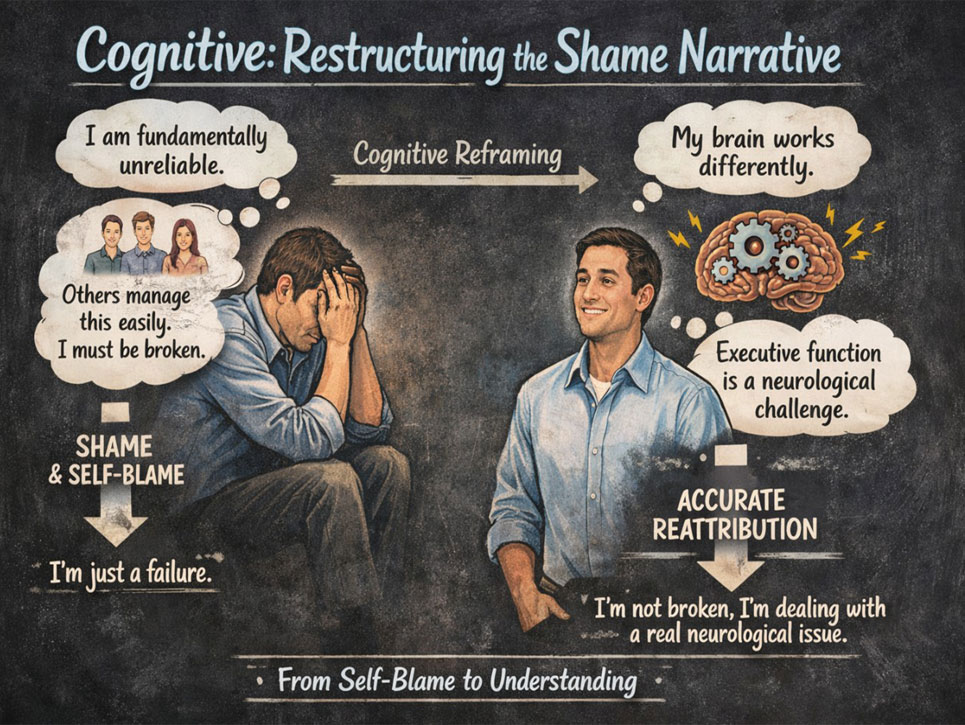
Cognitive, Restructuring the Shame Narrative
The cognitive component targets the specific distorted beliefs that executive dysfunction generates: 'I am fundamentally unreliable.' 'Other people manage this without effort, so my difficulty means I am broken.' Restructuring these beliefs is not a matter of arguing the person into positivity. It is a process of accurate reattribution, replacing a character explanation for executive failures with a neurological one, thereby reducing the shame activation that is worsening the very deficits it is responding to.
Behavioural, Building External Scaffolding
The behavioural component of adapted CBT rests on a single clinical insight: the prefrontal cortex in ADHD cannot reliably perform the regulatory functions it is supposed to automate. The therapeutic response is not to try harder to activate it. It is to move those functions entirely outside the brain.
External scaffolding works by relocating the cognitive demands of initiation, planning, time management, and motivation from internal executive resources into the physical environment. A visible timer does not require the brain to track time. A structured cue-action pair does not require the brain to generate initiation. A dopamine-paired task does not require the brain to manufacture motivation from importance alone. Each tool replaces an unreliable executive function with an environmental mechanism that is not.
What distinguishes effective scaffolding from a general productivity system is specificity: it must be calibrated to the individual's executive function profile, placed at the exact point in the environment where it will be needed, and designed to require the minimum possible executive resource to use. A system that the person has to remember to check has already failed.
The specific tools, such as implementation intentions, time externalisation, task decomposition, dopamine pairing, and routine architecture, are covered in depth in the scaffolding section. What matters here, as a CBT principle, is the reattribution this approach enables: the person is not failing to manage themselves. They are operating without the neurological infrastructure that self-management assumes. Scaffolding is not a crutch. It is the prosthetic that allows the rest of the work to happen.
Metacognitive, Building Self-Awareness of Executive Patterns
Metacognitive training develops a person's ability to recognise their own executive function states in real time, noticing when they are approaching initiation failure, when working memory is overloaded, when emotional dysregulation is beginning to build, and applying the relevant regulatory strategy before the system collapses.
Layer Two: Somatic and Nervous System Regulation
Executive function depends on a regulated nervous system. When the person with ADHD is in sympathetic activation, triggered by shame, anticipatory anxiety, or accumulated stress, the PFC activation that executive function requires is directly suppressed. Somatic approaches address this directly, working with the body first to create the neurological conditions in which cognitive and skills-based work can be received.
- Breath-based regulation: Extended exhalation breathing directly activates the parasympathetic nervous system, reducing cortisol and increasing PFC availability, a neurological intervention, not a relaxation technique
- Movement-based regulation: 20–30 minutes of vigorous cardiovascular exercise produces immediate, documented improvements in working memory, task initiation, and impulse control through the same dopamine pathways targeted by stimulant medication
- Grounding and sensory regulation: For adults with trauma histories or significant anxiety, present-moment sensory anchoring reduces the internal noise that competes with executive function for cognitive bandwidth
- Body doubling: The regulated presence of another person directly co-regulates the ADHD nervous system, a documented neurological mechanism that should be deliberately designed into the daily structure
At Coach For Mind, somatic regulation is integrated from the first session, because without a regulated nervous system, executive function strategies are inaccessible.
Layer Three: Trauma-Informed and Shame-Focused Work
For most adults receiving a late ADHD diagnosis, executive dysfunction arrived with decades of accumulated psychological experience: the repeated failure that felt inexplicable, the criticism that felt unjust, the identity built around the conclusion that trying harder would never be enough. These experiences are stored in the nervous system as somatic patterns, not merely thoughts to be reframed, but nervous system responses requiring specific clinical intervention.
- The avoidance that looks like resistance: Understanding protective shutdown responses as adaptive, and working with them through titrated, collaborative approaches rather than challenge
- Window of tolerance expansion: Gradually building the nervous system's capacity to approach executive demand without collapsing into shutdown or overwhelm
- Identity repair: The transition from a shame-based self-concept to a neurodiversity-informed one requires sustained therapeutic work; it does not happen automatically with diagnosis
Layer Four: Executive Function Coaching
Effective executive function coaching at Coach For Mind is built on three principles: profile-specific (calibrated to the individual's specific impairment map, not generic); the minimum viable system (the simplest possible system that produces the required functional outcome, with planned rotation when novelty fades); and embedding not adding (new behaviours built around existing reliable anchors rather than requiring entirely new routines from scratch).
Layer Five: Pharmacotherapy, The Enabling Layer
For many adults with ADHD, appropriately prescribed medication is the intervention that makes all other layers accessible. Stimulant medications, primarily methylphenidate, available in India, increase dopamine and norepinephrine availability in the prefrontal cortex, directly improving the neurochemical conditions on which executive function depends. The clinical effect is not a personality change: it is the initiation gap narrowing, working memory holding things long enough to be used, and emotional responses pausing for a moment before arriving. At Coach For Mind, we coordinate with prescribing psychiatrists where medication is part of the plan.
Layer Six: Psychoeducation and Environmental Design
Psychoeducation for individuals, partners, and families shifts the focus from compliance to genuine collaboration. Environmental design applies it practically:
- Visible, always-accessible external memory systems: whiteboards, digital calendars with aggressive reminders, notebooks that live on the desk
- Friction reduction for desired behaviours: gym clothes laid out the night before, healthy options at eye level, documents open and visible
- Friction addition for non-desired behaviours: phone charger outside the bedroom, social media apps requiring extra navigation steps
- Structured social accountability: check-in partners, body doubling arrangements, shared calendars providing external regulation
Part Four: The Neurobiology of the 'Why', What Is Actually Happening in the Brain
The Dopamine Hypothesis: Tonic vs. Phasic Signalling
The dominant neurobiological model of ADHD centres on dopamine, specifically, on the distinction between two types of dopamine signalling that serve different functions in the prefrontal cortex.
Tonic dopamine is the steady, background level of dopamine present in the PFC at rest. It functions like a carrier signal, maintaining the PFC in a state of readiness, supporting working memory, and allowing sustained goal-directed attention without requiring a novel stimulus. In ADHD, tonic dopamine levels in the PFC are chronically lower than optimal. The carrier signal is weak.
Phasic dopamine is the sharp, rapid burst released in response to a novel, rewarding, or emotionally salient stimulus, the dopamine surge of a new idea, an urgent deadline, or an emotionally compelling task. Phasic dopamine is largely intact in ADHD.
The clinical consequence of this asymmetry is profound: the ADHD brain cannot sustain the tonic dopamine level required for self-directed, priority-based attention, but it can generate the phasic surge required for interest- or urgency-driven attention. This is the neurobiological explanation for hyperfocus: when a task is genuinely novel or emotionally compelling, the phasic system compensates for the weak tonic signal. When it is not, the tonic system fails to sustain engagement regardless of the person's awareness of the task's importance.
Stimulant medications work primarily by increasing tonic dopamine availability in the PFC, raising the baseline carrier signal to a level at which the PFC can sustain goal-directed attention without requiring a phasic stimulus.
Structural Differences: Delayed Maturation and the DMN Problem
Delayed prefrontal cortex maturation: Neuroimaging research has documented that in ADHD, the PFC matures on a delayed timeline, reaching full development approximately three to five years later than in neurotypical individuals. A sixteen-year-old with ADHD may have the executive function architecture of a twelve or thirteen-year-old, not because of cognitive impairment, but because the relevant brain region is simply not yet fully developed.
Default Mode Network (DMN) and Task Positive Network (TPN) connectivity: The DMN is the brain's resting-state network, active during mind-wandering and self-referential thought. The TPN activates during externally focused, goal-directed activity. In neurotypical brains, these networks operate reciprocally: when one activates, the other suppresses. In ADHD, this reciprocal suppression is impaired. The DMN fails to fully deactivate when the TPN is engaged, meaning internal resting-state activity continues to compete for neural resources during task performance. The person trying to concentrate is simultaneously generating tangential associations and unrelated ideas, not by choice, but because the neurological mechanism that suppresses internal noise during task performance is not functioning reliably. This is the neurobiological substrate of 'my brain won't stop.'
Part Five: The Cost of Compensation, Masking, Burnout, and the Double Life
The Cognitive Tax of Masking
For adults with unrecognised ADHD who have developed sophisticated compensatory strategies, those who appear, from the outside, to be functioning adequately or even impressively, there is a cost that is almost never accounted for clinically: the extraordinary cognitive and emotional energy required to manually perform what is, for others, automatic.
When executive function operates normally, initiating a task, organising information, managing time, and regulating emotional responses occur with minimal deliberate resource expenditure. For the person with ADHD operating on compensatory strategies, none of these is automatic. Each requires conscious, sustained, effortful management, and that management runs continuously in the background, consuming the cognitive bandwidth that is simultaneously needed for the actual work.
The result is a chronic state of cognitive overload that is invisible from the outside. The person who appears organised is spending enormous effort maintaining a system that others maintain effortlessly. The person who is never late is spending mental energy on time-tracking that others perform automatically. The person who delivers excellent work is doing so while simultaneously managing an internal environment of competing impulses, working memory failures, and emotional regulation demands that their colleagues are not managing at all. This is not sustainable. It is a performance, and all performances have a metabolic cost.
The ADHD Burnout Cycle
The mechanism by which high-functioning ADHD collapses into burnout is neurobiological, not motivational. Many adults with unrecognised ADHD develop a specific coping pattern: using adrenaline, the physiological urgency response, to bypass the tonic dopamine deficit and activate the executive system. Deadlines work because they create urgency. Crises work because they create emotional salience. The night before the deadline produces a phasic dopamine surge that the preceding week could not generate.
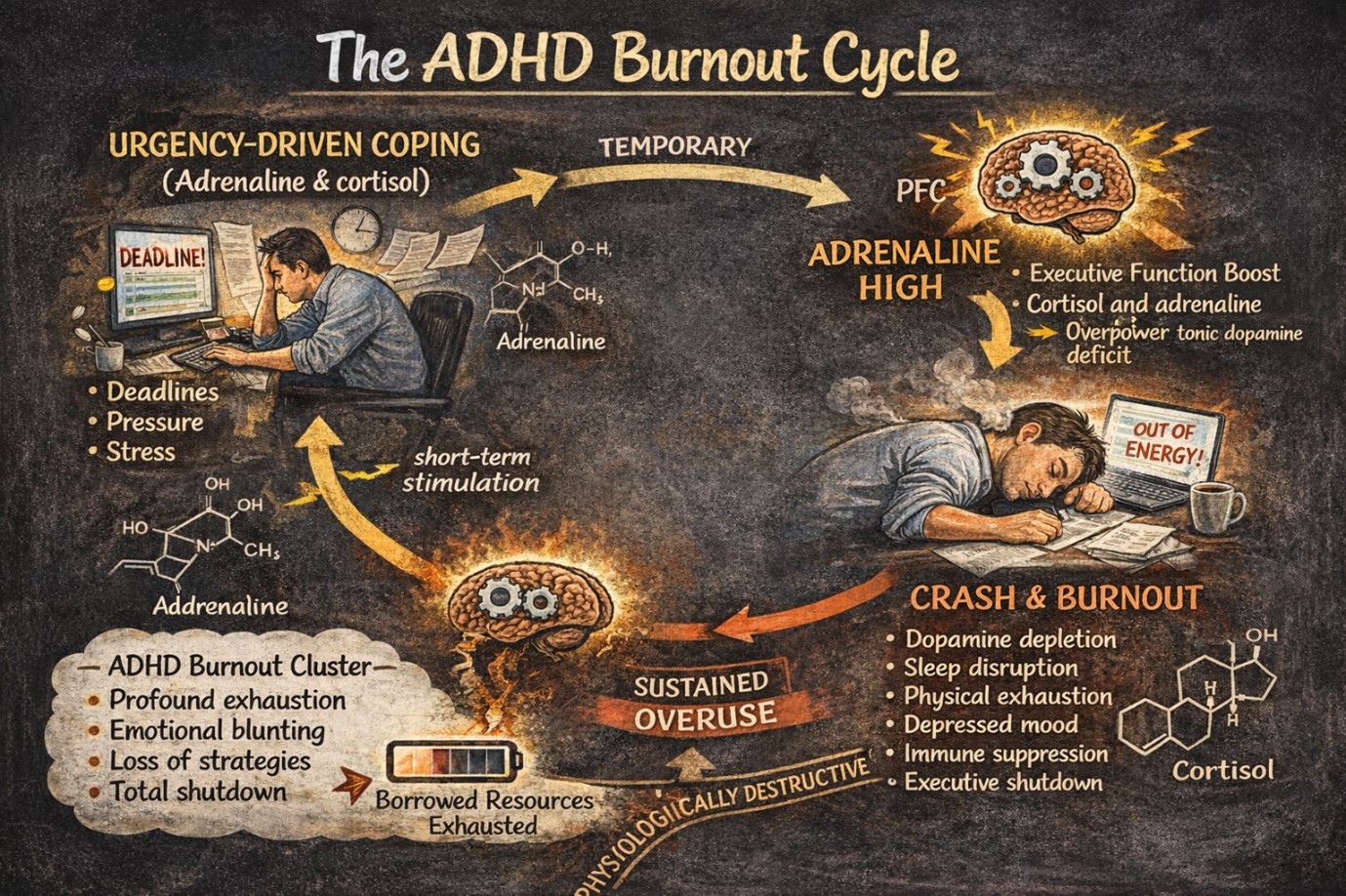
The chronic use of cortisol and adrenaline as substitutes for executive function is, in the medium term, effective. In the long term, it is physiologically destructive. Chronic cortisol elevation suppresses immune function, disrupts sleep architecture, dysregulates the HPA axis, and, critically, further reduces tonic dopamine availability in the PFC. The person is borrowing neurological resources from a system already operating at a deficit.
ADHD burnout presents with a specific cluster: a sudden, dramatic collapse of previously functional compensatory strategies; profound exhaustion that does not respond to rest; emotional narrowing that closely resembles depression; and a pervasive sense of having finally reached the end of a resource that was always borrowed. It is frequently misidentified as clinical depression and treated accordingly, with partial, temporary results, because the underlying mechanism has not been addressed.
The Double Life Phenomenon
One of the most consistent and most painful features of high-functioning ADHD is what might be called the double life: performing adequately or impressively in professional contexts, where external scaffolding (meeting structures, social accountability, deadlines set by others) provides much of the executive function support the internal system cannot, while private life remains in chronic, shameful chaos.
The work email is managed because a response is professionally expected. The home inbox has not been opened in four months. The work presentation was completed by the deadline. The tax return has been deferred for the third consecutive year. This asymmetry is not hypocrisy. It is the direct expression of an executive system that requires external regulation to function reliably, and that is only provided in professional contexts. Understanding this reframes what looks like priority mismanagement as the neurological reality it is: a brain that functions where structure exists, and struggles where it must be self-generated.
Part Six: Developmental Trajectory, Comorbidities, and Diviagnostic Shadowing
How Executive Dysfunction Evolves Across the Lifespan
ADHD executive dysfunction does not present identically at every developmental stage. In childhood, the executive function demands of the environment are relatively modest and largely externally structured; school timetables, parental routines, and teacher-directed learning provide much of the scaffolding that the ADHD brain cannot generate independently.
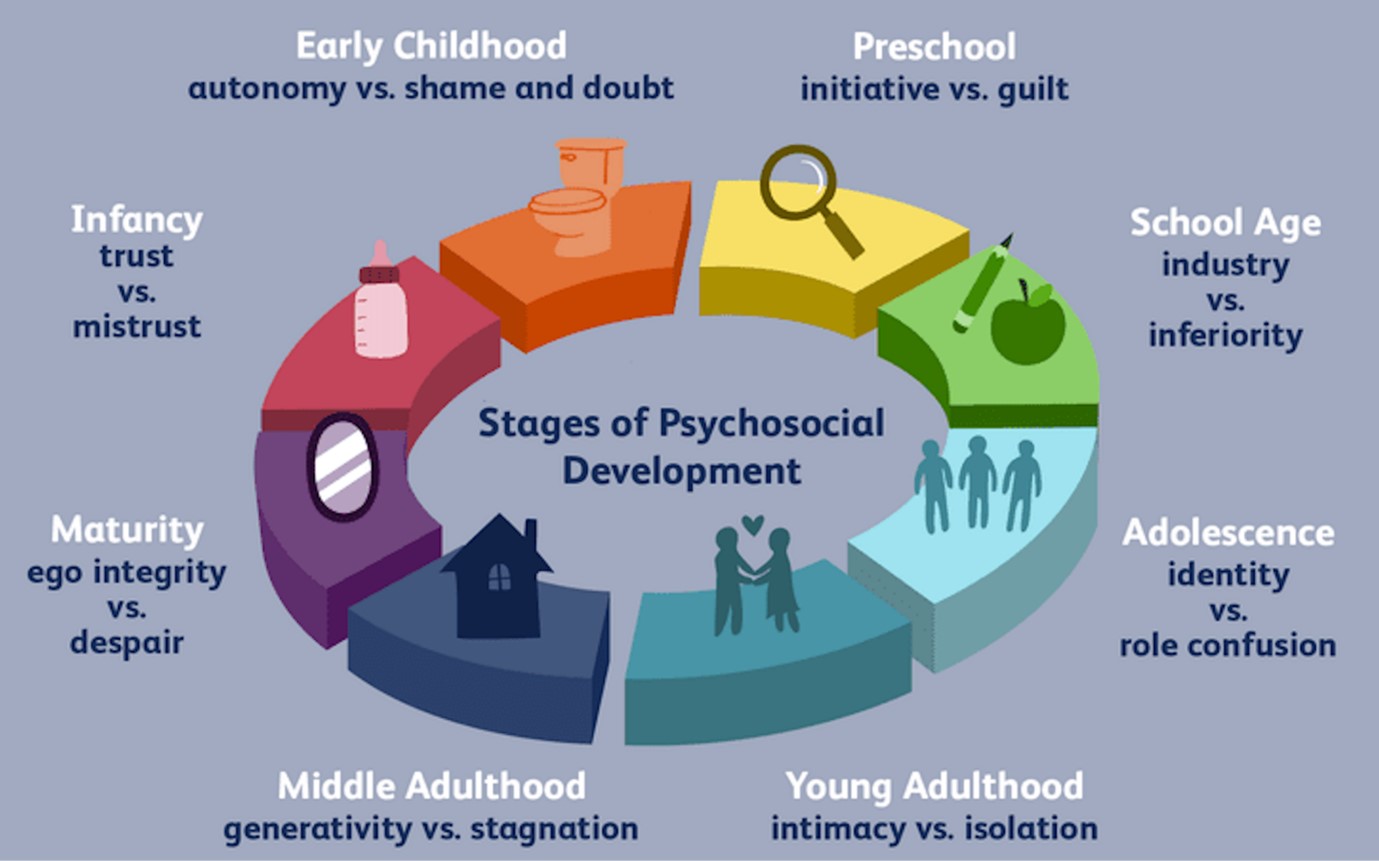
In adolescence, executive demands escalate precisely as external scaffolding begins to withdraw. In adulthood, two trajectories diverge: those who receive adequate support and build compensatory capacity, and those who do not, for whom the cumulative cost compounds across decades.
Diagnostic Shadowing: When ADHD Hides Behind Other Diagnoses
Generalised Anxiety Disorder (GAD): The anticipatory anxiety of an adult with unrecognised ADHD, the persistent, low-level dread of the next forgotten commitment, the next missed deadline, is experientially indistinguishable from generalised anxiety. Both produce worry, rumination, concentration difficulties, and sleep disruption. The critical diagnostic distinction is developmental history: GAD has an onset. ADHD executive dysfunction has been present since childhood, pervasive across settings, and not specifically attached to identifiable worry content. When ADHD is the underlying mechanism, anxiety-specific treatment provides partial relief because it addresses the anxiety response but not the executive dysfunction generating it.
Treatment-Resistant Depression: Secondary depression is one of the most common consequences of chronic, unrecognised ADHD. When this depression is treated without addressing the underlying ADHD, results are typically partial and temporary. Many adults who have been through multiple antidepressant trials without sustained remission are subsequently found, on comprehensive assessment, to have undiagnosed ADHD as the primary driver.
Hormonal Intersections: Executive Function in Women
It is easier to miss ADHD in women. Oestrogen directly modulates dopamine receptor sensitivity and dopamine synthesis in the prefrontal cortex. When oestrogen levels are stable and adequate, it provides a partial buffer for the tonic dopamine deficit of ADHD, one reason why many women with ADHD function adequately through their twenties and thirties.
When oestrogen levels fall, in the luteal phase of the menstrual cycle (producing PMDD-like symptom exacerbation), postpartum, and particularly during perimenopause, the dopaminergic buffer is removed. Executive function deteriorates, often sharply: time management fails, emotional dysregulation intensifies, and working memory becomes newly unreliable. Many women receive their first ADHD diagnosis in their forties, not because the condition is new, but because the hormonal buffer concealing it has been removed. The apparent sudden deterioration of cognitive function in midlife women is, in a significant proportion of cases, the unmasking of lifelong ADHD by hormonal change, not a new cognitive condition and not simply menopausal brain fog.
Rejection Sensitive Dysphoria (RSD) and Social Anxiety
Rejection Sensitive Dysphoria, the intense, rapid-onset emotional pain triggered by perceived criticism or rejection, is among the most functionally impairing and least clinically recognised features of ADHD emotional dysregulation. It is not ordinary sensitivity. It is a neurologically amplified emotional signal that can be genuinely incapacitating, arriving in seconds, felt physically as well as emotionally, and bearing little relationship to the actual severity of the triggering event.
Over time, chronic RSD produces anticipatory social withdrawal: the person learns to avoid any situation in which evaluation is possible, professional feedback, social judgment, and romantic vulnerability, because the anticipated pain of perceived rejection has become a threat response the nervous system treats as equivalent to genuine danger. This pattern is experientially close to social anxiety disorder, but the treatment distinction is critical: social anxiety responds well to standard exposure-based CBT; RSD-driven withdrawal requires ADHD-specific treatment addressing the underlying emotional regulation impairment rather than solely the avoidance behaviour.
Part Seven: The Scaffolding Toolkit, Concrete Strategies That Work
The Law of Visibility
The foundational principle of executive function scaffolding for ADHD brains is the Law of Visibility: if it cannot be seen, it does not exist. Working memory failures mean that information stored in a drawer, a closed app, or an internal mental note is functionally inaccessible. Every scaffolding system that works for ADHD is built on making the relevant information, tools, and reminders perceptually present at the point of performance, the exact moment and location where they are needed.
Visual Scaffolding
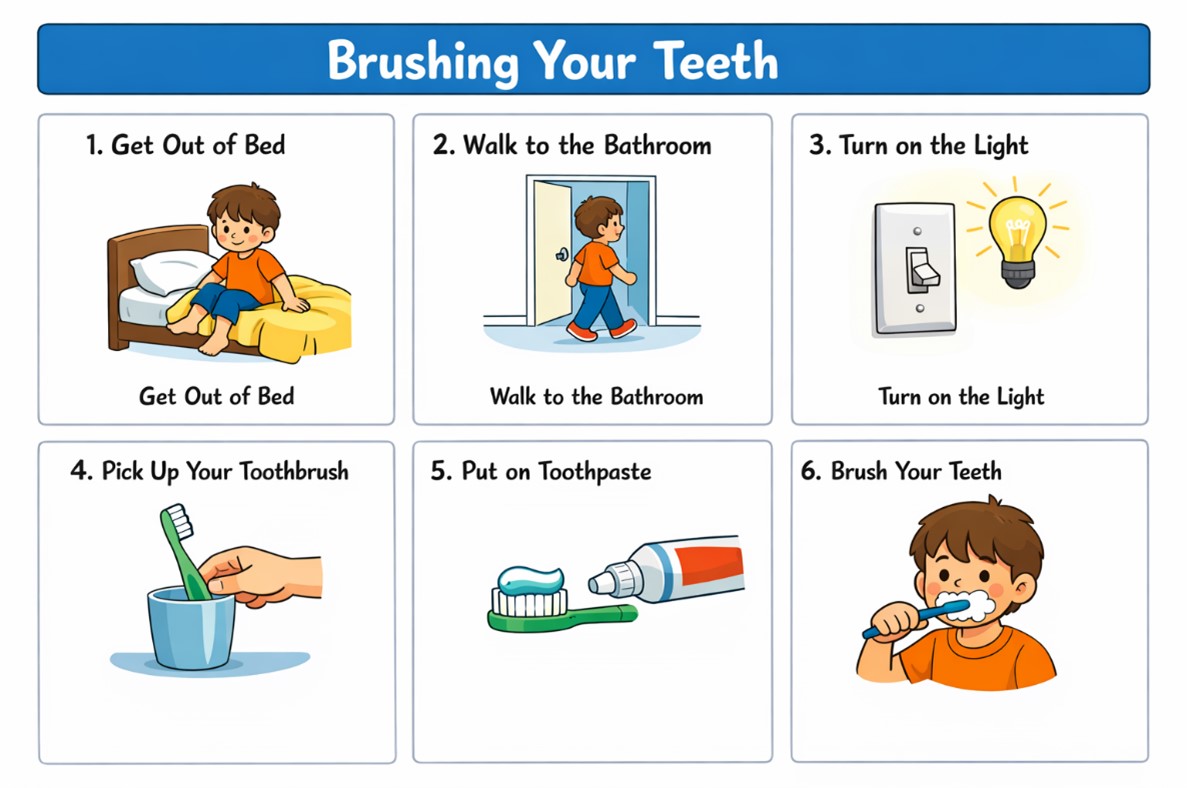
The physical whiteboard or corkboard: A large, visible whiteboard in direct line of sight, not tucked in a corner, serves as the externalised working memory that internal working memory cannot reliably provide. Current priorities, in-progress tasks, upcoming deadlines, and the single most important action for the day live here, permanently visible, requiring no retrieval effort.
Colour-coded systems: Colour coding adds urgency, category, and status information that the brain processes peripherally without executive effort; the red item demands attention before the blue item without requiring a deliberate priority review.
The Top 3 daily focus list: Rather than attempting to manage a full task list, which activates the planning and prioritisation demands that executive dysfunction impairs, daily focus is reduced to the three most important actions, written visibly, reviewed at the start, and adjusted at the end of each day.
Open task visibility: Active projects live in visible, open states, the document open on the desktop, the book open on the desk, and the bill on the kitchen counter. Filing is for completed things. Active things need to be seen.
The 3-2-1 Launch Method: For tasks with high initiation resistance, count down from three, and on '1' perform the single smallest possible action: open the document, write one word, make one phone call. The countdown bypasses the deliberative executive function that initiation failure blocks, triggering action before the brain can generate an avoidance response.
Auditory Scaffolding
Time-anchored alarms: For adults with time blindness, alarms set not only for appointments but for transitions, 'leave for meeting in 20 minutes,' 'start the report now,' 'take medication', make time perceivable in a way that internal time sense cannot. Name alarms descriptively so the required action is explicit when the alarm fires.
The Pomodoro Technique (adapted): The standard Pomodoro (25 minutes of work, 5 minutes of break) works for some adults with ADHD and fails for others, particularly those prone to hyperfocus, where the timer interrupts productive flow. The adapted version: start with the smallest possible interval (5 or 10 minutes) and use the timer to create urgency and task boundaries, not as a rigid structure. The timer makes time visible and finite, neurologically activating the interest-based nervous system.
Voice notes for working memory: When a thought occurs, and writing is not immediately possible, a 10-second voice note preserves it without requiring working memory to hold it until a writing opportunity arises, which is particularly valuable in transition moments when important thoughts are most vulnerable to loss.
Verbal planning: Speaking a plan aloud, to another person, a voice recorder, or oneself, engages the phonological loop of working memory in a way that silent internal planning does not. Externalising the plan into sound makes it more durable and more accessible.
Digital Hygiene for ADHD
The smartphone is both the most powerful organisational tool available to the ADHD brain and the most potent attention disruptor ever created. Managing this environment is not a moral question about self-control. It is an architectural question about who is designing the experience.
Notification pruning: All notifications except genuinely time-sensitive ones (calls and calendar alerts) should be disabled. Social media, news, email, and messaging notifications create continuous low-level attentional disruption that depletes the executive resources needed for intentional work.
App placement by intention: High-distraction apps are placed in a folder on a secondary screen, requiring deliberate navigation. High-utility apps (calendar, task manager, reminders) on the home screen, immediately accessible. Friction for distraction increases; friction for useful tools decreases.
Screen time limits as structural commitments: App timers set during high-regulation moments (mornings, after a productive session) create structural constraints that hold during low-regulation moments (evenings) without requiring willpower at the point of temptation.
Digital calendar as the external brain: Every commitment, appointment, and deadline lives in the digital calendar, never in internal memory. Reminders set aggressively: two days before, one day before, one hour before, fifteen minutes before. The calendar does the remembering. The person does the work.
Body Doubling, Why It Works Neurobiologically
Body doubling, working in the physical or virtual presence of another person, is one of the most reliably effective and most underutilised executive function interventions for ADHD. Its mechanism is not accountability in the social-embarrassment sense. It is nervous system co-regulation.
When the ADHD nervous system is isolated, it has no external source of regulatory input. When another regulated nervous system is present in the environment, even when engaged in their own work and not interacting, it provides a continuous co-regulatory signal through presence alone: a neurological anchor that reduces internal noise and supports sustained attentional orientation toward the task. This is why the person with ADHD who cannot work alone for twenty minutes can sometimes work for three hours in a coffee shop. It is also why virtual body doubling, working on a video call with another person, both focused on their own tasks, is clinically effective. The mechanism does not require interaction. It requires presence.
Practical implementations: scheduled co-working sessions with a trusted colleague, friend, or partner; virtual body doubling through online ADHD co-working communities; therapy sessions used not only for insight but also for structure and presence during particularly difficult periods of task initiation.
Task Decomposition, Making Starting Possible
The most important insight in task decomposition for ADHD is that the initiation barrier is not proportionate to the task's actual difficulty. It is proportionate to its perceived scope. Effective decomposition reduces the perceived scope to the smallest possible initiated action:
- Not 'finish the presentation', but 'open PowerPoint and add the title slide'
- Not 'clean the flat', but 'put five things away'
- Not 'respond to emails', but 'open the inbox and read the first email'
- Not 'study for the exam', but 'open the textbook to chapter three'
The principle is that starting is the hardest part, and task decomposition's job is to make starting as neurologically cheap as possible. Once the action has begun, the phasic dopamine of progress frequently sustains it, but the initiation must be made so small that executive resistance cannot prevent it.
Routine Architecture, Reducing Decision Load
Every decision made during the day is an expenditure of executive function. When daily sequences are routineised into automatic patterns, they require almost none. The goal of routine architecture for ADHD is not the rigid, perfectionist schedule that collapses on the first morning of disruption; it is the minimum viable daily scaffold that reduces decision load enough to preserve executive resources for work that actually requires them.
Key anchoring points:
- A consistent wake time and a fixed, automatic morning sequence, same actions, same order, every morning, that the brain learns to run without deliberation
- A consistent work-start ritual that functions as an initiation cue: the same small sequence of actions that the brain associates with entering work mode, reducing the executive cost of the transition
- Transition warnings before context switches: a phone alarm five to ten minutes before a transition, allowing the mental preparation that sudden context switching impairs for the ADHD brain
- An evening close-down sequence that includes the next day's single most important task written visibly, so the morning begins with clarity rather than the executive demand of planning from scratch
Reward Architecture, Working With the Dopamine System
Because the ADHD reward system requires closer, more reliable, and more immediate rewards to sustain motivation than the neurotypical system does, building explicit reward architecture into the work structure is not an indulgence. It is neurological engineering.
Effective reward architecture pairs avoided tasks with immediate, accessible pleasures:
- A specific playlist that plays only during a particular type of work, creating a pleasurable sensory environment that accompanies the task and provides a consistent dopamine signal
- A small, concrete reward scheduled immediately following a completed task or session, a favourite snack, a brief social interaction, a short walk, not contingent on perfect completion, but on engagement
- Progress tracking that makes completion visible, a paper chain, a checklist with satisfying boxes to cross, and a streak counter in a habit-tracking app, provides the visual confirmation of progress that the ADHD brain's impaired internal sense of achievement does not reliably generate
The reward must be immediate, must follow completion rather than precede it, and must be small enough to be delivered every session, not reserved for major milestones that executive function impairment may prevent the person from reaching in a single effort.
The Coach For Mind Integrated Approach
At Coach For Mind, our work with executive dysfunction in ADHD is built on a clinical conviction: the person in front of us is not broken. They have a specific neurological profile, documented impairments in specific executive function domains, operating in environments not designed for that profile, often without ever having had an accurate account of why things have been so hard.
- Assessment first: DIVA-5 with emotional amendment, validated executive function rating scales, and comprehensive developmental history, providing the clinical foundation for a genuinely personalised treatment plan
- Stabilisation before processing: For clients whose nervous systems are significantly dysregulated, somatic regulation and window of tolerance work precede cognitive and skills-based layers
- Shame as a primary target: Identified from the first session and treated as a clinical priority, both a source of suffering and a neurological obstacle to everything else
- Skills embedded in relational safety: Introduced within a therapeutic relationship that is explicitly non-shaming, paced to the individual's nervous system capacity, and oriented toward their own goals
- Coordination across the full treatment picture: Medication, family psychoeducation, psychiatric referral, integrated rather than treated as separate tracks
Sessions available online across India and for NRI clients internationally, and in-person in Gurgaon. Begin with a free 15-minute discovery call at www.coachformind.com.
Conclusion: From Surviving to Functioning, With the Brain You Actually Have
Executive dysfunction is the heart of ADHD, and it is also the dimension of the condition that is most responsive to targeted, informed, integrated intervention. The person who has spent years being told they are not living up to their potential, who has tried every planner and every morning routine, and who has concluded, with apparent evidence, that the problem is who they are, deserves to know that the problem has a name, a neurobiology, and a treatment.
The initiation failure is not laziness. The working memory collapse is not carelessness. The emotional explosion is not immaturity. The burnout was not a weakness. These are the predictable, documented, clinically addressable consequences of a specific neurological profile operating without recognition or support.
The goal of executive function treatment at Coach For Mind is not to produce a neurotypical performance. It is to build the external scaffolding, the internal skills, the regulated nervous system, and the accurate self-understanding that allow a person with ADHD to function fully, sustainably, and in a way that reflects their actual capacity rather than the gap that executive dysfunction creates between what they are and what they can reliably produce. That is achievable. It is what this work is for.
Take the Next Step: Executive Function Support at Coach For Mind
Whether you are newly diagnosed, long-diagnosed but under-supported, or simply beginning to wonder whether executive dysfunction might explain a lifelong pattern, we are equipped to assess, understand, and address your specific profile.
Our integrated approach includes:
- Comprehensive ADHD assessment using the DIVA-5 with emotional amendment and executive function profiling
- Adapted CBT and trauma-focused work to target the shame cycle, cognitive distortions, and specific executive function deficits across all six domains
- Somatic and nervous system regulation work is integrated from the first session
- Trauma-informed approaches for those carrying the accumulated weight of unrecognised ADHD
- Executive function coaching for practical daily system design, profile-specific, minimum viable, embedded in existing structure
- Psychoeducation for individuals, partners, and families
- Coordination with prescribing psychiatrists where medication is part of the plan
Sessions available online across India and internationally for NRI clients, and in-person in Gurgaon.
www.coachformind.com | [email protected]
Begin with a free 15-minute discovery call. RCI-registered clinical psychologists. Evidence-based. Culturally informed.
This article is for informational purposes only and does not constitute medical advice. If you believe you may have ADHD, please seek assessment from a qualified clinical professional.
By Ms Bhavya Sekhri | Psychotherapist at Coach For Mind
Frequently Asked Questions
Many people with ADHD experience a gap between knowing what needs to be done and being able to start or follow through. This is not a lack of discipline. Executive dysfunction arises from differences in how the prefrontal cortex manages planning, memory, emotional regulation, and task initiation, which are influenced by dopamine and norepinephrine. This is why everyday tasks can feel disproportionately effortful. Support typically focuses on simplifying tasks, creating external structure, and building awareness of patterns.
At Coach For Mind, we help you understand your unique executive profile and build practical systems that work with your brain, not against it. This includes tools for task initiation, emotional regulation, and sustainable routines. Over time, this shifts the experience from “Why can’t I do this?” to “I know how to support myself through this.”
People with ADHD are not inconsistent; they’re operating with a different attention system. In ADHD, attention isn’t guided by priority alone but by interest, urgency, and emotional relevance, which is why hyperfocus can happen so powerfully. Tasks that feel boring or distant simply don’t activate the same neural pathways. This isn’t a lack of discipline; it’s a difference in how attention is regulated.
At Coach For Mind, we help you design environments and strategies that increase engagement with low-interest tasks. This might include breaking tasks down, adding novelty, or creating structured urgency in healthier ways.
Many people look for a single solution, but executive dysfunction usually requires a combination of approaches. The most effective treatment is multimodal, combining adapted CBT (cognitive restructuring, behavioural scaffolding, metacognitive training), somatic and nervous-system regulation, trauma-informed shame work, executive-function coaching, and, where appropriate, medication. Environmental design and psychoeducation underpin all of these layers. No single intervention is sufficient on its own, and the specific combination should be informed by a thorough assessment of the individual's executive function profile.
At Coach for Mind, we help you design environments and strategies that increase engagement with low-interest tasks. This might include breaking tasks down, adding novelty, or creating structured urgency in healthier ways.
Oftentimes, people with ADHD carry significant shame around their difficulties, often interpreting them as personal failures. This is important because shame directly activates the stress response, which interferes with prefrontal cortex functioning. Shame activates the sympathetic nervous system, raises cortisol, and directly suppresses prefrontal cortex activation, the exact neurological mechanism on which executive function depends. The shame cycle, in which executive failure produces shame and shame produces conditions that worsen executive function, is self-reinforcing and requires specific clinical intervention.
At Coach For Mind, the shame cycle is identified in assessment and addressed from the earliest sessions. It is not the background context for the 'real' work. It is often the most critical clinical target of the first phase of treatment.
Many people with ADHD find that starting a task is the most difficult step. The 3-2-1 launch method is a micro-practice for task initiation: count down from three, and on '1,' perform the single smallest possible physical action, open the document, write one word, dial the first digit. It works because it bypasses the deliberative executive function that initiation failure blocks. The countdown creates a brief, structured urgency signal, a phasic dopamine trigger, that activates the action before the brain's avoidance response can consolidate. It is most effective when the action is made genuinely small: not 'start the report' but 'open the file.'
At Coach for Mind, these micro-strategies are used to support task initiation in a practical, repeatable way. These tools reduce the pressure of “starting big” and make action feel more accessible.
High-achieving adults with ADHD rely on urgency and pressure to stay productive. Deadlines and stress can temporarily boost focus by increasing adrenaline and cortisol. While this works in the short term, it is not sustainable over time. Chronic stress affects sleep, energy, and emotional regulation, eventually leading to burnout. In the long term, chronic cortisol elevation suppresses immune function, disrupts sleep, dysregulates the HPA axis, and further reduces tonic dopamine availability in the PFC, producing the specific ADHD burnout presentation: sudden collapse of compensatory strategies, profound exhaustion that does not respond to rest, and emotional narrowing that closely resembles depression
At Coach for Mind, the focus is on moving away from urgency-based productivity toward more sustainable systems and routines.
The underlying neurological profile is lifelong. But the functional impact is not fixed. The same neuroplasticity that enables learning across the lifespan also allows the executive function system to develop new compensatory pathways and respond to both pharmacological and skills-based interventions in measurable, documented ways. Many adults who receive comprehensive ADHD treatment describe not a cure but a qualitative shift: from a life organised around surviving the executive function impairments to a life designed to work with them, and increasingly, around the neurological strengths that the same profile produces.
At Coach for Mind, we focus on helping you create those systems while also recognising your strengths. Over time, this often leads to a shift from coping to actually feeling in control of your life.
Many adults with ADHD assume that executive function cannot change after a certain age. Research and clinical practice show that while the neurological profile remains, the functional impact can improve significantly. The brain can develop compensatory pathways through structured strategies, repetition, and environmental support. Improvements are often seen in task initiation, planning, and emotional regulation over time.
At Coach for Mind, the focus is on building these changes in a structured and practical way. This includes breaking down executive functions into specific, trainable skills, creating personalised systems for daily life, and integrating behavioural tools with cognitive and emotional work. The approach also includes consistent accountability and real-life application so that strategies do not remain theoretical but become part of everyday functioning.
Many people describe executive dysfunction as a constant gap between intention and action. Common experiences include difficulty starting tasks, losing track of plans midway through, feeling overwhelmed by simple responsibilities, and experiencing strong emotional reactions that are hard to regulate. There can also be a sense of mental fatigue or “shutdown” even when tasks are important. This experience is often misunderstood as laziness, but it is rooted in neurological processes.
At Coach for Mind, this experience is validated and broken down into specific patterns that can be worked with. Support involves identifying where the breakdown happens, whether in starting, sustaining, or regulating, and then introducing targeted strategies. Over time, this reduces confusion and builds a clearer sense of control over daily functioning.
Executive dysfunction itself is not separately labelled as a disability, but it is understood as a core feature of ADHD and similar conditions. Recognition can vary in practical settings such as workplaces and educational institutions. This can make access to accommodations inconsistent.
At Coach for Mind, support includes not just skill-building but also psychoeducation and guidance around navigating these systems. This may involve helping individuals understand their rights, communicate their needs more clearly, and build practical workarounds where formal accommodations are limited.
Many people expect a single test to measure executive dysfunction, but assessment is usually a combination of methods. This includes clinical interviews, detailed history-taking, behavioural observations, and standardised rating scales. The goal is to understand patterns across areas like attention, planning, memory, and emotional regulation. Assessment also looks at how these difficulties manifest in real-life contexts, such as work, relationships, and daily routines.
At Coach for Mind, assessment is approached in a functional and collaborative way. This involves mapping out the individual’s executive profile in detail, identifying strengths alongside challenges, and linking these patterns to everyday experiences. The insights from this process are then directly used to design personalised strategies and systems, ensuring that support is relevant, practical, and immediately applicable.
Many people worry that recognising manipulation means their entire relationship must be toxic or abusive. This uncertainty can make it difficult to evaluate what is actually happening. Psychologically, manipulative behaviours can appear in many relationships at times of stress or emotional insecurity. Attachment research shows that individuals with anxious or avoidant attachment styles may resort to tactics like guilt-inducing communication, withdrawal, or defensiveness when they feel threatened. The key distinction is pattern and accountability: in healthy relationships, these behaviours can be acknowledged, discussed, and changed.
At Coach For Mind, therapy helps clients differentiate between situational relational difficulties and entrenched abusive patterns. Through attachment-focused therapy, relational pattern analysis, and boundary development, clients gain clarity about what healthy dynamics look like and how to move toward them.