
TL;DR
- PPD is a Neurobiological Event, Not a Failure: The postpartum hormonal crash produces a specific, measurable GABA-A receptor destabilisation. PPD is the clinical consequence of a biological event. It is certainly not a reflection of how much you love your baby or how competent a mother you are.
- 10–20% of New Mothers Are Affected: PPD is one of the most common complications of childbirth and can onset at any point in the first postpartum year, not only in the early weeks.
- Baby Blues and PPD Are Clinically Distinct: Baby blues resolve within two weeks without treatment. PPD does not resolve on its own and requires active clinical intervention.
- Psychotherapy is a First-Line Treatment, Not a Secondary Option: CBT and Interpersonal Therapy (IPT) produce specific, documented neurological and relational changes that medication alone cannot produce. Therapy is not supplementary care. For many presentations, it is the primary intervention.
- Treating the Mother's Mood Is Necessary but Not Sufficient: Research confirms that improvements in maternal depression do not automatically restore the mother-infant relationship. Dyadic therapy (working with the mother-baby pair) is often a critical third layer of treatment.
- Sertraline Is Safe for Breastfeeding Mothers: Sertraline, the first-line antidepressant for PPD, has extensive safety data with infant serum levels typically undetectable or negligible. The fear of harming your baby by treating your own depression is not proportionate to the evidence.
- Zuranolone Is the New Frontier: Approved in 2023, this first oral PPD-specific medication targets the exact neurosteroid pathway disrupted by delivery, producing relief in as few as three days. It is not yet available in India, but it represents where treatment is heading.
- Intrusive Thoughts Are a Treatable Symptom, Not a Dangerous Identity: Ego-dystonic intrusive thoughts are a symptom of postpartum OCD. Disclosing them is safe and essential, and it opens access to specific, effective treatment.
- Coach For Mind Offers Integrated Perinatal Support: Assessment, individual therapy, dyadic work, partner psychoeducation, and somatic approaches, online across India, and in-person in Gurgaon. You can book a free discovery call here.
Introduction: The Condition Nobody Prepares You For
There is a specific kind of suffering that postpartum depression produces, and it is not the one people warn you about.
It is not simply feeling sad after having a baby. It is the profound wrongness of sitting in a room with your newborn and feeling nothing where love was supposed to be. It is the thoughts you cannot say aloud. It is the exhaustion that does not lift with sleep, the anxiety that does not resolve with reassurance, the sense that you are watching your own life from a distance and cannot find your way back inside it.
It is the terror of thinking that this might be permanent.
If you're still early in this and trying to understand what's normal versus what's not, our guide to the first year of motherhood covers why this period is so emotionally vulnerable in the first place. For a deeper look at symptoms, causes, and myths, see our companion piece on understanding and healing postpartum depression.
Postpartum depression (PPD) is a clinical mood disorder affecting 10 to 20 per cent of new mothers globally. It is one of the most common, most treatable, yet most under-treated complications of childbirth. It is under-treated because of the shame attached to its symptoms, the inadequacy of routine screening, and the gaps in specialist access keep too many women suffering alone for too long.
This article is not a general overview. It is a clinical deep dive into what PPD actually is at a neurobiological level, how therapy specifically works to produce recovery, and what comprehensive support at Coach For Mind looks like in practice.
I. The Clinical Picture: What Is Actually Happening
- The Neurobiology of Postpartum Depression
To understand PPD is to understand one specific biological event: the postpartum neurosteroid crash.
During pregnancy, allopregnanolone (a neurosteroid synthesised from progesterone) rises to levels approximately three times above baseline by the third trimester. Allopregnanolone is a positive allosteric modulator of the GABA-A receptor system: the brain's primary inhibitory network, responsible for modulating anxiety, regulating stress responses, and maintaining emotional equilibrium.
Over the course of a nine-month pregnancy, the brain calibrates to elevated allopregnanolone levels. The GABA-A system adapts to this neurosteroid support. Then, within 72 hours of delivery, allopregnanolone levels plummet, returning to or below pre-pregnancy baseline with extraordinary speed.
This is not merely a hormonal shift. It is a rapid, dramatic withdrawal from a compound that the brain's inhibitory system has come to depend on. The consequence is a destabilised GABA-A network, a stress regulation system without its primary modulator, producing the anxiety, emotional volatility, sleep disruption, anhedonia, and cognitive fog that characterise PPD.
This is the mechanism that Zuranolone, the first PPD-specific medication approved in 2023, was specifically designed to address. By acting as a synthetic GABA-A receptor positive allosteric modulator, it replaces the lost neurosteroid support and allows the receptor system to restabilise. Understanding this mechanism clarifies why PPD is not "just depression". It is a perinatal-specific neurobiological event that requires perinatal-specific treatment thinking.
The serotonin transporter gene (SERT) has also been identified as a primary genetic vulnerability factor. Women with certain SERT variants are significantly more sensitive to the neurosteroid crash, which is why some mothers develop PPD, and others do not, even when their hormonal shifts are similar.
- The Distinction That Matters: Baby Blues, PPD, PPA, and Postpartum OCD
These conditions exist on a spectrum but are clinically distinct, and treating them as interchangeable produces misdiagnosis, inadequate treatment, and extended suffering.
Baby blues affect up to 80% of new mothers. They emerge within two to three days of delivery, are driven by the acute hormonal withdrawal, and resolve spontaneously within two weeks. They involve tearfulness, emotional lability, mild anxiety, and fatigue, but without significant functional impairment. They do not require clinical treatment beyond support and monitoring.
Postpartum depression is distinguished by persistence beyond two weeks, functional impairment, and a symptom profile that does not resolve without active intervention. Key symptoms include:
- Persistent low mood or emotional numbness for most of the day
- Anhedonia: the inability to feel pleasure, including in the baby and in previously enjoyed activities
- Significant sleep disruption beyond what infant care demands
- Cognitive fog, difficulty concentrating, impaired decision-making
- Feelings of worthlessness, excessive guilt, or the belief that the baby would be better off without you
- Difficulty bonding or feeling connected to the infant
- Irritability and rage that feels disproportionate and frightening
- In severe presentations: thoughts of self-harm or suicide
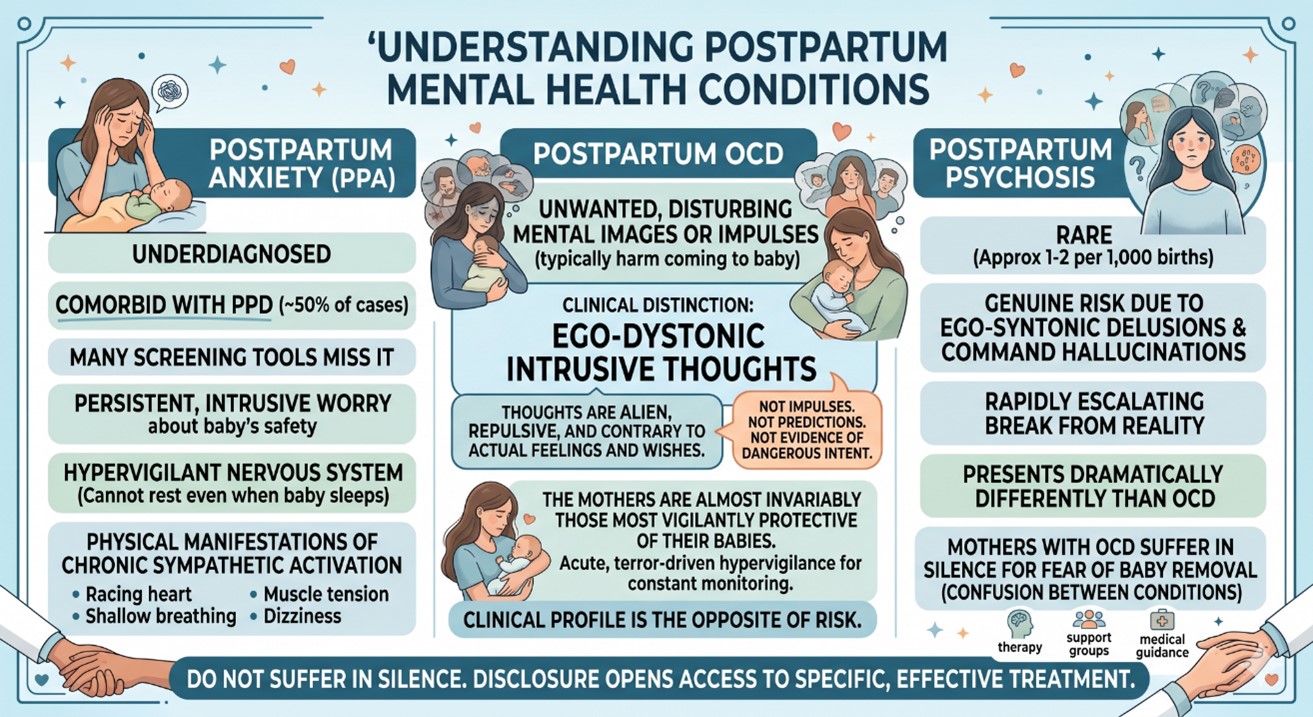
Postpartum anxiety (PPA) is at least as prevalent as PPD and significantly underdiagnosed. Research documents comorbid anxiety in approximately 50% of PPD cases, yet many screening tools capture only the depressive features. PPA presents as persistent, intrusive worry about the baby's safety and well-being, a hypervigilant nervous system that cannot rest even when the baby sleeps, and the physical manifestations of chronic sympathetic activation: racing heart, shallow breathing, muscle tension, and dizziness.
Postpartum OCD is characterised by unwanted, disturbing mental images or impulses, typically involving harm coming to the baby, that the mother finds horrifying and completely contrary to her intentions, known as ego-dystonic intrusive thoughts. The clinical distinction that mothers desperately need to hear: these thoughts are ego-dystonic, experienced as alien, repulsive, and entirely contrary to the mother's actual feelings and wishes. They are not impulses. They are not predictions. They are not evidence of dangerous intent.
The mothers who experience these thoughts are almost invariably those most vigilantly protective of their babies, because the thoughts produce an acute, terror-driven hypervigilance that keeps them monitoring constantly. The clinical profile of Postpartum OCD is the opposite of the profile of a mother who poses a risk.
Postpartum psychosis is a condition in which ego-syntonic delusions and command hallucinations can produce a genuine risk, which is rare (approximately 1 to 2 per 1,000 births) and presents dramatically differently: as a rapidly escalating break from reality, not as private, shame-laden, ego-alien intrusive thoughts. The confusion between these two presentations keeps mothers with postpartum OCD suffering in silence, afraid that disclosure will result in their baby being removed.
It will not. Disclosure opens access to specific, effective treatment.
- Risk Factors: Who Is Most Vulnerable
The strongest predictor of PPD, documented consistently across the research literature, is a personal history of depression or anxiety, particularly if symptoms were active during the pregnancy itself. This shifts the clinical frame significantly: PPD is not a random hormonal misfortune. For a significant proportion of women, it is a predictable risk that can be planned for and, with early intervention, substantially mitigated.
Additional documented risk factors include:
- Previous episode of PPD
- Inadequate social support, particularly the absence of a partner, or the absence of practical, tangible help during the postpartum period
- Stressful life events during pregnancy or the early postpartum period
- Premature birth, infant illness, or a traumatic birth experience
- Ambivalence about the pregnancy
- Socioeconomic stressors, including financial pressure and housing insecurity
- Breastfeeding difficulties
- The specific hormonal sensitivities associated with premenstrual dysphoric disorder (PMDD)
Critically, untreated maternal depression during pregnancy is associated with low infant birth weight and preterm delivery, reinforcing that managing perinatal mental health is not only maternal self-care. It is prenatal care for the baby.
II. How Therapy Works: The Mechanisms of Clinical Change
- Why Therapy Is a First-Line Treatment, Not a Second Option
A pervasive and costly misconception in how PPD is managed, including in India, is the framing of psychotherapy as something you do "alongside" medication, or as an option for those who "prefer not to take medication." The evidence does not support this framing.
Psychotherapy for PPD produces specific, documented changes in neurological function, cognitive architecture, relational capacity, and identity coherence that pharmacological treatment alone does not produce. For mild-to-moderate presentations, therapy is the primary intervention. For moderate-to-severe presentations, therapy combined with medication yields outcomes consistently superior to either alone. The question is not whether therapy is appropriate; it is which therapeutic approach, delivered how, at what intensity, for this specific mother.
- Cognitive Behavioural Therapy (CBT): Restructuring the Thought Architecture of Depression
CBT for PPD is not generic CBT applied to a perinatal context. It is a specifically adapted intervention that addresses the particular cognitive distortions that PPD generates.
The cognitive model of PPD identifies a specific cluster of dysfunctional beliefs that both arise from and sustain the depressive episode:
- The "bad mother" schema: Globally negative self-evaluation as a parent, often triggered by normal infant behaviour (crying, difficulty feeding, disrupted sleep) that is interpreted as evidence of maternal inadequacy. "She's crying because I can't soothe her. I'm failing her. A good mother would know what to do."
- Catastrophic prediction: The belief that the current state is permanent and progressive. "I will never feel connected to her. This is who I am now. Things will never get better."
- Emotional reasoning as evidence: Using internal emotional experience as proof of external reality. "I don't feel love for her, therefore I don't love her. I don't feel capable, therefore I am not capable."
- The perfectionism trap: Holding maternal performance to an impossible standard and interpreting any deviation as failure. The "supermum" schema is so deeply embedded in cultural expectations, and so ruthlessly exploited by the self-critical depressive mind.
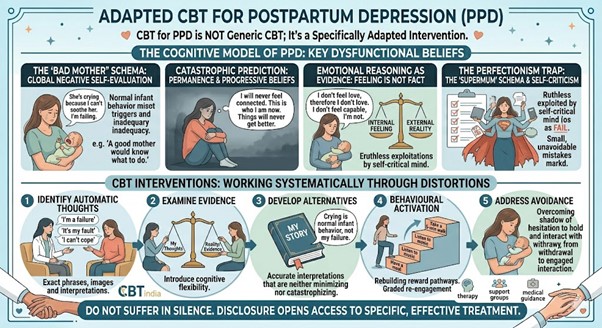
CBT india interventions work systematically through these distortions. The therapist and client together:
- Identify the specific automatic thoughts that are maintaining the depression, the exact phrases, images, or interpretations that arise in response to infant cues, domestic demands, or interactions with family
- Examine the evidence for and against these thoughts, introducing cognitive flexibility into what depression has made rigid and absolute
- Develop alternative, more accurate interpretations that neither minimise real difficulty nor catastrophise it
- Introduce behavioural activation, structured, graded re-engagement with activities that have been abandoned under the weight of anhedonia and avoidance, rebuilding the reward pathways that depression has suppressed
- Address the avoidance that PPD generates around infant interaction, the unconscious withdrawal from contact with the baby that both results from and perpetuates impaired bonding
In practice, perinatal cbt therapist online india also incorporates sleep management protocols specifically adapted for new mothers, not generic sleep hygiene advice, but targeted cognitive and behavioural interventions for the specific patterns of hyperarousal and rumination that prevent mothers with PPD from sleeping even when the infant allows it.
- Interpersonal Therapy (IPT): The Relational and Identity Dimension
Where CBT works primarily with cognitive architecture, Interpersonal Therapy (IPT) works with the relational and role dimensions of PPD, and these are, for many mothers, the deepest and most persistent sources of suffering.
IPT for PPD centres on four specific interpersonal domains:
Role transition is the domain most central to the postpartum experience. Becoming a mother is not merely the addition of a new role to an existing identity. It is a fundamental reorganisation of who you are, the loss of the pre-baby self, the renegotiation of every significant relationship, and the assumption of a role that carries enormous cultural weight and almost no preparatory training.
The grief of this transition is rarely acknowledged because the cultural script for new motherhood does not include grief. It includes joy, gratitude, and competence. The mother who is mourning her former life, her freedom, her professional identity, her body, her relationship with her partner, her sense of herself as someone other than a caregiver, is frequently shamed by this grief rather than supported through it. IPT creates the explicit therapeutic space to mourn what has been lost as a prerequisite for genuinely inhabiting what has been gained.
Interpersonal disputes address the relational conflicts that the postpartum period predictably intensifies. Asymmetric labour distribution, the mother carrying the overwhelming majority of the cognitive and physical load while the partner returns to structural normality, is one of the most consistent sources of resentment in the postpartum period. IPT works with the specific communication patterns, unspoken expectations, and role renegotiations that these disputes require.
Grief addresses loss, including the loss through birth complications, infant illness, pregnancy loss prior to this birth, or the loss of the birth experience the mother had hoped for. These griefs frequently go unacknowledged in routine postpartum care, yet their unprocessed weight contributes directly to the depressive and anxious presentations that follow.
Interpersonal deficits address the specific challenge consistently documented in the research literature: the isolation of the new mother who lacks an adequate support system. The cry, "I kept being told to reach out to my support system, and I kept saying I don't have one", is one of the most painful in perinatal mental health. IPT works in practical, specific ways to build the relational resources that recovery requires, including identifying what genuine support looks like, how to request it, and how to distinguish between relationships that sustain and those that deplete.
- Somatic and Trauma-Informed Approaches: The Body's Role in Postpartum Recovery
The neurobiological substrate of PPD is not only cognitive. The postpartum experience is profoundly embodied: the physical changes of pregnancy and birth, the demands of feeding and holding, the sleep deprivation that operates at a level of physiological impairment comparable to clinical sleep disorders, and the sensory overwhelm of new parenthood.
For mothers whose PPD has a significant anxiety or trauma component, including those who have had a traumatic birth experience, a history of birth trauma in previous pregnancies, or complex trauma histories that the vulnerability of new parenthood has reactivated, purely cognitive approaches may be insufficient. The nervous system is dysregulated at a physiological level that cognitive restructuring cannot directly reach.
Somatic approaches, working with breath, body sensation, movement, and the direct regulation of the nervous system, address this physiological dimension. Specific applications in perinatal work include:
- Breath-based regulation for the hyperaroused, anxious postpartum nervous system. Not generic deep breathing, but structured practices that directly activate the parasympathetic response and reduce the chronic sympathetic activation, maintaining the anxiety component of PPD
- Body-based trauma processing for mothers whose postpartum presentation is entangled with a traumatic birth experience, using approaches including Somatic Experiencing and trauma-informed body work to process the stored physiological response to the birth without requiring detailed verbal narration
- Grounding practices for the dissociative disconnection that characterises severe PPD, the "watching yourself from a distance" quality that many mothers describe, bringing present-moment sensory awareness to counteract the depersonalisation that depression produces
Trauma-informed care, as a clinical stance, not a specific technique, but an orientation, is essential in perinatal work because of the degree to which new motherhood reactivates earlier attachment injuries and relational histories. The mother who had a critical or unpredictable caregiver experiences her infant's demands through that lens. The mother who survived abuse experiences vulnerability and dependence through that lens. A trauma-informed approach recognises these histories as live variables in the current clinical presentation and responds with attunement, pacing, and explicit safety rather than inadvertently replicating the dynamic the history created.
- Dyadic Therapy: Treating the Relationship Between Mother and Baby
This is the treatment layer most frequently absent from PPD care, and the research is direct about what this absence costs.
A study of 155 mothers admitted for postpartum psychiatric care found that 57.1% of mothers with PPD had impaired bonding at admission. More significantly, a systematic review confirmed that improvements in maternal mood do not automatically translate into improvements in the mother-infant relationship or infant developmental outcomes. Treating the depression lifts the neurological suppression that was inhibiting the mother's experience of connection, but the quality of interaction between mother and baby, the specific patterns of reciprocity and attunement that form the substrate of secure infant attachment, may require direct therapeutic attention in addition.
Dyadic therapy, working therapeutically with the mother-baby pair, not only with the individual mother, addresses this specifically. It includes:
Video feedback intervention: Recording brief mother-infant interaction sequences and reviewing them with the mother in session, drawing explicit attention to moments of genuine reciprocity and connection that the mother's depression has prevented her from noticing or crediting. The mother who believes she is failing her baby is frequently shown, through this concrete evidence, moments of genuine attunement that she was not registering. This has a direct and documented effect on maternal self-efficacy and on the quality of subsequent interactions.
Interaction coaching: Real-time guidance during mother-infant interaction, helping the mother read the baby's cues more accurately, respond more contingently, and develop the confidence that depression has eroded. The infant's developmental needs are for a caregiver who responds predictably and warmly to their communications, and interaction coaching specifically builds this capacity at the level of behaviour, not only at the level of mood.
Watch, Wait, and Wonder: A specific dyadic intervention in which the mother observes her infant's self-directed activity from a position of receptive, non-directive attention, and then processes her observations and emotional responses with the therapist. This approach strengthens the mother's attunement to the infant's internal states and builds the reflective functioning capacity that PPD can suppress.
The evidence is clear: full recovery from PPD, in its impact on the child's development and the quality of the attachment relationship, requires attention to the dyad, not only to the individual mother. This is the standard Coach For Mind holds itself to. You may reach out to Nitika, our clinical coordinator, here!
III. The Medication Landscape: What Is Safe and What Has Changed
- Sertraline: The Evidence Base for Breastfeeding Mothers
The most clinically costly fear in postpartum pharmacotherapy is the belief that treating depression means choosing between your mental health and your baby's safety through breastfeeding. The evidence does not support this binary.
Sertraline is the preferred first-line antidepressant for PPD for reasons that are specific and well-documented: it has the most extensive perinatal safety data, produces minimal transfer into breastmilk, and results in infant serum levels that are typically undetectable or clinically negligible in the majority of documented cases. The Relative Infant Dose (RID), the standard measure of infant exposure, is well below the 10% threshold that perinatal pharmacologists use as a safety benchmark.
The clinical consensus from perinatal psychiatry organisations globally is direct: for the majority of breastfeeding mothers, the documented risks of untreated PPD, to the mother's health, to infant development, and to the mother-infant relationship, significantly outweigh the minimal risks of sertraline exposure through breastmilk.
This is a decision requiring informed clinical guidance. It is not a decision to make in fear, without the evidence, defaulting to the assumption that no medication is the safest choice for the baby. Untreated PPD is not a neutral baseline. It has its own documented costs to infant development, including disrupted attachment, impaired cognitive development, and the intergenerational transmission of mood vulnerability.
SSRIs, including sertraline, take four to six weeks to reach full therapeutic effect. The adjustment period (the first two to three weeks) often involves increased agitation, emotional volatility, and in some cases, a temporary worsening of anxiety before stabilisation. This is the phase most vulnerable to premature discontinuation. Active clinical monitoring through this period significantly improves adherence and outcomes.
- The Neurosteroid Treatments: Where PPD Pharmacotherapy Is Heading
Brexanolone (Zulresso, 2019): The first neurosteroid treatment approved for PPD, administered as a 60-hour intravenous infusion in a monitored hospital setting. It mimics the allopregnanolone levels of the third trimester, effectively providing the GABA-A receptor support that the postpartum crash has removed. Clinical trials demonstrated rapid, significant symptom reduction. Its RID for breastfeeding is 1.3%, well below the 10% safety threshold. The 60-hour hospital admission requirement and the need for continuous monitoring are significant practical barriers. It is not currently available in India.
Zuranolone (Zurzuvae, 2023): The first oral medication specifically approved for PPD. A 14-day course at 50mg, taken at bedtime. Targets the same GABA-A receptor mechanism as brexanolone but as a synthetic oral compound. Clinical trials demonstrated meaningful symptom reduction beginning as early as day 3, a clinically transformative difference compared with the four- to six-week onset of SSRIs. Important clinical notes: zuranolone has a 24-hour half-life and produces sedation, requiring a 12-hour "no driving or operating machinery" restriction after each dose. Home support during the 14-day course is a clinical requirement, not a preference. Its safety profile during breastfeeding is not yet fully characterised, making it unsuitable as a first-line choice for nursing mothers at this stage. It is not yet approved for use in India and would require a specialist perinatal psychiatry consultation to access through established channels.
For the majority of Indian mothers presenting with PPD, sertraline combined with CBT or IPT remains the most accessible, most evidence-based, and most practical treatment approach. The neurosteroid treatments represent where the field is heading — and for severe cases where rapid response is clinically critical, they represent a meaningful alternative that specialist consultation should with best cbt therapist in india.
IV. The Things Nobody Tells You: and that the Treatment Must Address
- Sleep: A Clinical Target, Not Self-Care Advice
Four hours of uninterrupted sleep is a documented clinical threshold for mood stabilisation in PPD. Below this threshold, the brain's stress regulation systems cannot perform basic restorative functions. Sleep deprivation at the level typical of early parenthood is not merely uncomfortable. It is a physiological state that directly amplifies every symptom of PPD: emotional dysregulation, cognitive impairment, anxiety sensitisation, and the anhedonia that impairs bonding.
This has direct clinical implications:
Partners and family members need to understand that protecting the primary caregiver's access to one consolidated four-hour sleep block is not "helping." It is active participation in medical treatment. The practical architecture, dividing the night into two four-hour blocks, with the partner or a support person managing one, is a clinical intervention that needs to be discussed explicitly, planned specifically, and treated as non-negotiable during the acute phase of recovery.
For mothers without partners, without nearby family, or without the financial resources to access professional postpartum support: this is the gap that the Indian mental health system has not yet adequately addressed. "Build your support network" is not clinical guidance for a woman who lacks a support network. Clinical care for isolated mothers needs to include practical problem-solving around access to sleep, not only psychological interventions.
- Intrusive Thoughts: The Symptom That Shame Keeps Hidden
Return to this if you need to: having a thought is not the same as wanting something. It is not the same as intending something. It is not who you are.
Ego-dystonic intrusive thoughts (the frightening, unwanted mental images involving harm to the baby) are a recognised, diagnosable, treatable symptom of postpartum OCD. They are clinically distinguishable from the ego-syntonic delusions of postpartum psychosis by several features: the mother with intrusive thoughts knows the thoughts are her own, finds them horrifying, and would never act on them. The alarm and vigilance that the thoughts produce are themselves protective. Postpartum psychosis presents completely differently: as a rapid, visible break from reality, not as private, silent, shame-laden thoughts that the mother is carefully concealing.
The specific treatment for postpartum OCD, ERP (Exposure and Response Prevention) within a CBT framework, is highly effective when accessed. It is inaccessible to every mother who is suffering in silence because the shame of disclosure or the terror of what it might mean prevents her from speaking.
The clinical responsibility is to say this clearly: disclosing intrusive thoughts to a qualified perinatal clinician is safe. It will not automatically result in your baby being taken away. It will result in your receiving the specific help needed to resolve these symptoms. Concealment extends the suffering. Disclosure ends it.
- Impaired Bonding: Treating the Relationship, Not Only the Mother
The data on bonding impairment in PPD is unambiguous: 57.1% of mothers with PPD show impaired bonding at clinical admission. For these mothers, the suffering has two layers: the depression itself, and the secondary guilt and shame of feeling disconnected from the baby they know they love.
The clinical message is equally unambiguous: for the majority of mothers, the bond re-emerges as treatment progresses. The love was always present. The depression was suppressing the neural pathways through which it could be felt and expressed. As the clinical intervention creates space in the neurological environment, the connection that was always there becomes accessible again.
For the smaller proportion of mothers in whom bonding difficulties persist beyond mood recovery, research documented this in approximately 5.7% of cases, specific dyadic therapy is available and effective. This is not a deeper failure. It is a residual clinical presentation that has its own targeted treatment.
V. The Indian Context: What Changes Here
Barriers Specific to Indian Mothers
India's postpartum mental health landscape has specific features that shape both the presentation of PPD and the path to treatment.
The "good mother" performance: In a cultural context where new motherhood is often closely observed by family and in-laws, and where competence and joy are expected to be visibly performed from the first days, the internal reality of PPD stands in stark, isolating contrast to the external presentation. The mother who appears to be managing, who has not disclosed the numbness, the fear, the intrusive thoughts, is often the mother who is most severely suffering. Screening during the pregnancy itself, before the performance pressure is fully active, is clinically essential.
The joint family variable: Joint and extended family households create both resources and stressors for postpartum mothers. When the family is attuned and supportive, the practical help available is a genuine clinical asset. When family relationships carry their own complexity, critical in-laws, unspoken expectations about the mother's role, and cultural pressures around infant feeding or caregiving practices, the family system can become a significant source of the interpersonal stress that IPT specifically addresses.
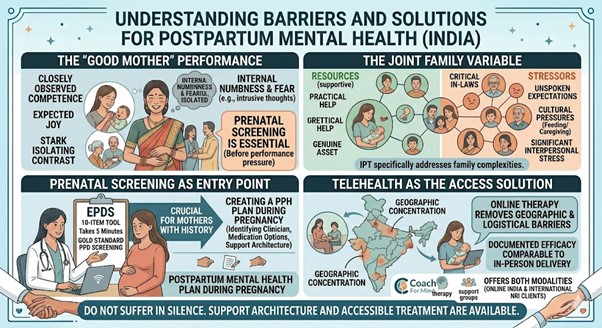
Prenatal screening as the entry point: The Edinburgh Postnatal Depression Scale (EPDS), a validated, free, ten-item tool that takes five minutes to complete, is the gold standard for PPD screening. For Indian mothers with a known history of depression or anxiety, the clinical conversation needs to happen during the second trimester, not after the crisis has arrived. Creating a postpartum mental health plan during pregnancy, including identifying the clinician who will provide support, discussing medication options if appropriate, and establishing a support architecture, is the single most effective preventive intervention available.
Telehealth as the access solution: Specialist perinatal mental health care in India is geographically concentrated in major metros. Online therapy in India, with documented efficacy comparable to in-person delivery, removes both the geographic and the logistical barrier of in-person attendance for a new mother managing an infant's schedule. Coach For Mind offers both modalities, with online sessions available across India and to NRI clients internationally.
VI. How Coach For Mind Supports Postpartum Depression
The Integrated Perinatal Approach at CFM
Postpartum depression is not a condition that responds to a single treatment modality delivered in isolation. The neurobiological disruption, the cognitive distortions, the relational disruptions, the identity transition, the potential trauma components, and the mother-infant relationship all require targeted postpartum depression treatment in india. At Coach For Mind, our perinatal support is built around this clinical reality.
- Assessment: The Starting Point
Every mother who contacts Coach For Mind for PPD support begins with a comprehensive clinical assessment. This is not a screening checklist. It is a thorough clinical interview covering:
- Current symptom profile across the full perinatal spectrum: depressive, anxious, OCD, and somatic presentations
- Onset, duration, and functional impact
- Personal psychiatric history (the strongest predictor of PPD severity and treatment response)
- Birth experience and any traumatic dimensions
- Infant feeding status and its implications for medication decisions
- Sleep architecture and the availability of support
- Relational context: partner, family, and the specific cultural pressures operating in this mother's environment
- Screening for intrusive thoughts, asked directly, in a frame that is explicitly non-shaming and clinically contained
This assessment shapes the treatment plan because PPD does not present identically in every mother, and a treatment approach not calibrated to the specific presentation yields incomplete results.
- Individual Therapy: CBT and IPT Delivered by Perinatal-Informed Clinicians
Our individual therapy for postpartum depression treatment in india is delivered by clinicians with training in both CBT and IPT for perinatal presentations, and with the capacity to integrate somatic and trauma-informed approaches when the clinical picture requires them.
Sessions are structured around the specific mechanisms of change described in 2nd part: the systematic examination of the "bad mother" schema, the explicit processing of the role transition grief, the behavioural activation that re-engages the reward system, and the interpersonal work that addresses isolation, relational asymmetry, and the absence of an adequate support network.
For mothers with significant anxiety or OCD features, ERP-informed CBT is integrated from the outset, not as a secondary referral, but as part of the initial treatment architecture.
- Dyadic Support: Working With the Mother-Infant Relationship
Where clinical assessment identifies significant bonding difficulty, impaired attunement, or anxiety about the quality of the mother-infant relationship, we incorporate dyadic work directly into the treatment plan. This may include video feedback, interaction coaching, or structured observation and reflection, depending on the specific presentation and the mother's capacity at the time.
This layer of treatment is not available everywhere. It is the layer that research shows makes the difference in the infant's developmental outcomes, and it is a standard component of CFM's perinatal work, not an optional add-on.
- Partner and Family Psychoeducation
The partner's understanding of PPD, specifically, the neurobiological basis of the symptoms, the clinical significance of sleep, and the difference between what looks like withdrawal or disinterest and what is actually a medical symptom, is one of the most powerful clinical levers available. Psychoeducation sessions for partners and, where relevant, family members are offered as part of the treatment plan at Coach For Mind.
The goal is explicit: replacing confusion, resentment, and unhelpful interventions stemming from misunderstanding with informed, active, and specific support that participates in recovery rather than inadvertently obstructing it.
- Medication Coordination
CFM's clinical team provides informed guidance on the medication landscape, the evidence base for sertraline in breastfeeding mothers, the adjustment period and what to expect during it, the emerging neurosteroid options, and the specific question of how to talk to an OB-GYN or psychiatrist who may not yet be familiar with the newest perinatal pharmacotherapy protocols.
Where medication is indicated, we coordinate with the prescribing physician to ensure that the pharmacological and psychological dimensions of treatment are sequenced and aligned, because medication without therapy, or therapy without adequate neurochemical stabilisation, produces incomplete results.
- Continuity: The Maintenance Phase
Research documents that gains from couples therapy and individual therapy for PPD can dissipate over time without sustained practice and, for some mothers, booster sessions. At Coach For Mind, the clinical plan explicitly includes a maintenance phase, a structured step-down in session frequency combined with clear markers for when to return to active treatment, so that recovery is consolidated rather than abandoned at the first sign of stability.
Conclusion: The Fog Has a Biology, and a Treatment
Postpartum depression is one of the most common and most treatable complications of childbirth. It has a specific neurobiological cause: the allopregnanolone crash, which destabilises the GABA-A receptor system within 72 hours of delivery. It has well-evidenced treatments, psychotherapy that produces documented neurological and relational change, pharmacotherapy that is safe for breastfeeding mothers, and the emerging neurosteroid interventions that are transforming what rapid recovery looks like. And it has consequences, for maternal health, for infant development, and for the family system, that make treating it not only a maternal right but a paediatric and public health priority.
What it does not have, in adequate supply, is the clinical infrastructure to reach every mother who needs it, or the cultural permission that would allow those mothers to seek it without shame.
That is the gap Coach For Mind is working within: providing clinical care that takes the full complexity of PPD seriously, that addresses the individual mother, the mother-infant relationship, and the family system, and that does not mistake symptom stabilisation for complete recovery.
If you are in the fog: the fog has a biology, a treatment, and an endpoint. You deserve to reach it. Contact our team here.
If You Are in Crisis Right Now
If you are experiencing thoughts of harming yourself or your baby, please contact support immediately:
- ICall (India): 9152987821
- Vandrevala Foundation Helpline: 1860-2662-345 (24/7, free, confidential)
- Snehi: 044-24640050
These services are available now. Please use them.
Take the Next Step: Perinatal Mental Health at Coach For Mind
Assessment. Individual Therapy. Dyadic Support. Partner Psychoeducation. Medication guidance is provided in-house by our psychiatry team, coordinated directly with your therapist — no need to see a separate provider.
Sessions available online across India and internationally for NRI clients, and in-person in Gurgaon.
Begin with a free 15-minute discovery call.
www.coachformind.com | [email protected]
RCI-registered clinical psychologists. Trauma-informed Counselling Psychologists. Evidence-based. Perinatal-specialist care.
References
- Dennis et al. (2024). Postpartum depression: A clinical review. Drugs.
- Khamidullina et al. (2025). PPD epidemiology, risk factors, diagnosis, and management. Journal of Clinical Medicine.
- Dimcea et al. (2024). PPD: Etiology, treatment, and consequences. Diagnostics.
- Gilden et al. (2020). Mother-to-infant bonding in postpartum psychosis and severe PPD. Journal of Clinical Medicine.
- Tsivos et al. (2015). Interventions for postnatal depression: Mother-infant relationship and child outcomes. International Journal of Women's Health.
- Frieder et al. (2019). Pharmacotherapy of PPD: Current approaches and novel development. CNS Drugs.
- Kroska & Stowe (2020). PPD: Identification and treatment in the clinic. Obstetrics and Gynecology Clinics of North America.
- Stewart & Vigod (2019). PPD: Pathophysiology, treatment, and emerging therapeutics. Annual Review of Medicine.
Written by the Clinical Team at Coach For Mind. RCI-registered clinical psychologists specialising in perinatal mental health, trauma-informed care, and complex presentations in the Indian context. Online and in-person sessions available. www.coachformind.com
This article is for informational purposes and does not constitute medical advice. Please consult a qualified clinician for individual guidance.
Frequently Asked Questions
Baby blues affect up to 80% of new mothers and typically begin within the first few days after birth. They are characterised by tearfulness, emotional sensitivity, and mood swings, but they resolve on their own within two weeks. Rapid hormonal shifts drive these symptoms and do not usually impair a mother’s ability to function.
Postpartum depression, in contrast, persists beyond two weeks and leads to significant functional impairment. It affects sleep, motivation, emotional regulation, and the ability to engage with daily life. It can also begin at any point in the first postpartum year, not just immediately after delivery. This distinction matters because postpartum depression is a medical condition that requires active treatment.
At Coach for Mind, structured screening and early assessment help differentiate between baby blues and postpartum depression accurately. The focus is not only on symptom identification but also on tracking functional impact and duration. This allows for timely intervention rather than waiting for symptoms to worsen. Early support can significantly reduce the severity and duration of postpartum depression.
Cognitive Behavioural Therapy and Interpersonal Therapy are the most evidence-based treatments for postpartum depression. Cognitive Behavioural Therapy focuses on identifying and changing unhelpful thought patterns such as self-blame, catastrophic thinking, and emotional reasoning. It also includes behavioural strategies like activity scheduling and sleep support, which directly improve functioning.
Interpersonal Therapy focuses on the relational and identity shifts that come with motherhood, including role transitions and changes in support systems. It helps address conflict, isolation, and the emotional impact of becoming a parent. Both approaches are highly effective and are often integrated in clinical practice. For cases involving anxiety, trauma, or strong physical symptoms, somatic and trauma-informed approaches may also be included.
At Coach for Mind, therapy is tailored to the individual rather than delivered as a fixed model. Treatment integrates CBT, IPT, and nervous system regulation based on the client’s needs. The goal is to restore emotional stability, functioning, and a sense of connection in a structured and sustainable way.
For most mothers, taking antidepressants while breastfeeding is considered safe when prescribed appropriately. Sertraline is the preferred first-line medication for postpartum depression due to its strong safety profile. Research shows that infant exposure through breastmilk is typically negligible or undetectable.
Untreated postpartum depression carries significant risks for both the mother and the baby, including impaired bonding and developmental concerns. For many women, the benefits of treatment clearly outweigh the minimal risks associated with medication. Decisions around medication should always be made collaboratively with a qualified clinician.
At Coach for Mind, medication decisions are approached from a balanced, evidence-based perspective. Mothers are guided through the risks, benefits, and available alternatives in a clear and non-alarmist way. The goal is to reduce fear-driven decision-making and replace it with informed choice. Ongoing psychological support is also provided alongside medication to ensure comprehensive care.
Intrusive thoughts are unwanted, distressing mental images or ideas that often involve harm coming to the baby. They are a recognised symptom of postpartum OCD and are more common than most people realise. These thoughts are ego-dystonic, which means they feel alien, disturbing, and completely inconsistent with the person’s values. You must disclose them to receive specific treatment.
They are not intentions, not desires, and not indicators of actual risk. In fact, mothers who experience these thoughts are usually the least likely to act on them because they find them so distressing. The fear of these thoughts often leads to silence, which can increase anxiety and isolation.
At Coach for Mind, intrusive thoughts are addressed with specific, evidence-based approaches such as cognitive behavioural techniques and exposure-based strategies. Mothers are helped to understand the nature of these thoughts so they stop interpreting them as dangerous. The therapeutic process focuses on reducing fear and avoidance rather than suppressing thoughts. Creating a safe space for disclosure is central to recovery.
Feeling disconnected from your baby as a result of PPD is clinically recognised and can be deeply distressing, but it is not permanent. Impaired bonding is a common and well-documented symptom of postpartum depression. More than half of mothers with postpartum depression report this experience at the time they seek treatment.
This disconnection is a result of changes in mood, energy, and emotional processing, not a reflection of your capacity to love. In most cases, the bond begins to return as the depression improves. Some mothers may need additional support that focuses specifically on the parent-infant relationship.
At Coach for Mind, both individual therapy and dyadic work are used to support bonding. This includes structured interventions that help rebuild emotional connection in a gradual and non-pressured way. The focus is not on forcing attachment but on restoring the conditions under which it can naturally emerge. With the right support, most mothers experience significant improvement.
There is no fixed timeline for postpartum depression treatment, and any estimate without understanding the individual case should be approached cautiously. For moderate presentations, evidence shows that therapies like Cognitive Behavioural Therapy and Interpersonal Therapy often lead to meaningful improvement within 12 to 16 sessions. More severe cases, especially those involving trauma history or significant bonding difficulties, usually require longer and more layered intervention.
Treatment does not end abruptly once symptoms improve, as a maintenance phase is typically included to consolidate progress and reduce relapse risk. This step-down phase is structured and time-bound, not an indefinite commitment. Progress is actively assessed throughout treatment to ensure that the approach remains effective and appropriate.
At Coach for Mind, timelines are individualised, regularly reviewed, and adjusted based on clinical progress rather than fixed expectations.
Postpartum depression cannot always be fully prevented, but its severity and duration can be significantly reduced with early planning. A history of depression or anxiety is the strongest predictor of postpartum depression, which makes it an important signal for proactive care. Clinical guidelines recommend discussing this history with both an obstetrician and a mental health professional during pregnancy.
Ideally, this planning begins in the second trimester, before the postpartum period starts. A structured plan may include identifying a therapist, discussing medication options, and building a reliable support system. Screening tools such as the Edinburgh Postnatal Depression Scale should be used during pregnancy and again in the early postpartum weeks.
At Coach for Mind, preventive care includes early assessment, structured planning, and ongoing monitoring to reduce risk and enable timely intervention.
Yes, fathers and partners can also experience postpartum depression. Research suggests that around 10% of new fathers are affected, with higher rates when the mother is also struggling. The presentation in fathers often looks different and may include irritability, withdrawal, overworking, or increased substance use.
Because these symptoms do not always match the typical image of depression, they are often overlooked. This can delay recognition and support. The impact on the family system can be significant when one or both parents are struggling.
At Coach for Mind, support is extended to partners as well, recognising that postpartum mental health is a systemic issue. Interventions may include individual therapy for partners or joint sessions where appropriate. The goal is to stabilise the emotional environment around the baby, not just treat one individual. Supporting both parents improves outcomes for the entire family.


